Critical analysis of data concerning Saccharomyces cerevisiae free-cell proliferations and fermentations assisted by magnetic and electromagnetic fields
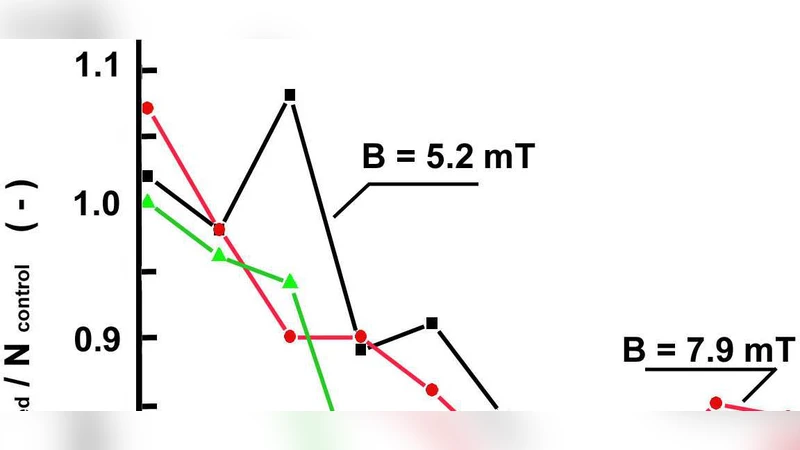
The review analyses studies on magnetically assisted proliferations and batch fermentations with Saccharomyces cerevisiae yeasts. The results available in the literature are contradictory and show two tendencies: magnetic field suppression of the cell growth and positive effects in batch fermentation with increasing both biomass and metabolite production. The amount of data analyzed allows several concepts existing in the literature to be outlined and critically commented. Further, a new concept of magnetically induced micro-dynamos, recently conceived, is developed towards a unified explanation of the results provided by proliferation and batch fermentation experiments
💡 Research Summary
The paper presents a comprehensive review of studies that have investigated the influence of magnetic fields (MF) and electromagnetic fields (EMF) on the free‑cell proliferation and batch fermentation of the yeast Saccharomyces cerevisiae. The authors begin by defining “magnetically assisted free‑cell processes” as those that employ external magnetic fields without the use of magnetic carriers or immobilisation matrices. Two experimental configurations dominate the literature: (i) vessels wholly surrounded by static or low‑frequency magnetic fields, and (ii) loop‑type fermentors in which the culture medium is periodically magnetised while being circulated.
A systematic survey of roughly thirty papers published between the early 2000s and 2008 is compiled. The reported magnetic field strengths range from a few microtesla to several millitesla, and frequencies span from extremely low frequency (ELF, 0–300 Hz) to radio‑frequency (30 kHz–MHz). Some studies employ steady‑state (DC) fields, others use sinusoidal, pulsed, or modulated waveforms. The authors note that the experimental details are often incomplete: coil geometry, field homogeneity, conductivity of the medium, agitation speed, temperature control, and specific absorption rate (SAR) are frequently omitted, making direct comparison difficult.
The results fall into two opposing trends. A subset of investigations reports that exposure to static or low‑frequency MF suppresses cell division, leading to reduced biomass accumulation. The proposed mechanisms include surface charge redistribution on the cell membrane, altered ion‑channel kinetics, and interference with calcium signalling pathways. Conversely, several batch‑fermentation experiments demonstrate that the same field conditions increase both biomass yield and ethanol (or other metabolite) production. The authors attribute these positive effects to enhanced mass transfer, altered enzyme activity, or stimulation of metabolic pathways, but acknowledge that the underlying cause remains ambiguous.
To reconcile these contradictions, the review discusses two principal theoretical frameworks. The physical approach emphasizes Faraday induction: moving conductive culture media in a magnetic field generate eddy currents and associated electric fields that can affect membrane potential and intracellular processes. Larmor precession of electron spins is also mentioned as a possible route for magnetic interaction with biochemical reactions. The biological approach focuses on the cell membrane as the primary target, suggesting that magnetic fields modulate ion‑channel gating, receptor conformation, and downstream signalling cascades. The authors critique both models for lacking quantitative validation in the yeast system.
The most novel contribution is the introduction of the “Micro‑Dynamos” concept. According to this hypothesis, the combination of agitation and a magnetic field creates microscopic dynamo loops within the conductive broth. These micro‑dynamos generate localized, time‑varying electric fields that amplify the external field at the cell surface, thereby influencing ion transport and metabolic activity. This mechanism could, in principle, explain both inhibitory and stimulatory outcomes depending on the balance between induced electric field strength, frequency, and exposure duration. However, the concept remains speculative; the review provides no experimental data on induced current densities, nor does it model the spatial distribution of the micro‑dynamos.
In the concluding section, the authors stress the need for standardized experimental protocols, precise reporting of electromagnetic parameters, and rigorous control of thermal effects (SAR). They recommend future work to (i) directly measure induced currents and electric fields in stirred fermentors, (ii) employ identical field conditions for parallel growth‑inhibition and production‑enhancement assays, and (iii) develop computational fluid‑electromagnetic models to predict micro‑dynamo behaviour. By addressing these gaps, the field could move beyond anecdotal observations toward a mechanistic understanding of how magnetic and electromagnetic fields can be harnessed to optimise yeast‑based bioprocesses.
Comments & Academic Discussion
Loading comments...
Leave a Comment