The TIANSHAN Radio Experiment for Neutrino Detection
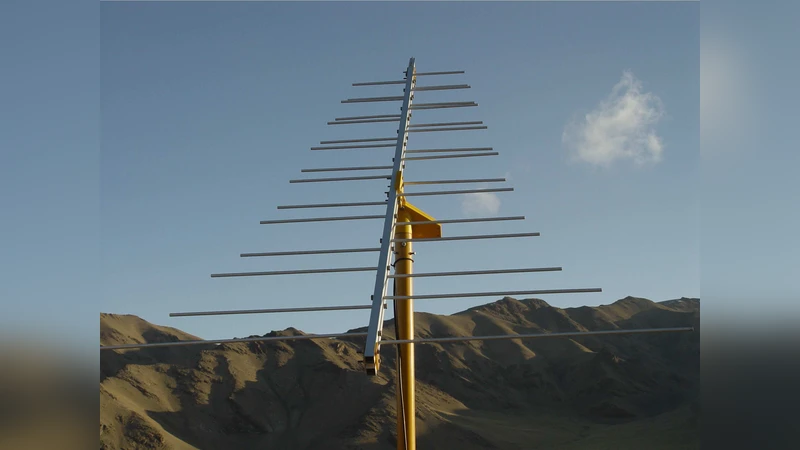
An antenna array devoted to the autonomous radio-detection of high energy cosmic rays is being deployed on the site of the 21 cm array radio telescope in XinJiang, China. Thanks in particular to the very good electromagnetic environment of this remote experimental site, self-triggering on extensive air showers induced by cosmic rays has been achieved with a small scale prototype of the foreseen antenna array. We give here a detailed description of the detector and present the first detection of extensive air showers with this prototype.
💡 Research Summary
The paper reports on the development and first successful operation of the TREND (Tianshan Radio Experiment for Neutrino Detection) prototype, a self‑triggering radio antenna array deployed at the 21 cm Array (21CMA) site in the Tianshan mountains of Xinjiang, China. The overarching goal of TREND is to provide a cost‑effective method for detecting ultra‑high‑energy (UHE) neutrinos by observing the extensive air showers (EAS) produced when Earth‑skimming τ‑leptons, generated in charged‑current neutrino interactions below the Earth’s surface, decay in the atmosphere.
The 21CMA infrastructure consists of 10 160 log‑periodic dipole antennas grouped into eight pods, each feeding analog signals via optical fibers to a central acquisition room. The site benefits from an exceptionally clean electromagnetic environment: apart from two nearby 10 kV power lines and a railway, the radio background is dominated by the Galactic synchrotron emission, with negligible anthropogenic noise. This low‑noise setting is crucial for achieving autonomous triggering based solely on radio signals.
The TREND prototype uses six of the 21CMA‑type log‑periodic antennas, each oriented northward to obtain east‑west linear polarization. Signals are amplified (64 dB low‑noise), filtered (50–100 MHz), and digitized at 200 MS/s with 8‑bit ADCs. A software trigger monitors each 2048‑sample (≈10 µs) waveform in real time; when the instantaneous voltage exceeds N times the instantaneous noise standard deviation σ (N≈6.5), the waveform is written to disk. σ is recomputed every second over the most recent 2048 samples, ensuring adaptation to slow variations in the Galactic background. Under quiet conditions the trigger rate stays below 1 Hz, matching the expected rate for Gaussian noise.
To identify genuine air‑shower events, the analysis first searches for coincident triggers among different antennas. Two triggers are considered causally linked if their time difference satisfies |t_i‑t_j| ≤ d_ij·c·T, where d_ij is the antenna separation, c the speed of light, and T≈1.1 accounts for timing uncertainties. An event is defined when at least four antennas satisfy this condition. For each event, a cross‑correlation is performed on the paired waveforms to determine the delay τ_ij that maximizes the correlation coefficient. Solving the resulting system of equations by least‑squares yields corrected trigger times t*_i, from which the arrival direction and source position are reconstructed.
During a 14‑day monitoring period in December 2009, the prototype recorded 1642 multi‑antenna triggers. The noise level of each antenna showed the expected diurnal modulation due to the Galactic plane crossing, confirming that the antennas are sky‑noise limited and that σ provides a reliable proxy for sensitivity. After applying the coincidence and cross‑correlation criteria, a subset of events with four to six simultaneous triggers displayed waveform shapes, amplitudes, and reconstructed directions consistent with extensive air showers observed in other radio experiments (e.g., LOPES, CODALEMA). These detections constitute the first autonomous radio observation of EAS at the TREND site.
The significance of this result lies in demonstrating that a modest array of six log‑periodic antennas, operating with a simple threshold trigger, can reliably detect cosmic‑ray‑induced air showers in a self‑triggering mode. This validates the core concept for scaling up to a large‑area, low‑cost radio array capable of searching for the rare, nearly horizontal showers expected from τ‑lepton decays initiated by UHE neutrinos. The authors outline future work: expanding the array to hundreds or thousands of antennas, refining the timing and direction reconstruction, and developing dedicated selection algorithms to isolate neutrino‑induced candidates from the dominant cosmic‑ray background. The TREND prototype thus establishes a solid experimental foundation for cost‑effective, autonomous radio detection of both ultra‑high‑energy cosmic rays and neutrinos.
Comments & Academic Discussion
Loading comments...
Leave a Comment