International X-ray Observatory (IXO) Assessment Study Report for the ESA Cosmic Vision 2015-2025
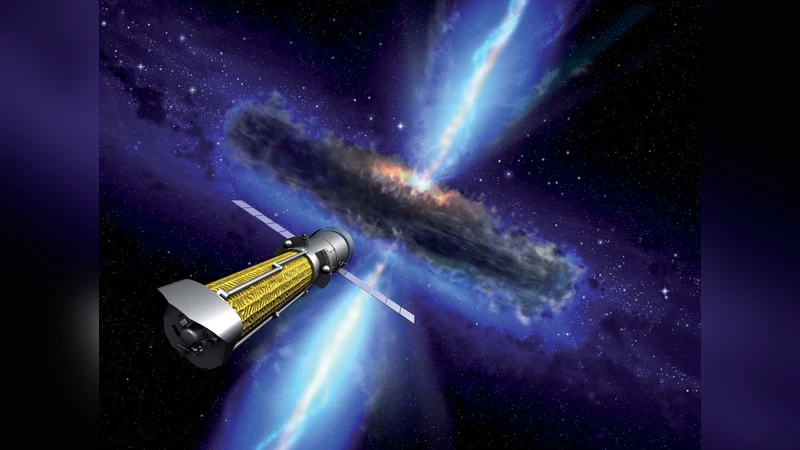
The International X-Ray Observatory (IXO) will address fundamental questions in astrophysics, including “When did the first SMBH form? How does large scale structure evolve? What happens close to a black hole? What is the connection between these processes? What is the equation of state of matter at supra-nuclear density?” This report presents an overview of the assessment study phase of the IXO candidate ESA L-class Cosmic Vision mission. We provide a description of the IXO science objectives, the mission implementation and the payload. The performance will offer more than an order of magnitude improvement in capability compared with Chandra and XMM-Newton. This observatory-class facility comprises a telescope with highly nested grazing incidence optics with a performance requirement of 2.5 sq.m. of effective area at 1.25 keV with a 5" PSF. There is an instrument complement that provides capabilities in imaging, spatially resolved spectroscopy, timing, polarimetry and high resolution dispersive spectroscopy. Since earlier submissions to the Astro2010 Decadal Survey, substantial technological progress has been made, particularly in the mirror development. Risk reduction measures and important programmatic choices have also been identified. An independent internal Technical and Programmatic Review has also been carried out by ESA, concluding with positive recommendations. Subject to successful conclusion of agreements between the partner space agencies, IXO is fully ready to proceed to further definition, moving towards an eventual launch in 2021-2022.
💡 Research Summary
**
The International X‑ray Observatory (IXO) assessment study report presents a comprehensive overview of a proposed ESA L‑class Cosmic Vision mission designed to address four major astrophysical themes: the formation and growth of the first super‑massive black holes (SMBHs), the evolution of large‑scale structure and the chemical enrichment of the Universe, the behavior of matter under extreme gravity and density, and the life cycles of matter and energy from supernova remnants to star‑planet systems.
IXO aims to deliver an order‑of‑magnitude improvement over current X‑ray facilities such as Chandra and XMM‑Newton. Its primary telescope employs a 20 m focal length silicon‑pore optics (SPO) assembly delivering 2.5 m² effective area at 1.25 keV and a point‑spread function better than 5 arcseconds. The design includes eight modular “petals” that are hierarchically assembled, with a segmented‑glass optics (SGO) concept retained as a backup. The spacecraft will operate at the Sun–Earth L2 halo orbit, using a 3‑axis stabilized platform with 1.5 arcsecond pointing knowledge, a 5‑year nominal lifetime (extendable to 10 years), and a high‑gain X‑band antenna delivering up to 90 Gbit per day.
The payload consists of five complementary instruments:
-
X‑ray Microcalorimeter Spectrometer (XMS) – a transition‑edge sensor (TES) and metal‑insulator‑sensor (MIS) array providing 2.5 eV energy resolution over a 5 arcminute field of view in the 0.3–12 keV band.
-
Wide‑Field Imager (WFI) and Hard X‑ray Imager (HXI) – active‑pixel silicon (WFI) and CdTe (HXI) detectors covering 0.1–15 keV and 10–40 keV respectively, with an 18 arcminute field, CCD‑like spatial resolution, and fast readout for high count‑rate observations.
-
High‑Time Resolution Spectrometer (HTRS) – a fast silicon‑drift diode array optimized for bright sources, delivering sub‑millisecond timing and modest spectral resolution (≈200 eV) across 0.3–15 keV.
-
X‑ray Polarimeter (XPOL) – a gas‑electron‑multiplier (GEM) detector providing polarization sensitivity of ~1 % in the 2–10 keV band, enabling studies of magnetic fields and scattering geometries near black holes and neutron stars.
-
X‑ray Grating Spectrometer (XGS) – two parallel concepts (Critical‑Angle Transmission and Off‑Plane gratings) feeding CCD read‑outs to achieve a resolving power of ~3000 in the soft X‑ray band (0.3–1 keV) with an effective area of ~1000 cm².
Technology readiness is high: SPO flight‑like modules have already been fabricated and tested, achieving the required angular resolution; TES microcalorimeters have demonstrated the target energy resolution; ADR cooling to <50 mK is mature; and the WFI/HXI detector technologies are at TRL 6–7. The report details risk mitigation strategies, including redundant metrology for mirror alignment, thermal‑control margins, and a backup optics path.
An internal ESA Technical and Programmatic Review concluded with positive recommendations, confirming that the mission concept, schedule, and cost estimates are realistic provided that international partnership agreements (NASA, JAXA, CSA, etc.) are finalized. The baseline launch vehicle is an Atlas V 551, targeting a 2021–2022 launch, followed by a 5‑year primary science phase.
In summary, IXO represents a mature, internationally collaborative X‑ray observatory that will transform our understanding of the hot Universe by delivering unprecedented imaging, spectroscopic, timing, and polarimetric capabilities across a broad energy range. Its successful implementation will enable definitive measurements of SMBH growth, the distribution of the warm‑hot intergalactic medium, the physics of strong gravity, and the equation of state of ultra‑dense matter, thereby addressing the core scientific goals of ESA’s Cosmic Vision 2015‑2025.
Comments & Academic Discussion
Loading comments...
Leave a Comment