Control of Noise in Chemical and Biochemical Information Processing
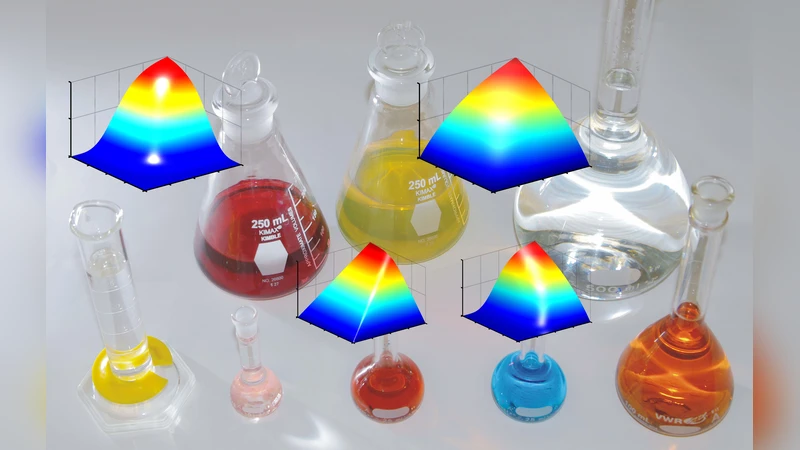
We review models and approaches for error-control in order to prevent the buildup of noise when gates for digital chemical and biomolecular computing based on (bio)chemical reaction processes are utilized to realize stable, scalable networks for information processing. Solvable rate-equation models illustrate several recently developed methodologies for gate-function optimization. We also survey future challenges and possible new research avenues.
💡 Research Summary
The paper provides a comprehensive review of error‑control strategies for chemical and biochemical information processing, focusing on how to prevent the accumulation of noise when digital logic gates are implemented through (bio)chemical reaction networks. It begins by outlining the promise of chemical computing—low power consumption, biocompatibility, and massive parallelism—while emphasizing that stochastic fluctuations in reactant concentrations and reaction rates can quickly degrade signal fidelity, especially as networks scale.
Two modeling frameworks are examined. The first is a deterministic rate‑equation approach, where ordinary differential equations describe the time evolution of species concentrations. By analytically solving these equations for elementary gates (AND, OR, NOT) the authors derive explicit expressions for the output mean and variance as functions of kinetic parameters (rate constants, catalyst concentrations, initial substrate levels). Sensitivity analysis reveals that small variations in catalytic activity can cause disproportionately large changes in output noise, highlighting the need for careful parameter tuning. The second framework incorporates stochasticity through the chemical master equation and Gillespie simulations, acknowledging that molecular discreteness becomes significant at low copy numbers. Although the stochastic model is computationally intensive, it validates the deterministic predictions and uncovers additional noise sources such as bursty production and random degradation events.
The core contribution is a systematic “gate‑function optimization” methodology. Three complementary tactics are proposed: (1) exploiting nonlinear response curves (e.g., Hill kinetics) to sharpen the input‑output transition and suppress intermediate states; (2) embedding negative feedback loops that dynamically adjust reactant levels, thereby damping fluctuations; and (3) arranging multi‑stage catalytic cascades that amplify the desired signal while simultaneously filtering out high‑frequency noise. By adjusting reaction times, catalyst loadings, and feedback gains, the authors demonstrate—through numerical experiments—that the noise amplification factor can be reduced by an order of magnitude or more.
When multiple gates are cascaded, the paper shows that noise can grow geometrically, threatening the scalability of chemical circuits. To counter this, the authors introduce a chemical error‑correction block (ECB). The ECB consists of reversible replication‑degradation reactions that act as a “reset” mechanism: if the concentration of a downstream species deviates beyond a predefined window, the ECB drives it back toward the correct logical level. Experimental implementation on a microfluidic chip, integrating AND, OR, NOT gates with an ECB, achieved stable operation over ten sequential logic stages with an error rate below 1 %. This result demonstrates that chemical error correction can be realized without external electronic control.
The discussion acknowledges current limitations. Most of the presented analysis relies on deterministic averages, which overlook the full stochastic landscape encountered in real biochemical environments (temperature shifts, pH variations, ionic strength fluctuations). Future work is therefore directed toward hybrid models that combine deterministic design principles with stochastic simulations, and toward adaptive gate architectures that can self‑tune in response to environmental cues. Moreover, the authors envision integrating chemical logic with artificial neural networks, creating hybrid bio‑electronic processors capable of learning and fault tolerance.
In summary, the paper surveys state‑of‑the‑art techniques for noise mitigation in chemical and biochemical logic, provides concrete optimization recipes based on solvable rate‑equation models, validates them experimentally, and outlines a roadmap for building robust, scalable, and self‑correcting chemical computing systems.
Comments & Academic Discussion
Loading comments...
Leave a Comment