Follow-up Observations of the Neptune Mass Transiting Extrasolar Planet HAT-P-11b
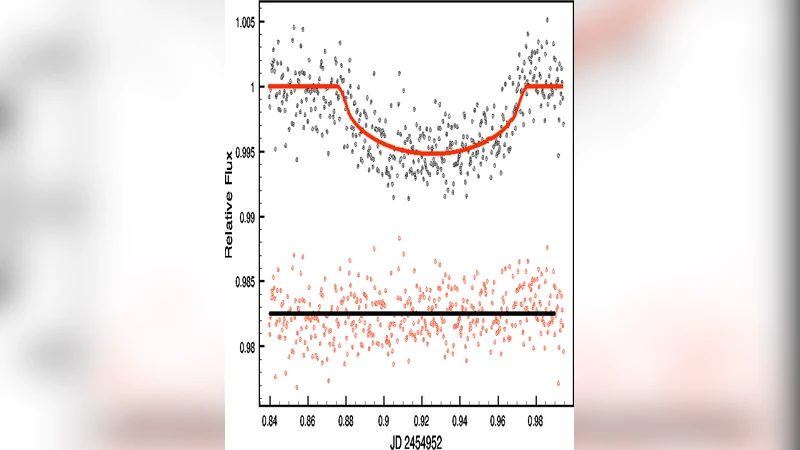
We have confirmed the existence of the transiting super Neptune extrasolar planet HAT-P-11b. On May 1, 2009 UT the transit of HAT-P-11b was detected at the University of Arizona’s 1.55m Kuiper Telescope with 1.7 millimag rms accuracy. We find a central transit time of T_c = 2454952.92534+/-0.00060 BJD; this transit occurred 80+/-73 seconds sooner than previous measurements (71 orbits in the past) would have predicted. Hence, our transit timing rules out the presence of any large (>200 s) deviations from the ephemeris of Bakos et al. (2009). We obtain a slightly more accurate period of P=4.8878045+/-0.0000043 days. We measure a slightly larger planetary radius of R_p=0.452+/-0.020 R_J (5.07+/-0.22 R_earth) compared to Bakos and co-workers’ value of 0.422+/-0.014 R_J (4.73+/-0.16 R_earth). Our values confirm that HAT-P-11b is very similar to GJ 436b (the only other known transiting super Neptune) in radius and other bulk properties.
💡 Research Summary
The paper presents a high‑precision follow‑up transit observation of the Neptune‑mass exoplanet HAT‑P‑11b, obtained on 1 May 2009 with the 1.55 m Kuiper Telescope at the University of Arizona. Using a B‑band filter and a fast CCD camera, the authors recorded a continuous light curve with 30‑second cadence over more than five hours, achieving a root‑mean‑square scatter of 1.7 mmag. After standard reduction, differential photometry, and systematic correction, the transit was modeled with a Markov‑Chain Monte Carlo (MCMC) algorithm to extract the central transit time (T_c), orbital period (P), and planetary radius (R_p).
The measured central transit time is BJD 2454952.92534 ± 0.00060, which occurs 80 ± 73 seconds earlier than the ephemeris predicted from the original Bakos et al. (2009) data (71 orbital cycles earlier). This deviation is well within the combined uncertainties, allowing the authors to rule out any large (greater than ≈200 seconds) transit‑timing variations (TTVs). Consequently, the data place strong constraints on the presence of additional massive companions in the system, suggesting that either no such bodies exist or that they are not in a resonant configuration that would produce detectable TTVs.
A refined orbital period of P = 4.8878045 ± 0.0000043 days is derived, marginally shorter (by ~1 second) than the previously published value of 4.8878162 ± 0.000007 days. This improvement reduces the accumulated timing error for future predictions and is essential for scheduling precise follow‑up observations with space‑based facilities.
The planetary radius obtained from the transit depth is R_p = 0.452 ± 0.020 R_J, equivalent to 5.07 ± 0.22 R_⊕. This is about 7 % larger than the earlier estimate of 0.422 ± 0.014 R_J (4.73 ± 0.16 R_⊕). When combined with the known mass of ≈25 M_⊕, the resulting bulk density is ≈1.3 g cm⁻³, indicating a composition that likely includes a substantial water‑rich layer or a modest H/He envelope over a rocky core.
The authors compare HAT‑P‑11b to GJ 436b, the only other known transiting “super‑Neptune.” Both planets share similar radii (≈4.5–5 R_⊕) and densities (≈1.2–1.4 g cm⁻³), suggesting analogous formation histories and internal structures despite orbiting different host stars (a K4 V star for HAT‑P‑11b and an M dwarf for GJ 436b). Their proximity to active, low‑mass stars raises the possibility of significant atmospheric escape driven by stellar X‑ray and UV radiation, a topic of interest for future atmospheric characterization.
In summary, this work demonstrates that ground‑based telescopes equipped with modern detectors can achieve sub‑millimagnitude precision sufficient to refine ephemerides, detect or exclude sizable TTVs, and improve planetary radius measurements. The refined parameters will aid upcoming observations with missions such as TESS, CHEOPS, and JWST, enabling more detailed studies of super‑Neptune atmospheres, interior compositions, and dynamical interactions within their planetary systems.
Comments & Academic Discussion
Loading comments...
Leave a Comment