IGR J17544-2619 in depth with Suzaku: direct evidence for clumpy winds in a supergiant fast X-ray transient
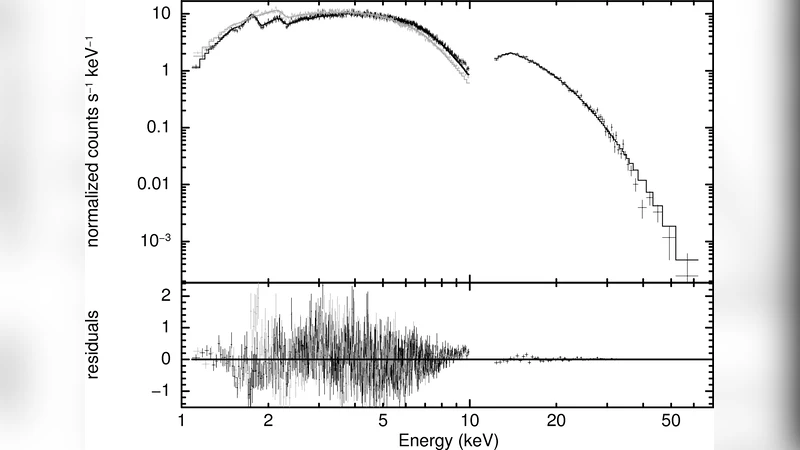
We present the first direct evidence for dense clumps of matter in the companion wind in a Supergiant Fast X-ray Transient (SFXT) binary. This is seen as a brief period of enhanced absorption during one of the bright, fast flares that distinguish these systems. The object under study was IGR J17544-2619, and a total of 236 ks of data were accumulated with the Japanese satellite Suzaku. The activity in this period spans a dynamic range of almost 10000 in luminosity and gives a detailed look at SFXT behavior.
💡 Research Summary
The paper presents the first direct observational evidence for dense clumps in the stellar wind of a Supergiant Fast X‑ray Transient (SFXT) binary, specifically IGR J17544‑2619, using a 236 ks Suzaku campaign. The authors accumulated data with the X‑ray Imaging Spectrometer (XIS, 0.5–10 keV) and the Hard X‑ray Detector PIN (HXD‑PIN, 15–70 keV), achieving sub‑second timing resolution that allowed them to resolve rapid flares and the intervening low‑luminosity states. Over the observation the source displayed a dynamic range of nearly four orders of magnitude, from a quiescent luminosity of ∼10^33 erg s⁻¹ to flare peaks of ∼10^37 erg s⁻¹.
A key result is the detection of a short (≈10 s) episode of enhanced photoelectric absorption during one of the brightest flares. Spectral fitting with an absorbed cutoff power‑law model shows that the column density N_H rises by ΔN_H ≈ 5 × 10^22 cm⁻² while the underlying continuum shape (photon index Γ ≈ 1.5, cutoff energy ∼15 keV) remains essentially unchanged. This isolated increase in absorption, unaccompanied by a change in the intrinsic spectral parameters, is interpreted as the line‑of‑sight crossing of a dense clump embedded in the supergiant’s radiatively driven wind.
Using the flare’s rise time (Δt ≈ 10 s) and an assumed wind velocity of v_w ≈ 1000 km s⁻¹, the authors estimate the clump’s linear size to be L ≈ v_w Δt ≈ 10^10 cm. Combining this size with the measured column increase yields a clump mass of order M ≈ 10^19 g, consistent with theoretical predictions for wind clumps in OB supergiants (10^18–10^20 g). The inferred density enhancement (a factor of 2–3 above the ambient wind) is sufficient to produce the observed rapid increase in accretion rate onto the neutron star, thereby triggering the flare.
The timing analysis also reveals that the flare’s rise and decay are symmetric on timescales of tens of seconds, supporting a scenario where the neutron star traverses a roughly spherical overdensity. The lack of significant spectral hardening or softening during the absorption episode suggests that the clump primarily modulates the observed flux through photoelectric absorption rather than altering the intrinsic emission mechanism.
In the broader context, this work validates the long‑standing hypothesis that SFXT flares are driven by stochastic encounters with wind clumps. By directly measuring a clump’s column density, size, and mass, the study provides quantitative constraints for wind‑clumping models and for simulations of accretion onto magnetized neutron stars in high‑mass X‑ray binaries. The authors argue that similar high‑time‑resolution, broadband observations of other SFXTs will be essential to determine whether the clump properties observed here are typical or represent an extreme case.
Finally, the paper discusses implications for the overall population of SFXTs. The observed clump frequency and mass distribution suggest that wind inhomogeneities are a dominant factor in shaping the extreme variability of these systems, potentially explaining the orders‑of‑magnitude luminosity swings that distinguish SFXTs from classical supergiant X‑ray binaries. The authors conclude that Suzaku’s unique combination of spectral coverage and timing capability has opened a new window onto the microphysics of massive star winds, and they advocate for future missions (e.g., XRISM, Athena) to pursue systematic clump detection campaigns.