Transits of Earth-Like Planets
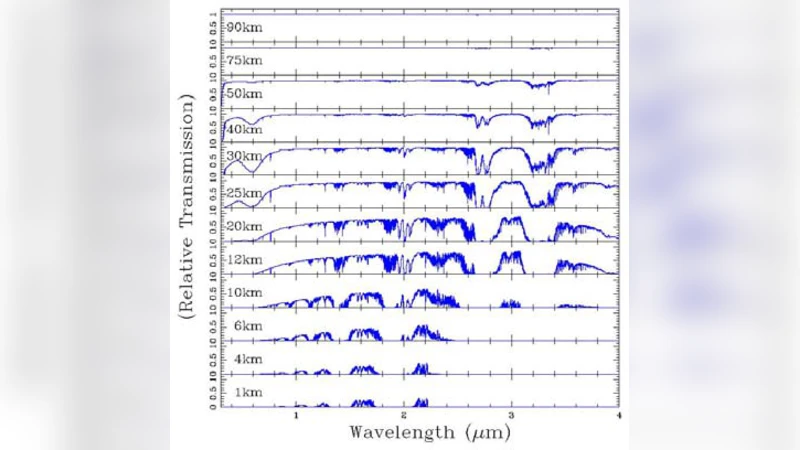
Transmission spectroscopy of Earth-like exoplanets is a potential tool for habitability screening. Transiting planets are present-day “Rosetta Stones” for understanding extrasolar planets because they offer the possibility to characterize giant planet atmospheres and should provide an access to biomarkers in the atmospheres of Earth-like exoplanets, once they are detected. Using the Earth itself as a proxy we show the potential and limits of the transiting technique to detect biomarkers on an Earth-analog exoplanet in transit. We quantify the Earths cross section as a function of wavelength, and show the effect of each atmospheric species, aerosol, and Rayleigh scattering. Clouds do not significantly affect this picture because the opacity of the lower atmosphere from aerosol and Rayleigh losses dominates over cloud losses. We calculate the optimum signal-to-noise ratio for spectral features in the primary eclipse spectrum of an Earth-like exoplanet around a Sun-like star and also M stars, for a 6.5-m telescope in space. We find that the signal to noise values for all important spectral features are on the order of unity or less per transit - except for the closest stars - making it difficult to detect such features in one single transit, and implying that co-adding of many transits will be essential.
💡 Research Summary
The paper by Kaltenegger and Traub investigates the feasibility of detecting atmospheric biomarkers on Earth‑analog exoplanets using transmission spectroscopy during primary transits. The authors adopt Earth itself as a proxy, constructing a detailed line‑by‑line radiative‑transfer model that spans the ultraviolet to the mid‑infrared (0.3–20 µm). The model incorporates the US Standard Atmosphere 1976 temperature‑pressure profile, realistic vertical mixing‑ratio profiles for major gases (H₂O, O₃, O₂, CH₄, CO₂, N₂, CFC‑11, CFC‑12, NO₂, HNO₃, N₂O), aerosol absorption, Rayleigh scattering, and three discrete cloud layers (1 km, 6 km, 12 km) with a total 60 % cloud coverage. Rayleigh scattering follows a λ⁻⁴ law, aerosol extinction a λ⁻¹·³ law, and clouds are treated as opaque continuum‑absorbing layers; multiple scattering is neglected.
The transmission spectrum is derived by calculating the absorption for 30 tangent rays ranging from the surface to 100 km, integrating the absorption over altitude to obtain an “effective height” h(λ). The planet’s wavelength‑dependent geometric cross‑section becomes πR²(λ)=πRp²+2πRp h(λ), and the fraction of stellar light blocked by the atmosphere is fₚ(λ)=2Rp h(λ)/Rₛ². Signal‑to‑noise ratio (SNR) for a given spectral feature is approximated as SNR=√Nₜₒₜ · fₚ, where Nₜₒₜ is the total number of photons collected from the star in the relevant band during the transit. This formulation isolates the astrophysical term (fₚ) from the observational term (Nₜₒₜ).
Model validation is performed against solar occultation spectra from the ATMOS‑3 experiment. The synthetic transmission spectra reproduce the observed features well, with minor discrepancies in the red wing of the 9.6 µm ozone band, confirming the adequacy of the atmospheric and cloud treatment.
The resulting Earth transmission spectrum shows that in the visible (0.3–4 µm) the strongest features are ozone (O₃), water vapor (H₂O), carbon dioxide (CO₂), methane (CH₄) and, to a lesser extent, molecular oxygen (O₂). In the infrared (4–20 µm) the dominant bands are CO₂, O₃, CH₄, H₂O, and nitric acid (HNO₃). Ozone is particularly prominent in the visible because it resides in the clear upper atmosphere, whereas water vapor is largely confined to lower, more opaque layers, reducing its transit signature.
The authors then compute SNRs for a 6.5 m space telescope (e.g., JWST) observing an Earth‑twin in the habitable zone of both Sun‑like stars and M‑dwarfs. For a Sun‑like star at 10 pc, even the strongest ozone band yields SNR≈0.5 per transit; at 5 pc the SNR rises to ≈1, and at 1 pc to ≈3. CO₂ and CH₄ bands behave similarly. M‑dwarf hosts improve the geometric factor fₚ because of the smaller stellar radius, but the lower stellar flux in the infrared offsets much of this gain, resulting in comparable SNRs to the Sun‑like case. Consequently, detection of any single biomarker in a single transit is unlikely except for the very nearest stars.
The paper concludes that co‑adding dozens to hundreds of transits will be essential to achieve statistically significant detections of atmospheric species on Earth analogs. It also highlights that larger apertures (>10 m), higher spectral resolution, or more efficient detectors would markedly improve prospects. The study provides a realistic benchmark for future mission concepts aimed at characterizing terrestrial exoplanet atmospheres and underscores the challenges inherent in using transmission spectroscopy for biosignature detection.
Comments & Academic Discussion
Loading comments...
Leave a Comment