Secondary radiation from the Pamela/ATIC excess and relevance for Fermi
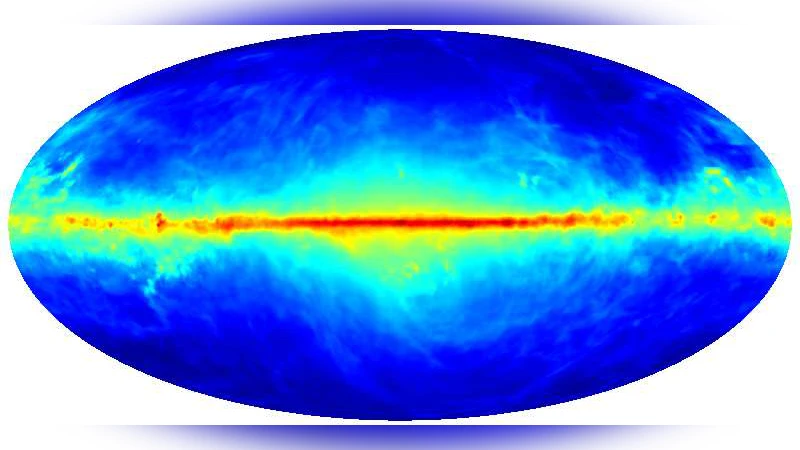
The excess of electrons/positrons observed by the Pamela and ATIC experiments gives rise to a noticeable amount of synchrotron and Inverse Compton Scattering (ICS) radiation when the e^+e^- interact with the Galactic Magnetic Field, and the InterStellar Radiation Field (ISRF). In particular, the ICS signal produced within the WIMP annihilation interpretation of the Pamela/ATIC excess shows already some tension with the EGRET data. On the other hand, 1 yr of Fermi data taking will be enough to rule out or confirm this scenario with a high confidence level. The ICS radiation produces a peculiar and clean “ICS Haze” feature, as well, which can be used to discriminate between the astrophysical and Dark Matter scenarios. This ICS signature is very prominent even several degrees away from the galactic center, and it is thus a very robust prediction with respect to the choice of the DM profile and the uncertainties in the ISRF.
💡 Research Summary
The paper investigates the secondary radiation that inevitably accompanies the excess of high‑energy electrons and positrons reported by the PAMELA and ATIC experiments, under the hypothesis that the excess originates from annihilating weakly interacting massive particles (WIMPs). The authors model the propagation of these e± in the Galactic environment, taking into account diffusion, energy losses, and interactions with the Galactic magnetic field (B≈3–10 μG) and the interstellar radiation field (ISRF). They solve the diffusion‑loss equation numerically to obtain the spatial and spectral distribution of the e± population for a range of WIMP masses (≈600 GeV–1 TeV) and annihilation cross sections (⟨σv⟩≈10⁻²⁶ cm³ s⁻¹).
The analysis shows that, in the energy band where the PAMELA/ATIC excess is most pronounced (∼100 GeV–1 TeV), inverse‑Compton scattering (ICS) off the ISRF dominates the energy‑loss budget, producing a substantial flux of γ‑rays. For the benchmark WIMP parameters that fit the e± data, the predicted ICS emission forms a diffuse “ICS haze” with an intensity of order 10⁻⁶ ph cm⁻² s⁻¹ sr⁻¹ in the 1–10 GeV range, extending several degrees away from the Galactic centre. This haze is already in mild tension with the EGRET γ‑ray measurements, which do not show such an excess at the predicted level.
The authors argue that the superior sensitivity and broader energy coverage of the Fermi Large Area Telescope (LAT) will decisively test this scenario. Simulated Fermi observations for a one‑year exposure indicate that the predicted haze could be detected at >5σ significance, or, if absent, the data would place an upper limit on ⟨σv⟩ roughly an order of magnitude below the value required to explain the PAMELA/ATIC excess. Importantly, the spatial morphology of the haze is robust: it remains relatively uniform out to latitudes of 10°–30°, and its intensity is only weakly dependent on the assumed dark‑matter density profile (e.g., NFW versus Einasto) or on reasonable variations (∼20 %) of the ISRF components.
Consequently, the paper presents three key conclusions: (1) the current EGRET data already constrain the WIMP‑annihilation interpretation of the e± excess; (2) a one‑year Fermi‑LAT dataset will either confirm the presence of the predicted ICS haze with high confidence or exclude the dark‑matter explanation at the level required to fit the PAMELA/ATIC observations; and (3) the ICS haze constitutes a clean, model‑independent signature that can be used to discriminate between dark‑matter and conventional astrophysical sources (such as pulsars or supernova remnants), because it is largely insensitive to the details of the Galactic magnetic field, ISRF uncertainties, and dark‑matter halo shape.
Overall, the work demonstrates that secondary γ‑ray emission provides a powerful, complementary probe of the high‑energy e± excess and that forthcoming Fermi data will play a decisive role in establishing whether the excess is a harbinger of particle dark matter or a manifestation of more mundane astrophysical processes.
Comments & Academic Discussion
Loading comments...
Leave a Comment