Formation of PAHs and Carbonaceous Solids in Gas-Phase Condensation Experiments
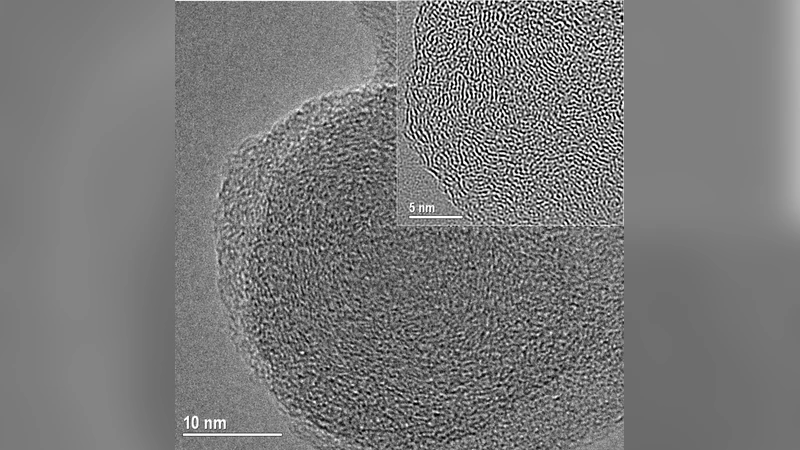
Carbonaceous grains represent a major component of cosmic dust. In order to understand their formation pathways, they have been prepared in the laboratory by gas-phase condensation reactions such as laser pyrolysis and laser ablation. Our studies demonstrate that the temperature in the condensation zone determines the formation pathway of carbonaceous particles. At temperatures lower than 1700 K, the condensation by-products are mainly polycyclic aromatic hydrocarbons (PAHs), that are also the precursors or building blocks for the condensing soot grains. The low-temperature condensates contain PAH mixtures that are mainly composed of volatile 3-5 ring systems. At condensation temperatures higher than 3500 K, fullerene-like carbon grains and fullerene compounds are formed. Fullerene fragments or complete fullerenes equip the nucleating particles. Fullerenes can be identified as soluble components. Consequently, condensation products in cool and hot astrophysical environments such as cool and hot AGB stars or Wolf Rayet stars should be different and should have distinct spectral properties.
💡 Research Summary
The paper investigates the formation pathways of carbonaceous dust particles—specifically polycyclic aromatic hydrocarbons (PAHs) and fullerene‑like solids—by reproducing astrophysical condensation processes in the laboratory. Two gas‑phase condensation techniques, laser pyrolysis and laser ablation, are employed to generate carbon vapour that rapidly cools in a controlled condensation zone. The central experimental variable is the temperature of this zone, which is deliberately set either below ~1700 K (low‑temperature regime) or above ~3500 K (high‑temperature regime). By comparing the chemical composition, morphology, and spectroscopic signatures of the resulting condensates, the authors delineate two distinct formation mechanisms that are directly tied to the thermal environment.
In the low‑temperature experiments (T < 1700 K), carbon atoms and small clusters first combine to produce volatile PAH molecules. Mass spectrometry and infrared spectroscopy reveal that these PAHs are dominated by 3‑ to 5‑ring aromatic systems (e.g., naphthalene, phenanthrene, pyrene derivatives). Because of their high volatility, they remain soluble in the extraction solvents and act as molecular building blocks. Subsequent coagulation of PAH molecules leads to the nucleation of non‑volatile soot particles. Transmission electron microscopy shows that these particles consist of an amorphous carbon matrix interspersed with PAH clusters, mirroring the structure expected for carbon dust formed in cool circumstellar envelopes such as those around asymptotic giant branch (AGB) stars. The infrared spectra of the low‑temperature condensates exhibit the classic PAH emission bands at 3.3, 6.2, 7.7, 8.6, and 11.3 µm, confirming their relevance to the ubiquitous unidentified infrared (UIR) features observed in many astrophysical environments.
Conversely, in the high‑temperature experiments (T > 3500 K), the kinetic energy of carbon species is sufficient to favor the direct formation of closed‑cage structures. Fullerenes (C₆₀, C₇₀) and fullerene fragments are detected both as soluble components and as integral parts of the nucleating particles. Electron microscopy reveals fullerene‑like spheroidal grains, often with a graphitic shell surrounding a fullerene core. These grains are essentially non‑volatile and display characteristic fullerene vibrational modes at 7.0, 8.5, 17.4, and 18.9 µm in their infrared spectra. Such signatures have been reported in a handful of astrophysical sources, notably certain planetary nebulae and the ejecta of Wolf‑Rayet stars, where the local gas temperatures can exceed several thousand kelvin.
The authors argue that the temperature‑dependent chemistry observed in the laboratory provides a natural explanation for the diversity of carbon dust observed in space. In cool stellar outflows (e.g., AGB stars) the PAH‑driven pathway dominates, yielding dust that is rich in aromatic molecules and exhibits strong PAH bands. In hot, high‑energy environments (e.g., Wolf‑Rayet winds, supernova remnants) the fullerene‑driven pathway prevails, producing fullerene‑rich solids with distinct spectral fingerprints. This dichotomy implies that the infrared emission features of a given astronomical source can be used as a diagnostic of the prevailing condensation temperature and, by extension, of the physical conditions in the dust‑forming region.
Overall, the study provides compelling experimental evidence that carbonaceous dust formation is not a single, universal process but rather bifurcates into two temperature‑controlled routes: a low‑temperature PAH‑mediated route and a high‑temperature fullerene‑mediated route. Incorporating these pathways into astrophysical dust evolution models will improve the interpretation of infrared observations and enhance our understanding of the life cycle of carbon in the cosmos.