The Jet of 3C 17 and the Use of Jet Curvature as a Diagnostic of the X-ray Emission Process
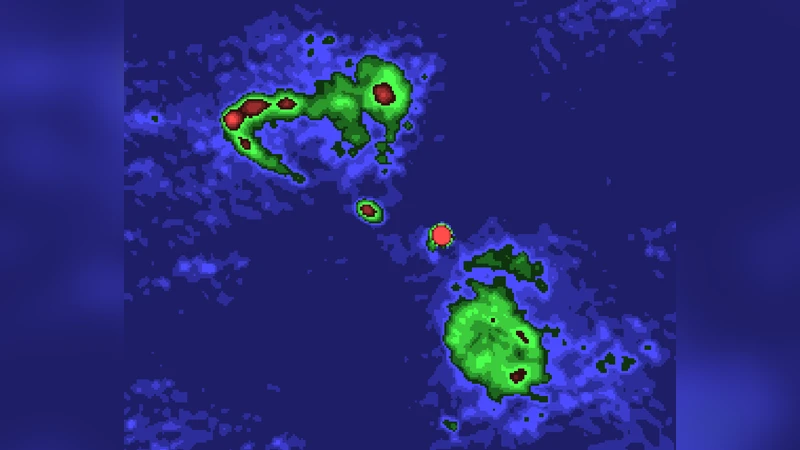
We report on the X-ray emission from the radio jet of 3C 17 from Chandra observations and compare the X-ray emission with radio maps from the VLA archive and with the optical-IR archival images from the Hubble Space Telescope. X-ray detections of two knots in the 3C 17 jet are found and both of these features have optical counterparts. We derive the spectral energy distribution for the knots in the jet and give source parameters required for the various X-ray emission models, finding that both IC/CMB and synchrotron are viable to explain the high energy emission. A curious optical feature (with no radio or X-ray counterparts) possibly associated with the 3C 17 jet is described. We also discuss the use of curved jets for the problem of identifying inverse Compton X-ray emission via scattering on CMB photons.
💡 Research Summary
The paper presents a multi‑wavelength study of the radio galaxy 3C 17, focusing on the high‑energy emission from its relativistic jet. Using a deep Chandra observation the authors detect X‑ray emission from two distinct knots along the jet. Both knots have clear counterparts in archival VLA radio maps and Hubble Space Telescope optical‑infrared images, establishing a coherent broadband picture from radio through optical to X‑rays. For each knot the authors construct a spectral energy distribution (SED) that spans more than five decades in frequency. They then test two leading mechanisms for the X‑ray production: inverse‑Compton scattering of cosmic‑microwave‑background photons (IC/CMB) by the jet’s relativistic electrons, and synchrotron radiation from a high‑energy tail of the same electron population. Both models can be tuned to reproduce the observed X‑ray fluxes, but they require markedly different physical conditions. The IC/CMB scenario demands relatively low magnetic fields (tens of µG), high bulk Lorentz factors (γ≈10), and a small viewing angle, which together boost the scattered CMB photon density in the jet frame. In contrast, the synchrotron interpretation calls for stronger magnetic fields (hundreds of µG) and an electron energy distribution that extends to Lorentz factors of order 10⁸, allowing direct synchrotron emission into the X‑ray band. The authors highlight that the jet of 3C 17 exhibits a pronounced curvature. Because the IC/CMB flux depends sensitively on the Doppler factor, a change in the line‑of‑sight angle along a curved jet produces a non‑linear variation in the X‑ray brightness, whereas synchrotron emission is largely insensitive to modest changes in viewing angle. By measuring the X‑ray intensity variations along the curved sections, one can therefore discriminate between the two mechanisms—a diagnostic tool the paper proposes and illustrates with the 3C 17 data. In addition to the two X‑ray knots, the authors report an intriguing optical feature that lacks radio or X‑ray counterparts; its nature remains uncertain, and they suggest deeper observations to clarify whether it is a jet‑related structure or a background object. Overall, the study combines high‑resolution X‑ray imaging with archival radio and optical data, performs detailed SED modeling, and introduces jet curvature as a practical probe of the dominant X‑ray emission process. The results reinforce that, for 3C 17, both IC/CMB and synchrotron models remain viable, but future observations—particularly high‑resolution, multi‑epoch imaging that can track changes in jet orientation and brightness—will be essential to break the degeneracy and to deepen our understanding of particle acceleration and radiative processes in powerful extragalactic jets.
Comments & Academic Discussion
Loading comments...
Leave a Comment