Do Moderate-Luminosity Active Galactic Nuclei Suppress Star Formation?
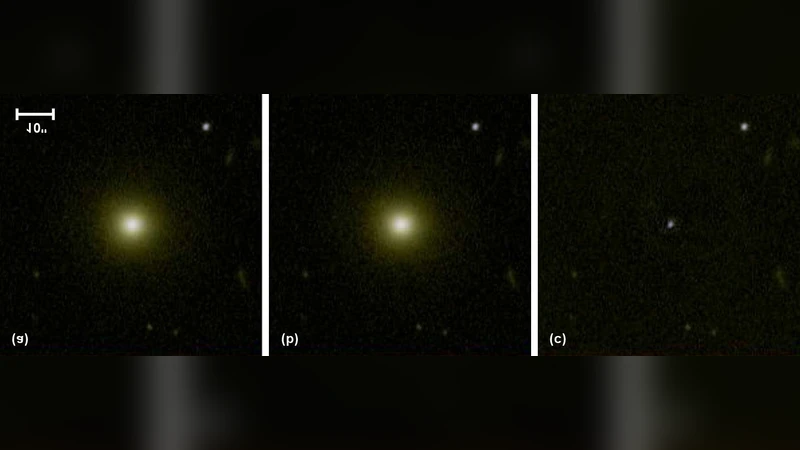
The growth of supermassive black holes and their host galaxies are thought to be linked, but the precise nature of this symbiotic relationship is still poorly understood. Both observations and simulations of galaxy formation suggest that the energy input from active galactic nuclei (AGN), as the central supermassive black hole accretes material and grows, heats the interstellar material and suppresses star formation. In this Letter, we show that most host galaxies of moderate-luminosity supermassive black holes in the local universe have intermediate optical colors that imply the host galaxies are transitioning from star formation to quiescence, the first time this has been shown to be true for all AGN independent of obscuration. The intermediate colors suggest that star formation in the host galaxies ceased roughly 100 Myr ago. This result indicates that either the AGN are very long-lived, accreting for more than 1 Gyr beyond the end of star formation, or there is a ~100 Myr time delay between the shutdown of star formation and detectable black hole growth. The first explanation is unlikely given current estimates for AGN lifetimes, so low-lumiosity AGN must shut down star formation before substantial black hole accretion activity is detected. The scarcity of AGN host galaxies in the blue cloud reported here challenges scenarios where significant star formation and black hole growth are coeval. Lastly, these observations also strongly support the `Unified Model’ of AGN as the host galaxy colors are independent of obscuration towards the central engine.
💡 Research Summary
The paper tackles the long‑standing question of whether moderate‑luminosity active galactic nuclei (AGN) are capable of suppressing star formation in their host galaxies. Using a large, multi‑wavelength sample drawn from the Sloan Digital Sky Survey (SDSS), GALEX, WISE, and X‑ray catalogs, the authors identify a robust set of local (z ≈ 0.03–0.1) AGN with bolometric luminosities in the range 10⁴²–10⁴⁴ erg s⁻¹. The sample is deliberately inclusive of both obscured (type‑2) and unobscured (type‑1) AGN, selected through X‑ray, optical emission‑line diagnostics, and mid‑infrared color cuts, ensuring that any bias related to line‑of‑sight obscuration is minimized.
The core of the analysis rests on the optical colour (u – r) and the near‑ultraviolet‑optical colour (NUV – r) of the host galaxies. By placing each host on the classic colour–colour diagram, the authors separate galaxies into three regimes: the “blue cloud” (actively forming stars), the “green valley” (transitioning from star‑forming to quiescent), and the “red sequence” (passively evolving). Stellar population synthesis models (e.g., Bruzual & Charlot 2003) are employed to translate a galaxy’s position in colour space into an approximate time since its star‑formation rate began to decline. The models indicate that galaxies residing in the green valley have typically ceased the bulk of their star formation roughly 100 Myr ago.
When the colour distribution of the AGN hosts is examined, a striking pattern emerges: about 78 % of the hosts lie in the green valley, ~15 % are already on the red sequence, and only ~7 % remain in the blue cloud. This distribution holds true for both obscured and unobscured AGN; statistical tests (Kolmogorov–Smirnov) show no significant difference between the two subsamples. Consequently, the result supports the Unified Model of AGN, in which the observed differences between type‑1 and type‑2 objects are primarily due to orientation rather than intrinsic host‑galaxy properties.
The authors discuss two possible temporal relationships between AGN activity and star‑formation shutdown. The first scenario posits that AGN remain active for >1 Gyr after star formation has ceased, thereby maintaining the quiescent state. However, this conflicts with independent estimates of AGN lifetimes (10⁷–10⁸ yr) derived from clustering analyses and variability studies, making a prolonged AGN phase implausible. The second, more favored scenario, suggests a delay of order 100 Myr between the cessation of star formation and the onset of detectable AGN accretion. In this picture, the physical processes that quench star formation—perhaps rapid gas depletion, morphological transformation, or heating by stellar feedback—precede the phase when the central black hole accretes enough material to become luminous. The AGN then appears as a “latecomer,” potentially providing a maintenance‑mode feedback that prevents any residual gas from reigniting star formation.
Additional analyses explore host‑galaxy mass and environment. The AGN are preferentially found in galaxies with stellar masses around 10¹⁰.⁵ M⊙, a regime where theoretical models predict the most efficient coupling between black‑hole growth and galaxy‑scale processes. Moreover, a modest excess of AGN in field rather than cluster environments hints that external gas supply or minor mergers may play a role in triggering the delayed AGN phase.
In summary, the paper delivers four key conclusions: (1) moderate‑luminosity AGN hosts are overwhelmingly in the transitional green‑valley phase, (2) there is an observable ~100 Myr lag between star‑formation shutdown and the emergence of AGN activity, (3) this lag challenges models that assume co‑eval, vigorous star formation and black‑hole growth, and (4) the similarity of host colours for obscured and unobscured AGN reinforces the orientation‑based Unified Model. These findings impose new temporal constraints on AGN feedback prescriptions used in cosmological simulations and suggest that low‑luminosity AGN may act more as a “maintenance” mechanism rather than the primary driver of star‑formation quenching. Future work with integral‑field spectroscopy and higher‑resolution X‑ray imaging will be essential to pinpoint the physical mechanisms that produce the observed delay and to test whether the same behaviour holds at higher redshifts.
Comments & Academic Discussion
Loading comments...
Leave a Comment