Constraints on the Intracluster Dust Emission in the Coma Cluster of Galaxies
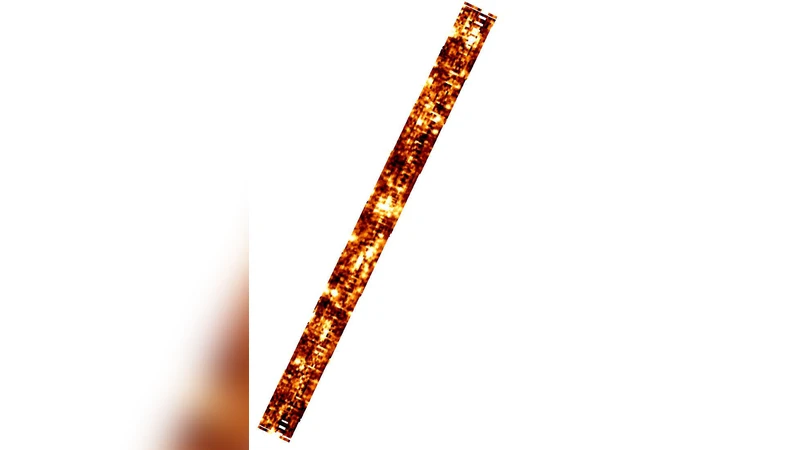
We have undertaken a search for the infrared emission from the intracluster dust in the Coma cluster of galaxies by the Multiband Imaging Photometer for Spitzer. Our observations yield the deepest mid and far-infrared images of a galaxy cluster ever achieved. In each of the three bands, we have not detected a signature of the central excess component in contrast to the previous report on the detection by Infrared Space Observatory (ISO). We still find that the brightness ratio between 70 and 160 microns shows a marginal sign of the central excess, in qualitative agreement with the ISO result. Our analysis suggests that the excess ratio is more likely due to faint infrared sources lying on fluctuating cirrus foreground. Our observations yield the 2 sigma upper limits on the excess emission within 100 kpc of the cluster center as 5 x 10^-3 MJy/sr, 6 x 10^-2 MJy/sr, and 7 x 10^-2 MJy/sr, at 24, 70, and 160 microns, respectively. These values are in agreement with those found in other galaxy clusters and suggest that dust is deficient near the cluster center by more than 3 orders of magnitude compared to the interstellar medium.
💡 Research Summary
The authors present a deep infrared search for intracluster dust (ICD) emission in the Coma galaxy cluster using the Multiband Imaging Photometer for Spitzer (MIPS). Observations were carried out in three bands—24 µm, 70 µm, and 160 µm—providing the deepest mid‑ and far‑infrared images of any galaxy cluster to date. The study was motivated by earlier reports from the Infrared Space Observatory (ISO) that claimed a detection of a central excess at 70 µm, which, if real, would imply a non‑negligible dust component surviving in the hot intracluster medium (ICM).
Data reduction followed the standard MIPS pipeline, after which the authors performed careful masking of foreground stars and bright background galaxies. Large‑scale Galactic cirrus emission was modeled and subtracted using multi‑Gaussian fitting, leaving a residual map that could contain any faint ICD signal. To quantify a possible central excess, the authors measured the mean surface brightness within a 100 kpc radius (≈3 arcmin) around the cluster core for each band. The resulting 2‑σ upper limits are 5 × 10⁻³ MJy sr⁻¹ at 24 µm, 6 × 10⁻² MJy sr⁻¹ at 70 µm, and 7 × 10⁻² MJy sr⁻¹ at 160 µm. These limits are well below the ISO‑reported excess (≈1.5 × 10⁻¹ MJy sr⁻¹ at 70 µm) and indicate that no statistically significant central excess is present in the Spitzer data.
The ratio of the 70 µm to 160 µm surface brightness shows a marginal increase toward the cluster centre, but the effect is at the 1‑σ level and can be reproduced by simulations that include random background galaxies and cirrus fluctuations. Consequently, the authors argue that the apparent ratio enhancement is more likely an artifact of foreground/background contamination rather than genuine thermal emission from intracluster dust.
Assuming a typical dust temperature of ~20 K and standard emissivity, the derived upper limits correspond to a dust mass of ≲10⁶ M⊙ within the central 100 kpc. Compared with the Milky Way interstellar medium, this implies a dust‑to‑gas ratio that is at least three orders of magnitude lower than the Galactic value. Such a severe depletion is consistent with theoretical expectations that dust grains are rapidly destroyed by sputtering in the hot (∼10⁸ K) X‑ray emitting plasma, and that dynamical processes (ram‑pressure stripping, galaxy harassment) further inhibit dust survival in cluster cores.
The paper discusses the limitations of the current dataset. The spatial resolution of MIPS (∼6″ at 24 µm, ∼18″ at 70 µm, ∼40″ at 160 µm) prevents the detection of very compact dust clumps, and residual cirrus noise remains a dominant source of uncertainty. The authors therefore advocate for follow‑up observations with next‑generation infrared facilities such as JWST/MIRI, SPICA/SAFARI, or future far‑infrared missions that will combine higher sensitivity, finer angular resolution, and broader spectral coverage. These instruments could push the detection limits well below the current upper bounds and potentially isolate the faint thermal signature of any surviving intracluster dust.
In summary, the Spitzer/MIPS observations provide stringent constraints on intracluster dust emission in the Coma cluster, contradicting earlier ISO claims of a central infrared excess. The lack of detectable dust implies that the intracluster medium is highly dust‑poor, reinforcing the view that dust is efficiently destroyed or expelled in the hostile environment of massive galaxy clusters. This result adds an important observational benchmark for models of dust evolution in dense cosmic structures.
Comments & Academic Discussion
Loading comments...
Leave a Comment