A testable conventional hypothesis for the DAMA-LIBRA annual modulation
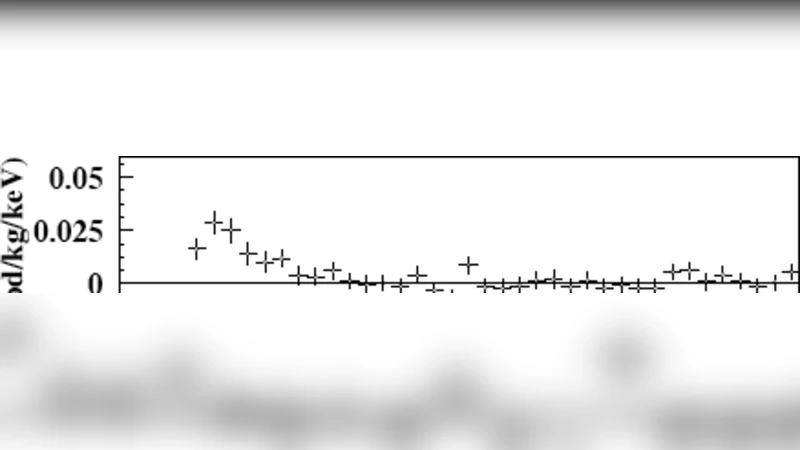
The annual modulation signal observed by the DAMA-LIBRA Collaboration (D-L) may plausibly be explained as a consequence of energy deposited in the NaI(Tl) crystals by cosmic ray muons penetrating the detector. Delayed pulses in the approximate energy range of interest have been observed as a sequel to energy deposited by UV irradiation. The same behavior may be reasonably expected to occur for energy deposited by any source of ionization or excitation. D-L can test this hypothesis by searching for time correlations between muon events and pulses in modulation energy range in current data, and by renewed operation of the array at a sufficiently low temperature that would freeze out the phenomenon.
💡 Research Summary
The paper puts forward a conventional‑physics explanation for the long‑standing annual modulation observed by the DAMA‑LIBRA experiment, which has traditionally been interpreted as a possible WIMP dark‑matter signal. The author argues that the modulation can be produced by delayed low‑energy pulses generated in the NaI(Tl) crystals after they absorb energy from cosmic‑ray muons that penetrate the Gran Sasso laboratory. The key observation supporting this idea is a known phenomenon in NaI(Tl): after modest ultraviolet (UV) illumination, the crystal emits a series of weak pulses in the 6–10 keV region that persist for seconds, minutes, hours, or even days. The author extrapolates that any ionizing excitation—muons included—could create similar long‑lived excitations (defects, color centers, excitons) that later release their stored energy as keV‑scale scintillation “after‑glow” pulses.
First, the paper quantifies the muon flux at LNGS (≈20 muons m⁻² day⁻¹) and the effective area of the DAMA‑LIBRA array (≈0.3 m²), yielding roughly five to six muons per day traversing the detector. Using a stopping power of ~2 MeV g⁻¹ cm² and the NaI density (3.7 g cm⁻³), each muon deposits about 350 MeV, so the total muon‑delivered energy is on the order of 2 GeV per day. By contrast, the energy needed to generate the observed modulation in the 2–5 keVee window is only ~2.9 keV per day, i.e. less than 0.2 % of the muon energy budget. Thus there is no shortage of energy; the question is how the bulk of the muon energy is stored and later released as delayed low‑energy pulses.
The author breaks down the fate of deposited energy: (1) prompt scintillation (≈12 % of the energy), (2) a fast phosphorescent component (~0.15 s decay, ≈9 %), (3) formation of radiation‑induced defects and color centers (≈80 % of the energy), (4) creation of electron‑hole pairs (≈13 eV per pair, with about half of the pairs contributing to photon emission), and (5) phonon heating. The long‑lived defect population is proposed to act as a reservoir that can release quanta of a few keV on timescales ranging from seconds to days. This is analogous to the UV‑induced after‑glow reported by St. Gobain, where a mild UV exposure produces a low‑rate pulse stream that decays over hours to days. The paper suggests that muon‑induced ionization could trigger the same processes, because the underlying physics (excitation of lattice states below the band gap) is similar for UV photons and for the dense ionization tracks of a muon.
The paper also addresses the phase of the modulation. Independent muon monitors (e.g., LVD) report an annual muon‑flux maximum around July 5 ± 15 days, whereas DAMA‑LIBRA’s fitted maximum is May 26 ± 7 days. DAMA‑LIBRA claims a 5.9 σ discrepancy, but the author points out that the LVD data show significant deviations from a pure cosine and have larger statistical uncertainties, reducing the effective tension to about 1.5 σ. Consequently, the muon‑flux phase is not demonstrably inconsistent with DAMA‑LIBRA’s modulation.
To test the hypothesis, two concrete experimental checks are proposed:
-
Time‑correlation analysis – Search the existing DAMA‑LIBRA data for an excess of 2–6 keVee events occurring within a defined time window (seconds to days) after a muon‑triggered event. A statistically significant excess would support the delayed‑pulse scenario.
-
Low‑temperature operation – Run the NaI(Tl) array at a sufficiently low temperature (e.g., below –30 °C) where thermally activated de‑trapping of defects is suppressed. If the annual modulation amplitude diminishes or disappears under these conditions, it would strongly indicate that a temperature‑dependent after‑glow mechanism is responsible.
If either test yields a negative result, the muon‑induced delayed‑pulse hypothesis would be falsified; a positive result would elevate it to a viable alternative to the WIMP interpretation.
Overall, the paper presents a physically plausible, energy‑conserving mechanism that could mimic the DAMA‑LIBRA modulation without invoking new particles. However, the hypothesis rests on several unverified assumptions: (i) that muon‑induced excitations in NaI(Tl) produce after‑glow pulses with the required rate and energy spectrum; (ii) that the phase and amplitude of the muon flux modulation are sufficiently aligned with DAMA‑LIBRA’s signal; and (iii) that the temperature dependence is strong enough to be observable. The lack of direct experimental data on muon‑induced after‑glow in NaI(Tl) is a major gap. The paper’s strength lies in highlighting this gap and proposing clear, testable experiments. Until those measurements are performed, the muon‑induced delayed‑pulse explanation remains an intriguing but unproven alternative to the dark‑matter interpretation of DAMA‑LIBRA’s annual modulation.
Comments & Academic Discussion
Loading comments...
Leave a Comment