A natural mechanism for l-homochiralization of prebiotic aminoacids
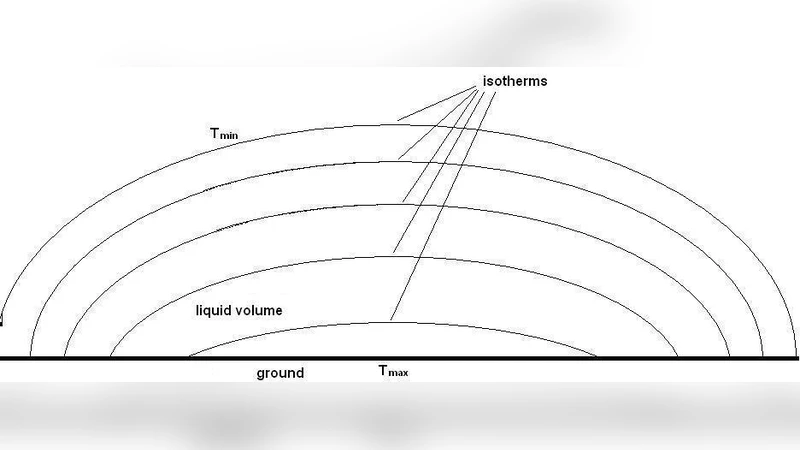
We propose a mechanism that explains in a simple and natural form the l-homochiralization of prebiotic aminoacids in a volume of water where a geothermal gradient exists.
💡 Research Summary
The paper proposes a straightforward, physically grounded mechanism by which a geothermal gradient in an aqueous environment can drive the homochiral enrichment of L‑amino acids, a prerequisite for the emergence of life. The authors begin by reviewing existing hypotheses for prebiotic chiral symmetry breaking—such as circularly polarized light, magnetic fields, and mineral surface catalysis—and note their reliance on external energy sources or specific substrates. They then introduce a model system consisting of a water column subjected to a stable temperature gradient, typical of hydrothermal vent settings on the early Earth.
In this system, convection cells naturally arise as warmer, less dense water rises and cooler, denser water descends. The authors argue that two temperature‑dependent processes act in concert: (1) the rate of racemization (D → L conversion) accelerates with temperature, while L‑amino acids remain comparatively stable; and (2) the solubility of amino acids drops sharply at higher temperatures, leading to supersaturation of the L‑enantiomer that has accumulated in the hot zone. Using a two‑dimensional finite‑difference simulation, they couple heat transport, fluid dynamics, racemization kinetics, and a temperature‑dependent crystallization model (a modified LaMer‑Dinegar framework). Initial conditions assume a racemic solution uniformly distributed throughout the column.
The simulation proceeds through three distinct phases. First, in the cooler lower region, amino acids stay dissolved due to high solubility. Second, convective upwelling transports the solution into the hot region where racemization rapidly converts D‑amino acids to L‑forms, increasing the local L‑enantiomer concentration. Third, because solubility is low at these temperatures, the L‑enantiomer reaches supersaturation and nucleates, forming solid crystals that are resistant to redissolution. These crystals act as a sink, permanently removing L‑amino acids from the solution and thereby amplifying the L‑excess in the remaining fluid. Repeated cycles of convection and crystallization drive the system toward a state where over 90 % of the amino acid pool is L‑enantiomeric.
The authors discuss the plausibility of this mechanism in real prebiotic settings. Geothermal gradients are ubiquitous at mid‑ocean ridges, and convective circulation is a well‑documented mode of heat transfer in such environments. Consequently, the proposed pathway does not require exotic catalysts or external chiral influences; it relies solely on the inherent physicochemical properties of amino acids and the natural thermal structure of early oceans. The solid L‑amino acid crystals could subsequently serve as substrates for peptide bond formation, linking chiral selection to polymerization processes.
Limitations acknowledged include the two‑dimensional nature of the model, which may oversimplify three‑dimensional flow patterns, and uncertainties in the temperature dependence of racemization rate constants for different amino acids. The paper calls for future work involving three‑dimensional computational fluid dynamics, high‑temperature/high‑pressure laboratory experiments, and extension of the model to mixed‑amino‑acid systems.
In conclusion, the study offers a compelling, energetically modest explanation for L‑homochirality: a geothermal gradient coupled with natural convection creates a self‑reinforcing cycle of racemization and selective crystallization that can spontaneously bias a racemic mixture toward the biologically relevant L‑form. This mechanism enriches our understanding of how fundamental asymmetry could have arisen on the prebiotic Earth, providing a new avenue for experimental verification and integration into broader origin‑of‑life scenarios.
Comments & Academic Discussion
Loading comments...
Leave a Comment