The impact of the air-fluorescence yield on the reconstructed shower parameters of ultra-high energy cosmic rays
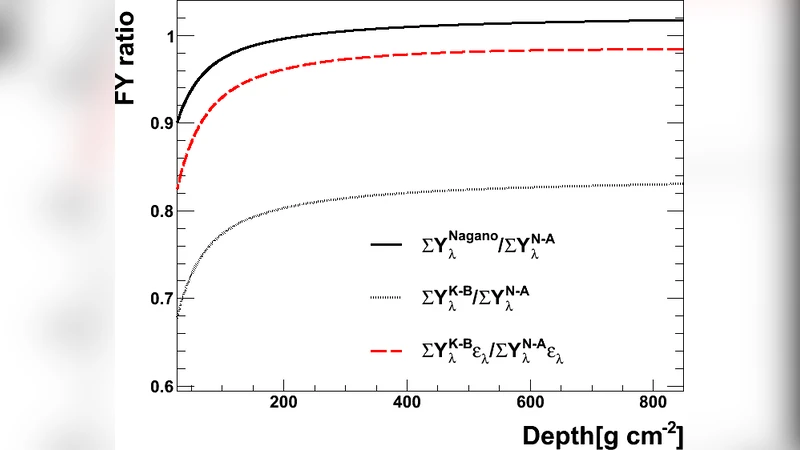
An accurate knowledge of the fluorescence yield and its dependence on atmospheric properties such as pressure, temperature or humidity is essential to obtain a reliable measurement of the primary energy of cosmic rays in experiments using the fluorescence technique. In this work, several sets of fluorescence yield data (i.e. absolute value and quenching parameters) are described and compared. A simple procedure to study the effect of the assumed fluorescence yield on the reconstructed shower parameters (energy and shower maximum depth) as a function of the primary features has been developed. As an application, the effect of water vapor and temperature dependence of the collisional cross section on the fluorescence yield and its impact on the reconstruction of primary energy and shower maximum depth has been studied.
💡 Research Summary
The paper addresses a fundamental source of systematic uncertainty in ultra‑high‑energy cosmic‑ray (UHECR) measurements that rely on the atmospheric fluorescence technique: the fluorescence yield (FY) and its dependence on ambient pressure, temperature, and humidity. The authors begin by reviewing the physical origin of FY – the number of ultraviolet photons emitted per unit energy deposited by an extensive air shower (EAS) in nitrogen – and emphasize that collisional quenching by oxygen, nitrogen, and especially water vapor reduces the observable photon count. They compile several published FY data sets (AIRFLY, Kakimoto, Nagano, etc.), extracting both the absolute yield at standard conditions and the quenching parameters (pressure‑dependent quenching coefficients, temperature exponents, and humidity coefficients).
A key contribution is the development of a simple, modular procedure that allows one to replace the FY model inside a standard reconstruction chain and quantify the resulting shifts in the primary energy (E) and the depth of shower maximum (Xmax). Two FY scenarios are defined: (1) a “standard” model that assumes a temperature‑independent yield and neglects water vapor, using a fixed absolute value of ~5.05 photons MeV⁻¹; (2) an “extended” model that incorporates a temperature‑dependent collisional cross‑section (σ ∝ Tⁿ with n ≈ –0.5) and a humidity quenching term proportional to the water‑vapor mixing ratio. Both models are implemented in a CORSIKA‑based Monte‑Carlo simulation covering a broad range of primaries (proton to iron), energies (10¹⁸–10²⁰ eV), and zenith angles (0°–60°).
The comparative analysis reveals that the choice of FY model produces a modest but non‑negligible bias in reconstructed energy: on average a 1–2 % shift, rising to up to 5 % for the highest energies and for showers developing in humid conditions (>30 % relative humidity). The bias originates from two mechanisms: (i) water‑vapor quenching removes a few percent of the emitted photons, and (ii) higher temperatures increase the collisional cross‑section, reducing the effective yield. For Xmax, the impact is larger in relative terms: the standard model underestimates Xmax by about 3 g cm⁻² on average, with deviations up to 10–12 g cm⁻² for high‑altitude (≥12 km) showers where temperature and humidity gradients are strongest. Such shifts are comparable to the statistical resolution of modern fluorescence detectors and can bias composition studies (e.g., proton‑iron discrimination).
The authors quantify the contribution of FY uncertainties to the overall systematic error budget, finding that FY accounts for roughly 30 % of the total ~10 % systematic uncertainty in energy and Xmax. They argue that real‑time atmospheric monitoring (lidar, radiosonde, microwave radiometers) combined with in‑situ calibration sources (laser, radioactive isotopes) can dramatically reduce this component. Moreover, they advocate for an international standardization of FY parameters and the creation of a shared database that includes temperature‑dependent cross‑sections and humidity coefficients, enabling consistent cross‑experiment comparisons.
In conclusion, the study demonstrates that accurate modeling of the fluorescence yield—including its temperature dependence and water‑vapor quenching—is essential for precise reconstruction of UHECR shower parameters. Neglecting these effects leads to systematic biases that are comparable to, or larger than, the statistical uncertainties of current experiments. Implementing the extended FY model and improving atmospheric monitoring are therefore critical steps toward reducing the dominant systematic uncertainties in the measurement of cosmic‑ray energy spectra and mass composition.
Comments & Academic Discussion
Loading comments...
Leave a Comment