SN 2008iy: An Unusual Type IIn Supernova with an Enduring 400 Day Rise Time
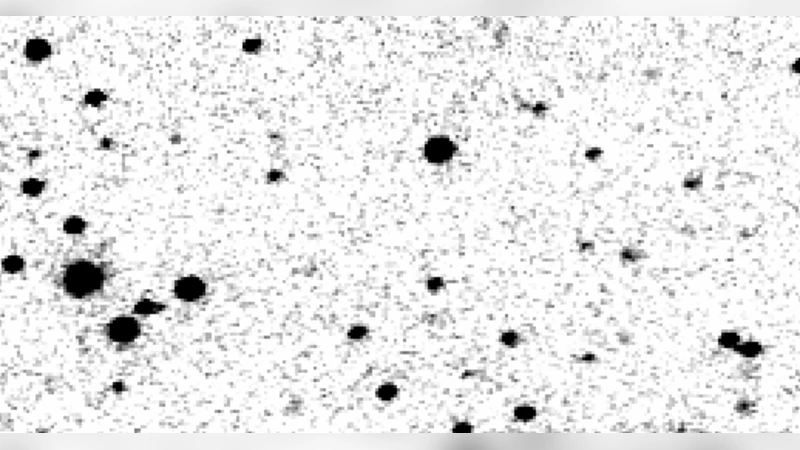
We present spectroscopic and photometric observations of the Type IIn supernova (SN) 2008iy. SN 2008iy showed an unprecedentedly long rise time of ~400 days, making it the first SN to take significantly longer than 100 days to reach peak optical luminosity. The peak absolute magnitude of SN 2008iy was M_r ~ -19.1 mag, and the total radiated energy over the first ~700 days was ~2 x 10^50 erg. Spectroscopically, SN 2008iy is very similar to the Type IIn SN 1988Z at late times, and, like SN 1988Z, it is a luminous X-ray source (both supernovae had an X-ray luminosity L_ X > 10^41 erg/s). The Halpha emission profile of SN 2008iy shows a narrow P Cygni absorption component, implying a pre-SN wind speed of ~100 km/s. We argue that the luminosity of SN 2008iy is powered via the interaction of the SN ejecta with a dense, clumpy circumstellar medium. The ~400 day rise time can be understood if the number density of clumps increases with distance over a radius ~1.7 x 10^16 cm from the progenitor. This scenario is possible if the progenitor experienced an episodic phase of enhanced mass-loss < 1 century prior to explosion or the progenitor wind speed increased during the decades before core collapse. We favour the former scenario, which is reminiscent of the eruptive mass-loss episodes observed for luminous blue variable (LBV) stars. The progenitor wind speed and increased mass-loss rates serve as further evidence that at least some, and perhaps all, Type IIn supernovae experience LBV-like eruptions shortly before core collapse. We also discuss the host galaxy of SN 2008iy, a subluminous dwarf galaxy, and offer a few reasons why the recent suggestion that unusual, luminous supernovae preferentially occur in dwarf galaxies may be the result of observational biases.
💡 Research Summary
The paper presents an extensive observational campaign of the Type IIn supernova SN 2008iy, focusing on its unprecedentedly long optical rise time of roughly 400 days. Photometric monitoring from discovery through ~700 days after explosion shows a very gradual increase in luminosity, reaching a peak absolute magnitude of M_r ≈ ‑19.1 mag. The total radiated energy over the first 700 days is estimated at ~2 × 10^50 erg, placing SN 2008iy among the most energetic IIn events.
Spectroscopic data obtained at several epochs (≈ 100, 300, 500, and 700 days) reveal classic IIn signatures: a broad Hα component with a full width at half maximum of ~2000 km s⁻¹, superimposed on a narrow P Cygni absorption indicating a pre‑explosion wind speed of ~100 km s⁻¹. The overall line profile, as well as the late‑time spectral evolution, is strikingly similar to that of SN 1988Z, a well‑studied IIn that remained luminous for years.
X‑ray observations with Chandra and Swift detect a persistent, high‑luminosity source (L_X > 10^41 erg s⁻¹). The X‑ray spectrum is dominated by thermal bremsstrahlung, implying a hot plasma generated by the shock interaction between the supernova ejecta and a dense circumstellar medium (CSM). Modeling the X‑ray emission suggests an average CSM density of order 10^7 cm⁻³ at radii of ~10^16 cm.
The authors argue that the extraordinary 400‑day rise cannot be powered by radioactive decay or standard diffusion of shock‑deposited energy. Instead, they propose that the luminosity is sustained by continuous conversion of kinetic energy into radiation as the ejecta plow into a clumpy, radially increasing CSM. In this picture, the number density of dense clumps rises with distance out to ~1.7 × 10^16 cm, causing the shock to encounter progressively more material and thereby lengthening the rise time.
Two scenarios are explored to generate such a CSM structure. The favored one involves an episodic, extreme mass‑loss episode occurring less than a century before core collapse, with mass‑loss rates of 10⁻³–10⁻² M_⊙ yr⁻¹. This would naturally create a shell of clumpy material whose density grows outward. An alternative hypothesis is a gradual increase in the progenitor wind speed over several decades, which would also steepen the density profile but requires fine‑tuned wind acceleration. The authors deem the eruptive mass‑loss scenario more plausible, especially because the inferred wind speed (~100 km s⁻¹) and the magnitude of the mass loss resemble those observed in luminous blue variable (LBV) eruptions.
The host galaxy is identified as a sub‑luminous dwarf (M_B ≈ ‑16 mag) with low metallicity, a type of environment that has been linked to other luminous transients. The paper cautions that the apparent preference of unusually bright supernovae for dwarf hosts may be amplified by selection effects: low‑luminosity galaxies are under‑represented in surveys, so only the most luminous events are readily discovered in them.
In summary, SN 2008iy provides a rare, well‑documented case of a supernova whose light curve is dominated by prolonged interaction with a dense, clumpy CSM. The data support a picture in which the progenitor underwent an LBV‑like eruptive phase shortly before collapse, shedding large amounts of mass that later powered the supernova’s extraordinary rise and sustained X‑ray emission. This work strengthens the emerging view that many, perhaps most, Type IIn supernovae are the final explosions of massive stars that experience violent, episodic mass‑loss episodes in the centuries leading up to core collapse.
Comments & Academic Discussion
Loading comments...
Leave a Comment