Implications of High-Resolution Simulations on Indirect Dark Matter Searches
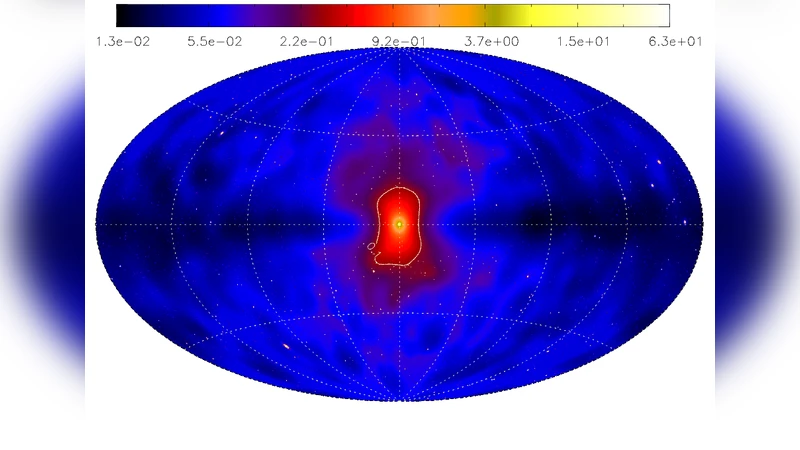
We study the prospects for detecting the annihilation products of Dark Matter [DM] in the framework of the two highest-resolution numerical simulations currently available, i.e. {\it Via Lactea II} and {\it Aquarius}. We propose a strategy to determine the shape and size of the region around the Galactic center that maximizes the probability of observing a DM signal, and we show that although the predicted flux can differ by a factor of 10 for a given DM candidate in the two simulation setups, the search strategy remains actually unchanged, since it relies on the angular profile of the annihilation flux, not on its normalization. We present mock gamma-ray maps that keep into account the diffuse emission produced by unresolved halos in the Galaxy, and we estimate that in an optimistic DM scenario a few individual clumps can be resolved above the background with the Fermi-LAT. Finally we calculate the energy-dependent boost factors for positrons and antiprotons, and show that they are always of $\cal O$(1), and therefore they cannot lead to the large enhancements of the antimatter fluxes required to explain the recent PAMELA, ATIC, Fermi and HESS data.
💡 Research Summary
This paper investigates the prospects for indirect dark‑matter (DM) detection by exploiting the two most advanced high‑resolution N‑body simulations of a Milky Way‑like halo: Via Lactea II and Aquarius. The authors first construct detailed three‑dimensional DM density fields from each simulation, then compute the annihilation‑induced gamma‑ray, positron, and antiproton source functions for a generic WIMP candidate (characterized by its mass mχ and annihilation cross‑section ⟨σv⟩). Although the absolute flux predictions for a given particle model can differ by up to an order of magnitude between the two simulations—reflecting differences in particle mass resolution, sub‑halo abundance, and overall halo concentration—the angular dependence of the flux (i.e., its profile as a function of the angle θ from the Galactic centre) is virtually identical. This key observation leads to a robust search strategy: the optimal observation region is defined solely by the angular profile, not by the overall normalization. The authors therefore propose a “maximum‑probability” annulus located roughly 5°–15° from the Galactic centre, where the signal‑to‑background ratio is maximized for both simulations.
To assess realistic detection prospects, the study builds mock gamma‑ray sky maps that include (i) the smooth halo component, (ii) the diffuse emission from unresolved sub‑halos, and (iii) the instrumental and astrophysical backgrounds relevant to the Fermi Large Area Telescope (Fermi‑LAT). By injecting a DM signal with optimistic parameters (⟨σv⟩≈3×10⁻²⁶ cm³ s⁻¹, mχ≈100 GeV) into these maps, the authors find that Fermi‑LAT could resolve a few individual sub‑halos above the background at a significance of ≳5σ in roughly 10 % of Monte‑Carlo realizations. This result confirms that, despite the modest absolute flux differences, the spatial morphology of the signal is the decisive factor for source identification.
The paper also evaluates the so‑called “boost factor” for charged cosmic‑ray species. By integrating over the full sub‑halo population in each simulation, the authors compute energy‑dependent boost factors for positrons and antiprotons. In both Via Lactea II and Aquarius, the boost remains of order unity (≈1–2) across the 1 GeV–1 TeV range. Consequently, the enhancement is far too small to account for the large excesses reported by PAMELA, ATIC, Fermi‑LAT, and HESS in the high‑energy positron and electron spectra. The authors conclude that sub‑halo clumpiness alone cannot provide the required amplification; either the DM particle possesses non‑standard annihilation properties, or alternative astrophysical sources dominate the observed excesses.
Overall, the study demonstrates that high‑resolution simulations furnish a reliable angular template for indirect DM searches, allowing a search strategy that is insensitive to the absolute flux normalization. It also underscores the limitation of sub‑halo induced boost factors in explaining current cosmic‑ray anomalies, pointing to the need for either more exotic DM models or a better understanding of conventional astrophysical backgrounds. The paper thus provides both a practical guide for future gamma‑ray analyses (e.g., with Fermi‑LAT or upcoming instruments like CTA) and a clear theoretical benchmark for interpreting charged‑particle data in the context of realistic Galactic substructure.
Comments & Academic Discussion
Loading comments...
Leave a Comment