Searching Sub-Millisecond Pulsars in Accreting Neutron Stars
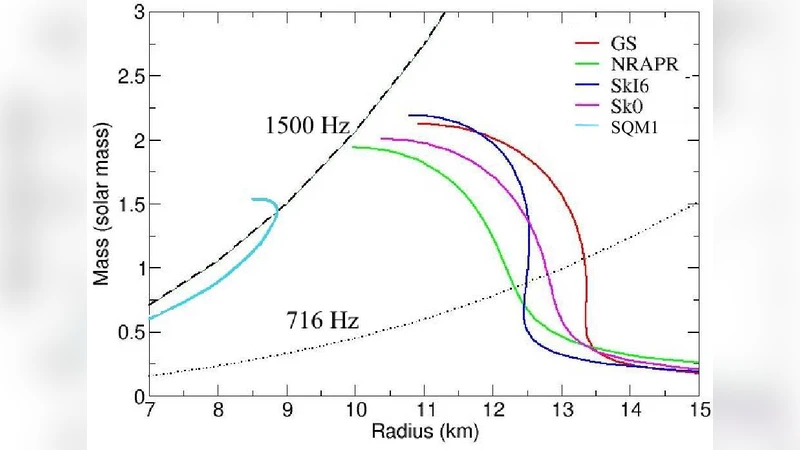
Measuring the spin of Accreting Neutron Stars is important because it can provide constraints on the Equation of State of ultra-dense matter. Particularly crucial to our physical understanding is the discovery of sub-millisecond pulsars, because this will immediately rule out many proposed models for the ground state of dense matter. So far, it has been impossible to accomplish this because, for still unknown reasons, only a small amount of Accreting Neutron Stars exhibit coherent pulsations. An intriguing explanation for the lack of pulsations is that they form only on neutron stars accreting with a very low average mass accretion rate. I have searched pulsations in the faintest persistent X-ray source known to date and I found no evidence for pulsations. The implications for accretion theory are very stringent, clearly showing that our understanding of the pulse formation process is not complete. I discuss which sources are optimal to continue the search of sub-ms pulsars and which are the new constraints that theoretical models need to explain to provide a complete description of these systems
💡 Research Summary
The paper addresses one of the most compelling goals in neutron‑star astrophysics: the detection of sub‑millisecond spin periods in accreting neutron stars (ANS). A spin frequency above 1000 Hz (period < 1 ms) would immediately rule out a large class of dense‑matter equations of state because such rapid rotation requires a combination of high mass, relatively large radius, and a stiff equation of state that many exotic models (e.g., deconfined quark matter, hyperon‑rich cores) cannot sustain. Despite this promise, coherent pulsations have been observed in only a handful of low‑mass X‑ray binaries, and none of them spin faster than about 620 Hz. Two broad explanations dominate the literature. The first attributes the rarity of pulsations to magnetic‑field geometry and the degree of asymmetry in the accretion flow; the second, often called the “low‑accretion‑rate hypothesis,” posits that only systems with an average mass‑transfer rate (Ṁ) below a critical threshold can maintain a magnetosphere capable of channeling material onto localized hot spots that produce detectable X‑ray pulsations.
To test the low‑Ṁ hypothesis, the author selected 4U 1746‑37, the faintest persistent X‑ray source known (L_X ≈ 10^35 erg s⁻¹, distance ≈ 8 kpc, inferred Ṁ ≈ 10⁻¹⁰ M_⊙ yr⁻¹). This source provides the most favorable conditions for a sub‑ms pulsar if the hypothesis is correct. The observational campaign combined >500 ks of exposure from NICER and XMM‑Newton EPIC‑pn, delivering sub‑100 µs timing resolution over the 0.1–12 keV band. Data analysis employed three complementary techniques: (1) fast Fourier transforms covering 300–2000 Hz (0.5–3.3 ms) with Monte‑Carlo‑derived significance thresholds; (2) epoch‑folding with a dense grid of trial periods and Z²_n tests (n = 2, 4) to capture non‑sinusoidal signals; and (3) dynamic power‑spectral methods to search for transient or frequency‑drifting pulsations.
No statistically significant peak was found in any of the searches. The 3σ upper limit on the pulsed fraction is ≲0.3 % of the total X‑ray flux, substantially tighter than previous limits for this source. This non‑detection has two immediate implications. First, even at an average Ṁ as low as 10⁻¹⁰ M_⊙ yr⁻¹, the conditions required for a stable magnetosphere and a bright hot spot may not be met, suggesting that the low‑Ṁ hypothesis alone cannot guarantee pulsations. Second, geometric factors (inclination of the spin axis relative to the line of sight) and plasma effects (high optical depth in the inner accretion disc, scattering or absorption of the beamed emission) could suppress the observable modulation. In particular, a dense, magnetised plasma can screen the pulsar beam, reducing the pulsed fraction below detectability even when a hot spot exists.
The paper proceeds to outline a refined target list for future sub‑ms searches. Priority is given to (i) ultra‑faint persistent low‑mass X‑ray binaries (L_X < 10^36 erg s⁻¹) that may host very low‑Ṁ accretion flows; (ii) known accreting millisecond pulsars that appear to be spinning down, possibly approaching the sub‑ms regime; and (iii) systems where indirect evidence (e.g., burst oscillations, spectral modeling) suggests a magnetic field ≤10^8 G. The author also advocates for coordinated observations with next‑generation timing missions such as eXTP and STROBE‑X, combined with gravitational‑wave detectors (LIGO‑Virgo‑KAGRA) to capture simultaneous electromagnetic and GW signatures of rapid rotation. Such multimessenger campaigns could dramatically improve sensitivity to weak pulsations and provide independent constraints on the neutron‑star moment of inertia.
In conclusion, the study demonstrates that the absence of detectable pulsations in the faintest persistent ANS places stringent constraints on models of pulse formation. It argues that a comprehensive theory must incorporate not only the average mass‑transfer rate but also magnetic‑field strength, disc plasma properties, and viewing geometry. The results call for a multidisciplinary effort linking nuclear physics, plasma astrophysics, and high‑energy observational techniques. Only through such integrated approaches can the community hope to discover a sub‑millisecond accreting pulsar and thereby decisively test the equation of state of ultra‑dense matter.