A laser gyroscope system to detect the Gravito-Magnetic effect on Earth
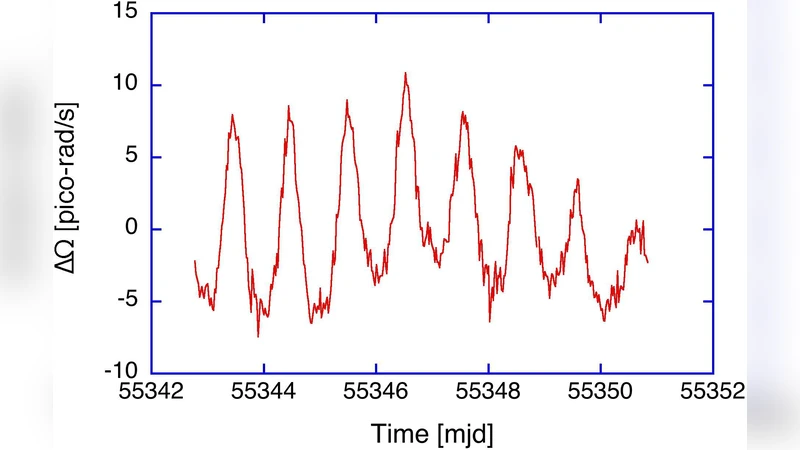
Large scale square ring laser gyros with a length of four meters on each side are approaching a sensitivity of 1x10^-11 rad/s/sqrt(Hz). This is about the regime required to measure the gravitomagnetic effect (Lense Thirring) of the Earth. For an ensemble of linearly independent gyros each measurement signal depends upon the orientation of each single axis gyro with respect to the rotational axis of the Earth. Therefore at least 3 gyros are necessary to reconstruct the complete angular orientation of the apparatus. In general, the setup consists of several laser gyroscopes (we would prefer more than 3 for sufficient redundancy), rigidly referenced to each other. Adding more gyros for one plane of observation provides a cross-check against intra-system biases and furthermore has the advantage of improving the signal to noise ratio by the square root of the number of gyros. In this paper we analyze a system of two pairs of identical gyros (twins) with a slightly different orientation with respect to the Earth axis. The twin gyro configuration has several interesting properties. The relative angle can be controlled and provides a useful null measurement. A quadruple twin system could reach a 1% sensitivity after 3:2 years of data, provided each square ring has 6 m length on a side, the system is shot noise limited and there is no source for 1/f- noise.
💡 Research Summary
The paper proposes a terrestrial experiment to directly measure the Earth’s gravitomagnetic (Lense‑Thirring) effect using large‑scale square ring‑laser gyroscopes (RLGs). Recent advances have brought 4‑meter‑side RLGs to a rotation‑rate sensitivity of about 1 × 10⁻¹¹ rad s⁻¹ Hz⁻¹ᐟ², which is within an order of magnitude of the ~10⁻¹⁴ rad s⁻¹ signal expected from frame‑dragging at the Earth’s surface. A single gyroscope cannot determine the full three‑dimensional rotation vector, nor can it eliminate systematic biases. Therefore the authors argue for an array of at least three mutually orthogonal RLGs, preferably more for redundancy, rigidly mounted together.
The core of the design is a “twin” configuration: two identical RLGs are placed with a small relative tilt Δθ, and two such pairs are combined to form a quadruple‑twin system. Because the two gyros in each twin experience essentially the same Earth‑rotation signal, any common‑mode systematic error (e.g., optical path length drift, temperature‑induced mechanical deformation) cancels when the differential signal is taken. The residual differential output is then proportional almost exclusively to the gravitomagnetic contribution, providing a powerful null measurement that suppresses intra‑system biases.
Noise analysis shows that, under shot‑noise‑limited operation, the sensitivity of a single 6‑meter‑side square ring is still around 1 × 10⁻¹¹ rad s⁻¹ Hz⁻¹ᐟ². By averaging N independent gyroscopes the signal‑to‑noise ratio improves as √N; with four gyros the improvement factor is two. Consequently, the authors estimate that a 6‑m twin‑quadruple system, operating without any 1/f (flicker) noise and with perfect environmental isolation, could achieve a 1 % measurement of the Lense‑Thirring precession after roughly 3.5 years of continuous data acquisition (≈1.1 × 10⁸ seconds). This timescale is derived from the expected signal amplitude, the combined noise floor, and the √N averaging benefit.
The paper also discusses practical challenges. Low‑frequency noise sources such as seismic vibrations, temperature drifts, and magnetic field fluctuations can dominate over shot noise on long integration times. The authors propose mitigation strategies: vibration‑isolated platforms, temperature‑controlled enclosures, magnetic shielding, and advanced data‑processing techniques (Kalman filtering, Bayesian inference) to model and subtract residual systematics. They stress that the twin geometry itself provides an internal consistency check, allowing real‑time monitoring of systematic drifts.
Finally, the authors outline future work: (1) developing ultra‑low‑frequency noise suppression technologies, possibly involving cryogenic operation; (2) improving laser power and detector quantum efficiency to push the shot‑noise limit lower; (3) expanding the array to more than four gyros to further increase √N gains and to enable spatial correlation studies that could separate true gravitomagnetic signals from local disturbances. If these technical hurdles are overcome, the ring‑laser gyroscope platform could become a standard laboratory instrument for testing general‑relativistic frame‑dragging, complementing satellite missions such as Gravity Probe B and LAGEOS, and opening new avenues for precision gravimetry and fundamental physics on Earth.
Comments & Academic Discussion
Loading comments...
Leave a Comment