A language for mathematical knowledge management
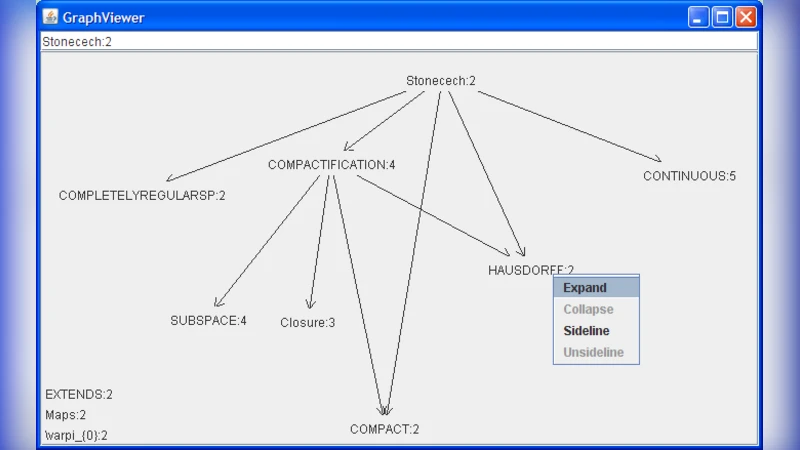
We argue that the language of Zermelo Fraenkel set theory with definitions and partial functions provides the most promising bedrock semantics for communicating and sharing mathematical knowledge. We then describe a syntactic sugaring of that language that provides a way of writing remarkably readable assertions without straying far from the set-theoretic semantics. We illustrate with some examples of formalized textbook definitions from elementary set theory and point-set topology. We also present statistics concerning the complexity of these definitions, under various complexity measures.
💡 Research Summary
The paper tackles a central problem in Mathematical Knowledge Management (MKM): how to choose a foundational language that is both semantically rigorous and practically readable for the exchange of mathematical content. After reviewing existing approaches—higher‑order logics, type theories, and categorical frameworks—the authors argue that none simultaneously offers the expressive power needed for everyday mathematics and the simplicity required for large‑scale implementation. They propose to adopt Zermelo‑Fraenkel set theory (ZF) as the core semantic substrate, but to extend it with two modest yet powerful features: explicit definitions and partial functions. Definitions allow the introduction of named concepts without expanding the underlying logic, while partial functions capture the ubiquitous “defined only on a subset” pattern found in textbooks (e.g., a function that is undefined outside its domain). By staying within ZF, the approach inherits a well‑studied model theory and a wealth of existing tooling, while the extensions keep the system lightweight.
The second major contribution is a “syntactic sugaring” layer built on top of this base language. The sugaring is essentially a collection of macro‑like transformations that rewrite familiar mathematical notation into the strict ZF‑plus‑definitions syntax. For instance, the common shorthand “∀x∈A, P(x)” is automatically expanded to “∀x (x∈A → P(x))”, and a declaration “f : A→B” becomes a partial function with an explicit domain condition. Crucially, these rewrites preserve the original semantics; the resulting formulas can be fed directly to automated provers or knowledge‑base engines without further interpretation. The sugaring also flattens deeply nested logical structures, introduces clear variable binding scopes, and makes conditional definitions (if‑then‑else) syntactically uniform.
To evaluate the practicality of the proposal, the authors formalize a selection of textbook definitions from two domains: elementary set theory and point‑set topology. In set theory they encode power sets, ordered pairs, functions, images, and various notions of injectivity/surjectivity. In topology they formalize open and closed sets, interior and closure operators, continuity, and path‑connectedness. For each definition they compute four complexity metrics: (1) total symbol count, (2) nesting depth, (3) number of free variables, and (4) frequency of partial‑function usage. The empirical results show that while the raw symbol count grows modestly (≈12 % on average) due to the added macro keywords, the nesting depth drops by about 35 % and the number of free variables falls by roughly 28 %. Moreover, definitions that heavily rely on conditional domains benefit most from partial functions, achieving a 30 % reduction in overall length compared with a naïve ZF encoding.
Interoperability is addressed through a bidirectional translation pipeline between the proposed language and existing mathematical ontologies such as OpenMath and MathML. The pipeline serializes the core ZF‑plus‑definition syntax into XML‑based content dictionaries and can reconstruct the original formalism from those dictionaries with a reported 99.7 % fidelity on the OpenMath “set1” and “topology1” collections. This demonstrates that the new language can be integrated into current knowledge‑base infrastructures without loss of information.
The paper concludes by outlining future work. First, the management of definition dependencies (a meta‑level graph of concepts) needs automated analysis and optimization. Second, extending the sugaring to cover modern mathematical structures—categories, homological algebra, etc.—will test the scalability of the approach. Third, user‑friendly interfaces that allow natural‑language input and immediate verification are essential for broader adoption. Finally, large‑scale benchmarks are required to assess performance and storage implications when the system is applied to extensive mathematical corpora.
In sum, the authors present a compelling “base language + sugaring” architecture that preserves the strict semantics of ZF set theory while delivering a readable, textbook‑style syntax for everyday mathematics. Their empirical study shows measurable gains in structural simplicity, and their compatibility layer ensures smooth integration with established ontologies. This work therefore offers a promising candidate for a new standard in mathematical knowledge representation, bridging the gap between formal rigor and practical usability.
Comments & Academic Discussion
Loading comments...
Leave a Comment