The Atacama Cosmology Telescope (ACT): Beam Profiles and First SZ Cluster Maps
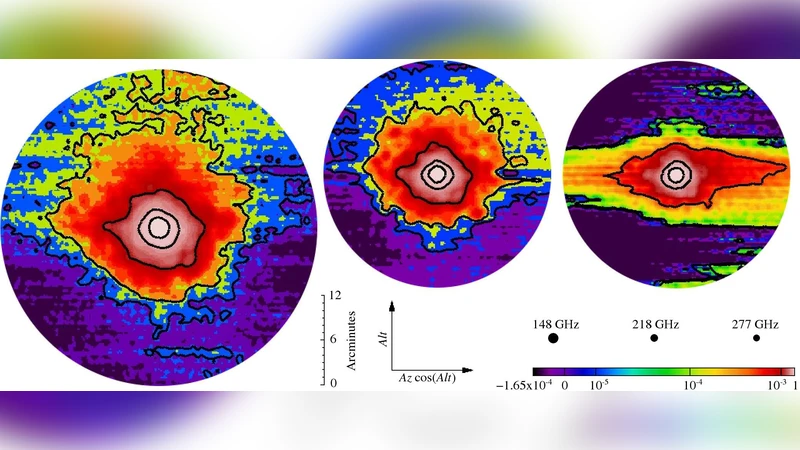
The Atacama Cosmology Telescope (ACT) is currently observing the cosmic microwave background with arcminute resolution at 148 GHz, 218 GHz, and 277 GHz. In this paper, we present ACT’s first results. Data have been analyzed using a maximum-likelihood map-making method which uses B-splines to model and remove the atmospheric signal. It has been used to make high-precision beam maps from which we determine the experiment’s window functions. This beam information directly impacts all subsequent analyses of the data. We also used the method to map a sample of galaxy clusters via the Sunyaev-Zel’dovich (SZ) effect, and show five clusters previously detected with X-ray or SZ observations. We provide integrated Compton-y measurements for each cluster. Of particular interest is our detection of the z = 0.44 component of A3128 and our current non-detection of the low-redshift part, providing strong evidence that the further cluster is more massive as suggested by X-ray measurements. This is a compelling example of the redshift-independent mass selection of the SZ effect.
💡 Research Summary
The Atacama Cosmology Telescope (ACT) is a ground‑based millimeter‑wave observatory located on the high plateau of the Atacama Desert, designed to map the cosmic microwave background (CMB) with arcminute resolution at three frequency bands: 148 GHz, 218 GHz, and 277 GHz. This paper presents ACT’s first scientific results, focusing on two core achievements: (1) the precise characterization of the instrument’s beam profiles and the derivation of the corresponding window functions, and (2) the production of the inaugural Sunyaev‑Zel’dovich (SZ) effect maps of a sample of galaxy clusters.
Data processing begins with a maximum‑likelihood map‑making algorithm that employs B‑splines to model and subtract atmospheric fluctuations, which dominate ground‑based millimeter observations. By fitting a smooth spline model to the time‑ordered data (TOD) simultaneously with the sky signal, the method preserves the underlying CMB and SZ signals while efficiently removing low‑frequency atmospheric noise. This approach yields higher signal‑to‑noise maps than conventional high‑pass filtering and minimizes beam distortion introduced during data reduction.
Beam characterization is performed using frequent observations of bright, compact celestial calibrators (primarily planets). Two‑dimensional beam maps are generated for each frequency band, and their Fourier transforms provide the ℓ‑space window functions (Wℓ) needed to correct the CMB power spectrum for beam smoothing. The measured full‑width at half‑maximum (FWHM) values are ≈1.4′ at 148 GHz and ≈1.0′ at 218 GHz, representing roughly a 30 % improvement over earlier experiments. The authors present a full covariance matrix that incorporates beam asymmetry, measurement uncertainties, and residual atmospheric modeling errors, thereby enabling robust cosmological parameter estimation from ACT data.
The SZ analysis leverages the same high‑fidelity maps and beam corrections. Five galaxy clusters previously identified through X‑ray or earlier SZ observations are targeted. For each cluster, the authors construct filtered maps at 148 GHz and 218 GHz, extract the SZ decrement/increment, and compute the integrated Compton‑y parameter (Y₀₅₀₀), which directly measures the line‑of‑sight integral of the electron pressure. The results are consistent with expectations from X‑ray derived masses, confirming the reliability of ACT’s SZ measurements.
A particularly noteworthy case is the double‑component system A3128. ACT detects a strong SZ signal from the high‑redshift (z = 0.44) component, while the low‑redshift component remains undetected. This differential detection provides compelling evidence that the high‑z component is significantly more massive, corroborating earlier X‑ray indications. The finding exemplifies the redshift‑independent nature of SZ selection, reinforcing the technique’s utility for constructing mass‑limited cluster samples.
Systematic uncertainties are thoroughly examined. The authors quantify the impact of B‑spline parameter choices (node spacing, spline order) on map fidelity, assess beam‑related biases, and simulate the propagation of atmospheric modeling errors into the final Y‑parameter estimates. Cross‑validation with simulated skies demonstrates that the adopted pipeline yields unbiased SZ fluxes and reliable beam window functions.
In summary, this paper delivers a comprehensive description of ACT’s data‑processing pipeline, presents high‑precision beam measurements essential for CMB power‑spectrum analysis, and showcases the telescope’s capability to produce scientifically valuable SZ cluster maps. The integrated Compton‑y measurements and the successful detection of the high‑z component of A3128 illustrate ACT’s potential to contribute significantly to both cosmology (through improved CMB constraints) and cluster astrophysics (through mass‑selected SZ surveys). The methodologies and results set a solid foundation for forthcoming ACTPol and Advanced ACT (AdvACT) campaigns, which will expand sky coverage, add polarization sensitivity, and further refine the instrument’s systematic control.