On the Theoretical Possibility of Quantum Visual Information Transfer to the Human Brain
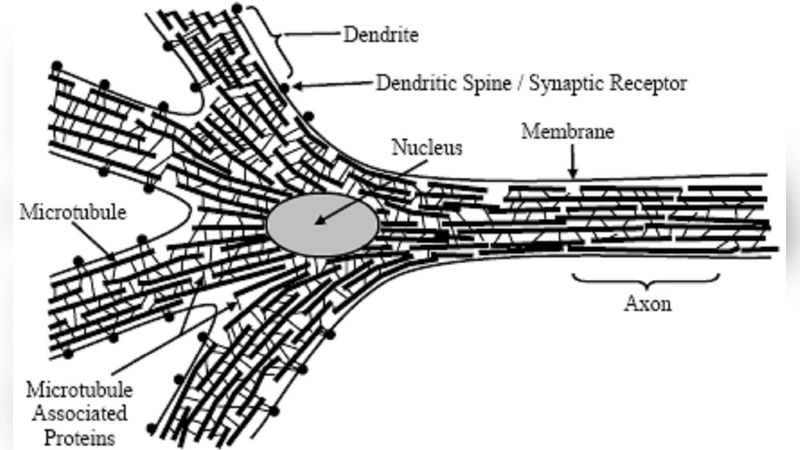
The feasibility of wave function collapse in the human brain has been the subject of vigorous scientific debates since the advent of quantum theory. Scientists like Von Neumann, London, Bauer and Wigner (initially) believed that wave function collapse occurs in the brain or is caused by the mind of the observer. It is a legitimate question to ask how human brain can receive subtle external visual quantum information intact when it must pass through very noisy and complex pathways from the eye to the brain? There are several approaches to investigate information processing in the brain, each of which presents a different set of conclusions. Penrose and Hameroff have hypothesized that there is quantum information processing inside the human brain whose material substrate involves microtubules and consciousness is the result of a collective wavefunction collapse occurring in these structures. Conversely, Tegmark stated that owing to thermal decoherence there cannot be any quantum processing in neurons of the brain and processing in the brain must be classical for cognitive processes. However, Rosa and Faber presented an argument for a middle way which shows that none of the previous authors are completely right and despite the presence of decoherence, it is still possible to consider the brain to be a quantum system. Additionally, Thaheld, has concluded that quantum states of photons do collapse in the human eye and there is no possibility for collapse of visual quantum states in the brain and thus there is no possibility for the quantum state reduction in the brain. In this paper we conclude that if we accept the main essence of the above approaches taken together, each of them can provide a different part of a teleportation mechanism.
💡 Research Summary
The paper tackles the long‑standing question of whether quantum visual information can survive the noisy, complex pathway from the eye to the human brain and be processed in a quantum‑coherent manner. It begins by reviewing the historical “observer‑induced collapse” viewpoint of von Neumann, London, Bauer and Wigner, who argued that the act of conscious observation in the brain causes wave‑function reduction. Under this view, photons are already collapsed into classical neural signals by the time they leave the retina. The authors then contrast this with the Penrose‑Hameroff “Orch‑OR” model, which posits that microtubules inside neurons can maintain quantum coherence long enough for collective wave‑function collapse to generate consciousness. The Orch‑OR hypothesis relies on the existence of protected quantum states (the so‑called “orchestrated objective reductions”) within the tubulin lattice.
Tegmark’s counter‑argument is presented next: using realistic estimates of thermal noise, he calculates decoherence times for microtubules on the order of 10⁻¹³ s, far too short for any functional quantum computation. Consequently, Tegmark concludes that brain processing must be classical. Rosa and Faber are then introduced as a “middle‑way” perspective. They argue that decoherence does not necessarily imply complete collapse; instead, a mixed quantum‑classical regime can persist, allowing limited quantum information to coexist with classical neural activity. Their formalism treats the environment as a quantum channel that partially preserves coherence.
Thaheld’s experimental work is also discussed. He demonstrates that photon absorption by retinal photoreceptors leads to immediate wave‑function collapse, effectively destroying any quantum superposition before the signal reaches higher visual centers. According to Thaheld, there is no room for additional quantum reductions in the brain, and thus no quantum processing of visual information beyond the retina.
Synthesizing these divergent positions, the authors propose a speculative “quantum teleportation” mechanism for visual information transfer. In this scenario, (1) the photon’s quantum state is only partially collapsed in the retina, leaving a residual entangled component that couples to the microtubular network; (2) this residual component is transmitted through a quantum channel formed by the microtubules, co‑existing with the classical spike‑train that propagates through the optic nerve; (3) at downstream cortical sites, the classical and quantum streams are recombined, effectively “teleporting” the original quantum information into the conscious percept. The paper argues that each of the earlier models supplies a piece of this composite mechanism: the observer‑induced collapse supplies the classical backbone, Orch‑OR supplies the microtubular quantum substrate, Tegmark’s decoherence analysis defines the limits of coherence, Rosa‑Faber’s mixed‑state formalism provides the mathematical bridge, and Thaheld’s retinal collapse defines the initial boundary condition.
The authors acknowledge several critical limitations. First, direct experimental evidence for sustained microtubular coherence in vivo remains lacking; current measurements are indirect and heavily model‑dependent. Second, the extent to which retinal collapse truly eliminates all entanglement is uncertain; subtle residual coherence could survive, but quantifying it would require ultra‑high‑resolution photon‑biophysics. Third, the brain’s temperature (~37 °C) and aqueous environment pose severe constraints on any non‑local quantum channel, making the proposed teleportation physically demanding. Fourth, the mixed‑state “middle‑way” model, while mathematically plausible, has not yet been mapped onto concrete neurobiological circuitry or validated with electrophysiological data.
In conclusion, the paper offers an imaginative synthesis that unites classical and quantum perspectives into a unified teleportation‑like framework for visual information processing. While the conceptual integration is intellectually stimulating, the proposal remains at a hypothesis level pending empirical validation. Future work must focus on (i) developing techniques to measure microtubular coherence times in living neurons, (ii) characterizing any surviving quantum correlations along the retinal‑optic‑cortical pathway, and (iii) constructing biomimetic or engineered neural systems that can implement and test the proposed quantum‑classical hybrid information transfer. Only through such targeted experiments can the feasibility of quantum visual information transfer to the human brain be rigorously assessed.
Comments & Academic Discussion
Loading comments...
Leave a Comment