Review on Neutrino Telescopes
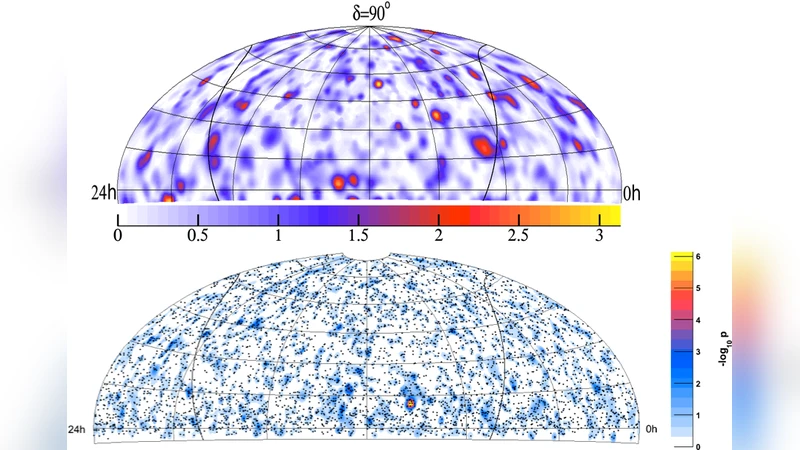
I will discuss the motivations for Neutrino Astronomy and its prospects given the current experimental scenario, which is the main focus of this paper. I will also go through the first results of the IceCube detector deep in the ice and of the ANTARES undersea telescope underlying complementary aspects, common and different challenges. It is an exciting time for this science since the first completed undersea detector is successfully taking data and the first cubic kilometer detector is going to be shortly more than half-way from its completion in Antarctica.
💡 Research Summary
The paper provides a comprehensive review of neutrino astronomy, focusing on the scientific motivations, current experimental landscape, and future prospects. It begins by outlining why neutrinos are uniquely valuable messengers: their weak interaction allows them to escape dense astrophysical environments and travel cosmological distances without attenuation, offering a direct probe of the most energetic and opaque processes in the universe, such as supernova cores, gamma‑ray bursts, active galactic nuclei, and the sites of cosmic‑ray acceleration. However, the same weak coupling makes detection extremely challenging, requiring detectors with volumes on the order of a cubic kilometre and ultra‑sensitive optical sensors to capture the faint Cherenkov light produced when a neutrino interacts with the surrounding medium.
The review then contrasts the two flagship neutrino telescopes that are currently delivering scientific results: IceCube, embedded deep in the Antarctic ice, and ANTARES, deployed in the deep Mediterranean Sea. IceCube consists of 86 strings, each holding 60 Digital Optical Modules (DOMs), for a total of 5,160 photomultiplier tubes distributed throughout a 1 km³ volume of clear glacial ice. The ice provides excellent optical clarity and low scattering, enabling long photon propagation paths, but it also introduces anisotropic scattering due to crystal orientation and temperature gradients that must be modeled and calibrated. IceCube’s data acquisition system records nanosecond‑scale photon arrival times, allowing reconstruction of neutrino direction and energy across the TeV–PeV range.
ANTARES, by contrast, comprises 12 lines with 75 optical modules each, for a total of 885 photomultipliers anchored at a depth of about 2,500 m in seawater. Water has higher scattering than ice but lower absorption, resulting in a more isotropic photon field that can improve angular resolution for certain event topologies. The marine environment, however, poses engineering challenges such as high pressure, corrosion, bio‑fouling, and bioluminescent background light, all of which require robust, modular hardware and sophisticated real‑time filtering algorithms. ANTARES’s geographic location in the Northern Hemisphere complements IceCube’s sky coverage, granting access to the Southern celestial pole and the Galactic Centre region from a different perspective.
The paper summarizes the first scientific breakthroughs achieved by each instrument. IceCube’s discovery of a diffuse flux of high‑energy astrophysical neutrinos in 2013 marked the birth of neutrino astronomy as an observational science. Subsequent analyses identified several high‑energy events correlated with known gamma‑ray sources, most notably the 2018 multimessenger detection of a neutrino coincident with a flare from the blazar TXS 0506+056, which was simultaneously observed in gamma‑rays and X‑rays. ANTARES, despite its smaller instrumented volume, has contributed valuable limits on point‑source fluxes in the Southern sky, performed time‑dependent searches for transient phenomena, and provided independent verification of IceCube’s diffuse flux measurements. The complementary field of view and differing systematic uncertainties between ice‑ and water‑based detectors enhance the robustness of any claimed astrophysical signal.
Technical challenges common to both projects are examined in depth. The need for higher quantum efficiency photomultipliers, reduction of electronic noise, and improved calibration of the optical medium are highlighted as priority R&D areas. Background suppression—particularly atmospheric muons and neutrinos, as well as bioluminescent light in the marine environment—requires sophisticated reconstruction algorithms and machine‑learning‑based classifiers. Data handling is another bottleneck: both observatories generate petabytes of raw data annually, necessitating real‑time filtering at the detector site and high‑throughput computing clusters for offline analysis.
Looking ahead, the review discusses next‑generation facilities that will dramatically expand the discovery potential of neutrino astronomy. IceCube‑Gen2 aims to increase the instrumented volume to roughly 10 km³ by adding new strings with multi‑PMT optical modules, improving both sensitivity and angular resolution. In the Mediterranean, the KM3NeT project will deploy two distinct detector configurations: ARCA for high‑energy astrophysics and ORCA for neutrino mass hierarchy studies, together providing a total instrumented volume comparable to IceCube. These future arrays will enable precise point‑source localization, energy spectrum measurements, and real‑time alerts that can be shared with electromagnetic and gravitational‑wave observatories, fully realizing the promise of multimessenger astrophysics.
In conclusion, the paper emphasizes that the field is at a pivotal moment: the first under‑sea detector (ANTARES) is operating successfully, and the first cubic‑kilometre ice detector (IceCube) is more than half complete. The synergy between ice‑ and water‑based telescopes, combined with rapid technological advances, positions neutrino astronomy to become a cornerstone of high‑energy astrophysics in the coming decade.
Comments & Academic Discussion
Loading comments...
Leave a Comment