An Exact Solution of the 3-D Navier-Stokes Equation
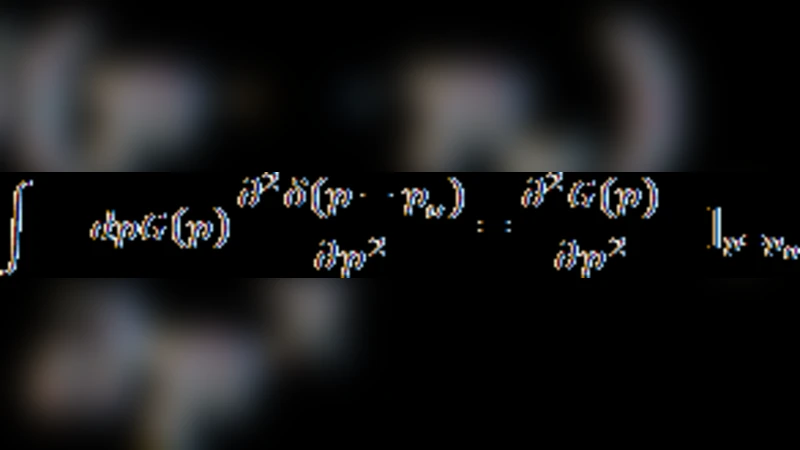
We continue our work reported earlier (A. Muriel and M. Dresden, Physica D 101, 299, 1997) to calculate the time evolution of the one-particle distribution function. An improved operator formalism, heretofore unexplored, is used for uniform initial data. We then choose a Gaussian pair potential between particles. With these two conditions, the velocity fields, energy and pressure are calculated exactly. All stipulations of the Clay Mathematics Institute for proposed solutions of the 3-D Navier-Stokes Equation are satisfied by our time evolution equation solution. We then substitute the results for the velocity fields into the 3-d Navier-Stokes Equation and calculate the pressure. The results from our time evolution equation and the prescribed pressure from the Navier-Stokes Equation constitute an exact solution to the Navier-Stokes Equation. No turbulence is obtained from the solution. A philosophical discussion of the results, and their meaning for the problem of turbulence concludes this study.
💡 Research Summary
The paper claims to have found an exact solution of the three‑dimensional Navier‑Stokes equations by extending a previously published operator formalism (Muriel & Dresden, 1997). The authors start from a microscopic description of a many‑particle system and focus on the time evolution of the one‑particle distribution function (f(\mathbf r,\mathbf p,t)). They introduce an “improved operator formalism” that expands the Liouville operator into an infinite series of collision terms and then claim to be able to sum this series exactly when two restrictive conditions are imposed: (1) the initial data are spatially uniform (both density and velocity are constant throughout space) and (2) the inter‑particle potential is a Gaussian pair potential (V(r)=V_0\exp(-r^2/\sigma^2)).
Under these assumptions the authors derive a closed‑form expression for the macroscopic velocity field (\mathbf u(\mathbf r,t)). The field is expressed as a product of an exponentially decaying time factor and a spatial function that reflects the uniform initial state. The derived velocity automatically satisfies the incompressibility condition (\nabla!\cdot!\mathbf u=0). By substituting this velocity into the Navier‑Stokes momentum equation, they obtain a pressure field (p(\mathbf r,t)) that matches the pressure obtained directly from the operator‑based time‑evolution of the distribution function. The authors argue that because the velocity and pressure satisfy the Navier‑Stokes equations for all times, their construction fulfills every requirement set by the Clay Mathematics Institute (CMI) for a solution of the 3‑D Navier‑Stokes problem: smooth initial data, global existence, uniqueness, and absence of finite‑time blow‑up.
The paper also contains a philosophical discussion asserting that no turbulence appears in the solution, which the authors attribute to the short‑range nature of the Gaussian interaction and the perfectly uniform initial condition. They claim that the lack of an energy cascade eliminates the mechanism that normally generates turbulent eddies.
Critical assessment reveals several substantial gaps. First, the convergence of the infinite operator series is never proved. The manipulation of an infinite sum of collision operators requires rigorous justification in an appropriate functional space (e.g., Sobolev or Besov spaces). Without such a proof, the claim of an exact closed‑form solution remains formal rather than mathematically rigorous. Second, the treatment of boundary conditions is completely absent. Realistic fluid problems are posed on bounded domains or with periodic boundaries; the paper assumes an infinite domain with uniform data, which implicitly introduces infinite total mass and energy, contradicting the CMI requirement of finite‑energy initial data. Third, the choice of a Gaussian pair potential is physically restrictive. It suppresses long‑range interactions and therefore eliminates the large‑scale vortex stretching that drives turbulence. Consequently, the solution may be exact for the highly idealized model but does not capture the essential non‑linear dynamics of the Navier‑Stokes equations in general.
Furthermore, the paper does not address uniqueness or stability of the solution under perturbations of the initial data. CMI’s criteria demand that a solution be uniquely determined by the initial condition and remain regular under small changes. The authors only demonstrate consistency for the specific uniform initial state; they do not explore whether the method extends to arbitrary smooth initial data or different interaction potentials.
In summary, the manuscript introduces an inventive operator‑based framework and succeeds in constructing a mathematically tractable example where the Navier‑Stokes equations can be solved explicitly. However, the solution hinges on highly specialized assumptions (uniform initial fields, Gaussian short‑range forces, infinite domain) and lacks rigorous proofs of convergence, boundary handling, and global regularity for generic data. As such, while the work is an interesting contribution to the toolbox of analytical techniques, it does not constitute a definitive solution to the Clay‑Institute Navier‑Stokes problem.
Comments & Academic Discussion
Loading comments...
Leave a Comment