Status and Strategies of Current LUNASKA Lunar Cherenkov Observations with the Parkes Radio Telescope
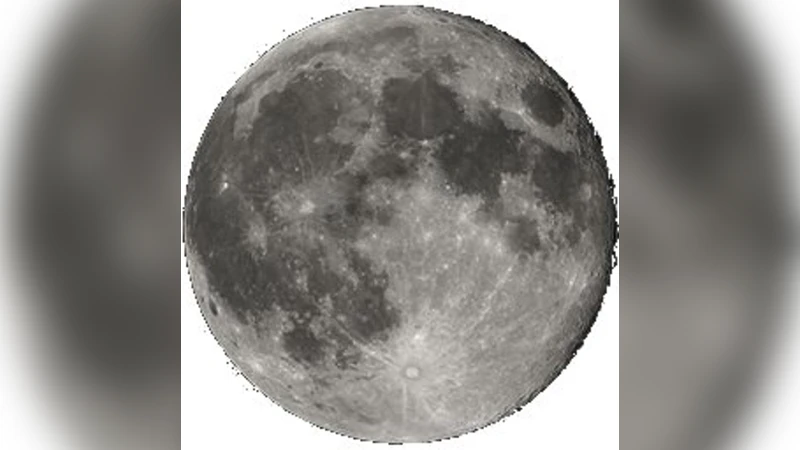
LUNASKA (Lunar UHE Neutrino Astrophysics with the Square Kilometre Array) is an ongoing project conducting lunar Cherenkov observations in order to develop techniques for detecting neutrinos with the next generation of radio telescopes. Our current observing campaign is with the 64-metre Parkes radio telescope, using a multibeam receiver with 300 MHz of bandwidth from 1.2-1.5 GHz. Here we provide an overview of the various factors that must be considered in the signal processing for such an experiment. We also briefly describe the flux limits which we expect to set with our current observations, including a directional limit for Centaurus A.
💡 Research Summary
The paper presents the status and methodology of the LUNASKA (Lunar Ultra‑High‑Energy Neutrino Astrophysics with the Square Kilometre Array) project’s current observing campaign using the 64‑metre Parkes radio telescope. LUNASKA aims to develop and validate the lunar Cherenkov technique for detecting ultra‑high‑energy (UHE) neutrinos with future radio facilities such as the SKA. When a UHE neutrino interacts in the lunar regolith it initiates a particle cascade that emits a short (nanosecond‑scale) broadband Cherenkov pulse in the radio band. Detecting these pulses requires a large collecting area, wide instantaneous bandwidth, and sophisticated signal‑processing to distinguish genuine lunar events from terrestrial radio‑frequency interference (RFI) and ionospheric effects.
The Parkes instrument employed for this campaign is a multibeam receiver with seven independent beams covering 1.2–1.5 GHz, providing a total usable bandwidth of 300 MHz. The signal chain digitises the band at 8‑bit resolution with a 2 GHz sampling rate, feeding a field‑programmable gate array (FPGA) that performs real‑time filtering, inverse ionospheric dispersion correction, and triggering. The inverse dispersion is calculated using contemporaneous total electron content (TEC) measurements from GPS, allowing the nanosecond pulses to be de‑smeared before trigger evaluation.
Triggering is performed in two stages. First, each beam is monitored for voltage excursions exceeding a 5σ threshold. Second, candidate events are cross‑checked across adjacent beams for the expected inter‑beam time delays (10–30 ns) and phase coherence that are characteristic of a lunar origin. This multi‑beam coincidence dramatically reduces false triggers caused by ground‑based RFI, satellite transmissions, or impulsive atmospheric phenomena. In addition, a dedicated “off‑Moon” scanning schedule is used to characterise the background noise floor and to dynamically adjust the trigger threshold according to prevailing conditions.
RFI mitigation combines frequency‑domain masking of known communication channels with time‑domain vetoes for events that exhibit atypical duration or spectral structure. The pipeline also stores a short pre‑trigger buffer for each candidate, enabling offline verification and detailed waveform analysis.
Monte‑Carlo simulations incorporating realistic neutrino spectra, lunar geometry, and the Parkes beam pattern indicate that, with the current 5σ threshold and 300 MHz bandwidth, the experiment achieves an effective exposure of roughly 1 km² sr yr for neutrinos around 10²² eV. Because the Parkes telescope has favorable visibility of the Centaurus A region (RA ≈ 13h 25m, Dec ≈ −43°), the campaign can set a directional flux limit on that source that is about a factor of two lower than existing limits from other lunar Cherenkov experiments.
The authors outline future upgrades: increasing the sampling rate to 2 GHz, expanding the bandwidth, and implementing machine‑learning‑based pattern‑recognition triggers to capture subtler pulse morphologies. These improvements are intended to produce a prototype system that can be directly scaled to the Square Kilometre Array‑Low, thereby opening a new window on UHE neutrino astronomy and providing a complementary probe of the most energetic astrophysical accelerators.
Comments & Academic Discussion
Loading comments...
Leave a Comment