Influence of Rotations on the Critical State of Soil Mechanics
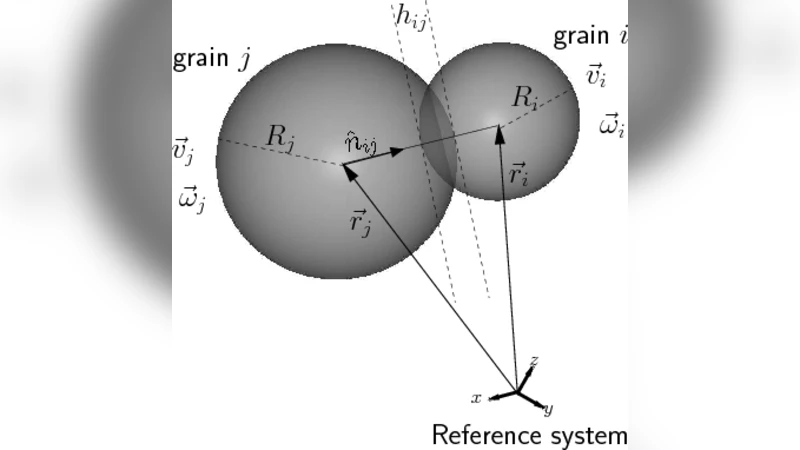
The ability of grains to rotate can play a crucial role on the collective behavior of granular media. It has been observed in computer simulations that imposing a torque at the contacts modifies the force chains, making support chains less important. In this work we investigate the effect of a gradual hindering of the grains rotations on the so-called critical state of soil mechanics. The critical state is an asymptotic state independent of the initial solid fraction where deformations occur at a constant shear strength and compactness. We quantify the difficulty to rotate by a friction coefficient at the level of particles, acting like a threshold. We explore the effect of this particle-level friction coefficient on the critical state by means of molecular dynamics simulations of a simple shear test on a poly-disperse sphere packing. We found that the larger the difficulty to rotate, the larger the final shear strength of the sample. Other micro-mechanical variables, like the structural anisotropy and the distribution of forces, are also influenced by the threshold. These results reveal the key role of rotations on the critical behavior of soils and suggest the inclusion of rotational variables into their constitutive equations.
💡 Research Summary
The paper investigates how restricting the rotational freedom of individual grains influences the critical state of granular soils. Using three‑dimensional molecular dynamics simulations, the authors model a simple shear test on a polydisperse assembly of spherical particles. A novel particle‑level “rotation friction” coefficient (μ_r) is introduced, acting as a threshold torque that limits the relative rotation of contacting grains. Four values of μ_r (0, 0.2, 0.5, 0.8) are examined while keeping the conventional translational friction coefficient (μ_t = 0.5) constant.
The contact law combines a Hertz‑Mindlin normal–tangential force model with a torque term T = μ_r · R · F_n · sgn(ω_rel), where R is the contact radius, F_n the normal force, and ω_rel the relative angular velocity. Periodic boundaries and a constant shear rate (γ̇ = 10⁻⁴ s⁻¹) are applied, allowing the system to evolve from an initial loose state (initial void ratio e₀ ≈ 0.75) toward a steady critical state.
Key macroscopic observations show that increasing μ_r systematically raises the steady‑state shear strength (q_c) from roughly 30 kPa (μ_r = 0) to about 45 kPa (μ_r = 0.8) and reduces the critical void ratio from e_c ≈ 0.68 to e_c ≈ 0.62. Thus, a higher resistance to grain rotation produces a denser, stronger packing at the critical state.
Micro‑mechanical analysis reveals that the fabric tensor’s shear component (F_12) grows by nearly a factor of two as μ_r increases, indicating a pronounced alignment of contacts in the shear direction. The probability density functions of normalized normal and tangential contact forces develop heavier tails, meaning that strong force chains become more prevalent when rotation is hindered. Coordination number (average contacts per particle) also rises from about 4.2 to 4.8, reflecting a more interconnected contact network.
These findings demonstrate that grain rotation is not a passive degree of freedom; its restriction directly modifies force chain topology, fabric anisotropy, and ultimately the macroscopic constitutive response. The authors argue that traditional elasto‑plastic soil models, which rely solely on translational friction, cannot capture this effect. They propose augmenting constitutive frameworks with a rotational state variable (e.g., an average rotation constraint θ) and a corresponding evolution law that depends on μ_r and the current stress state. Such an extension would enable more accurate predictions for problems involving cyclic loading, strain‑softening, or highly non‑uniform stress fields where particle rotations play a decisive role.
In conclusion, the study provides quantitative evidence that the difficulty of grain rotation, modeled through a particle‑level friction coefficient, is a controlling factor for the critical state shear strength, density, fabric anisotropy, and force distribution in granular soils. Incorporating rotational variables into soil constitutive equations is therefore essential for advancing the predictive capability of geomechanical models.
Comments & Academic Discussion
Loading comments...
Leave a Comment