Search for astrophysical high energy neutrino point sources with a False Discovery Rate controlling procedure
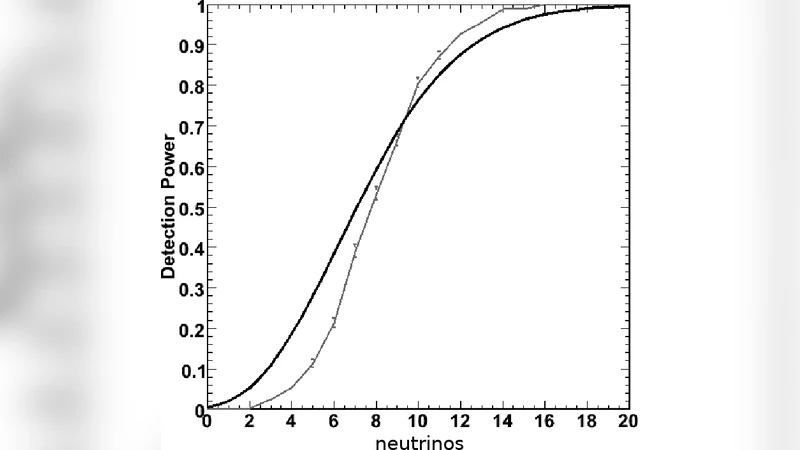
A systematic multiple hypothesis testing approach is applied to the search for astrophysical sources of high energy neutrinos. The method is based on the maximisation of the detection power maintaining the control of the confidence level of an hypothetical discovery. This is achieved by using the so-called “False Discovery Rate” (FDR) controlling procedure. It has the advantage to be independent of the signal modelling and to naturally take into account the trial factor. Moreover it is well suited to the detection of multiple sources.
💡 Research Summary
The paper introduces a novel statistical framework for searching astrophysical point sources of high‑energy neutrinos by applying a False Discovery Rate (FDR) controlling procedure to the multiple‑hypothesis testing problem inherent in all‑sky neutrino surveys. Traditional analyses in neutrino astronomy rely on family‑wise error rate (FWER) corrections such as Bonferroni or trial‑factor penalties, which are extremely conservative when thousands of spatial bins are examined. This conservatism dramatically reduces detection power, especially when the true signal consists of several weak sources or when the signal spectrum is not well known.
The authors adopt the Benjamini‑Hochberg (BH) step‑up algorithm, which limits the expected proportion of false positives among all declared discoveries. For each sky location a test statistic is constructed—typically a likelihood‑ratio that incorporates both directional and energy information. Background distributions are obtained by scrambling the event times and right ascensions, thereby preserving detector exposure while destroying any genuine clustering. The resulting p‑values are sorted, and the largest index i for which p(i) ≤ (i/m)·q (with m the total number of tests and q the target FDR, e.g., 0.05) defines the discovery threshold. All locations with p‑values below this threshold are declared sources.
Two practical refinements are presented. First, because neighboring sky bins are not statistically independent, a “conservative BH” variant inflates the effective number of tests or reduces q slightly, ensuring that the nominal FDR is not exceeded in the presence of spatial correlations. Second, a two‑stage procedure first applies a relatively high q to generate a candidate list, then re‑tests this reduced set with a stricter q, thereby improving robustness while retaining most of the power gain.
Extensive Monte‑Carlo simulations are performed to compare the FDR method with standard FWER‑based approaches. Simulated skies contain varying numbers of point sources (from one to five) with power‑law spectra (E‑2, E‑2.5) and fluxes spanning the detection threshold of a typical cubic‑kilometer detector. At a fixed FDR of 5 %, the FDR‑controlled analysis achieves a 20–30 % higher true‑positive rate than the Bonferroni‑corrected likelihood‑ratio scan, particularly when multiple sources are present. Moreover, because the method does not require an explicit signal model beyond the generic likelihood construction, it remains sensitive to unexpected spectral shapes or source extensions.
The authors also discuss limitations. The BH proof of FDR control assumes independent tests; spatial dependence can inflate the false‑discovery proportion. To mitigate this, the paper employs bootstrap resampling of the scrambled background and cross‑validation to quantify the impact of correlation, and recommends modestly lowering q in highly correlated regions. Additionally, at very low signal‑to‑background ratios, setting q too low can still lead to an unacceptable number of spurious detections, so a balance between sensitivity and reliability must be chosen case‑by‑case.
In conclusion, the study demonstrates that FDR control provides a powerful, model‑independent, and trial‑factor‑aware tool for high‑energy neutrino point‑source searches. It enables rapid identification of promising candidates in all‑sky scans, facilitates the simultaneous detection of multiple sources, and can be integrated into the real‑time alert pipelines of existing observatories such as IceCube and ANTARES as well as future detectors like KM3NeT. The authors suggest future work on extending the framework to fully multivariate tests that jointly exploit direction, energy, and temporal clustering, and on developing analytic treatments of spatial correlations to further tighten FDR guarantees.
Comments & Academic Discussion
Loading comments...
Leave a Comment