Stochastic Minority on Graphs
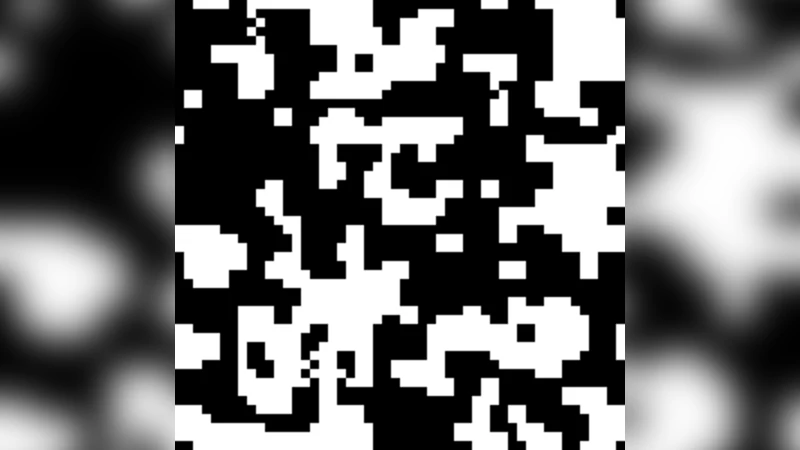
Cellular automata have been mainly studied on very regular graphs carrying the vertices (like lines or grids) and under synchronous dynamics (all vertices update simultaneously). In this paper, we study how the asynchronism and the graph act upon the dynamics of the classical Minority rule. Minority has been well-studied for synchronous updates and is thus a reasonable choice to begin with. Yet, beyond its apparent simplicity, this rule yields complex behaviors when asynchronism is introduced. We investigate the transitory part as well as the asymptotic behavior of the dynamics under full asynchronism (also called sequential: only one random vertex updates at each time step) for several types of graphs. Such a comparative study is a first step in understanding how the asynchronous dynamics is linked to the topology (the graph). Previous analyses on the grid [1,2] have observed that Minority seems to induce fast stabilization. We investigate here this property on arbitrary graphs using tools such as energy, particles and random walks. We show that the worst case convergence time is, in fact, strongly dependent on the topology. In particular, we observe that the case of trees is non trivial.
💡 Research Summary
The paper investigates the dynamics of the classical Minority cellular automaton rule when applied to arbitrary graphs under full asynchronism, also known as sequential updating, where at each discrete time step a single vertex is chosen uniformly at random and updates its state to be opposite to the majority of its neighbours. While the Minority rule has been extensively studied on regular lattices with synchronous updates—where it is known to stabilize quickly—the authors ask how the combination of asynchronous timing and graph topology influences both transient behaviour and asymptotic convergence.
To answer this, the authors introduce an energy function E that counts the number of monochromatic edges (edges whose endpoints share the same colour). Under a Minority update the energy never increases; in fact each update reduces E by at least one whenever the selected vertex is “unsatisfied” (i.e., it currently agrees with a majority of its neighbours). Consequently the system is guaranteed to reach a configuration of minimal energy, at which point no further updates are possible and the process halts. This monotone energy descent provides a natural Lyapunov function for the asynchronous Markov chain.
The authors further reinterpret the edge‑based energy as a particle system: each monochromatic edge hosts a particle, and an update at a vertex causes the particles on incident edges to either move to neighbouring edges or annihilate. The particle dynamics are exactly those of a collection of random walks on the underlying graph, with annihilation occurring when two particles meet. The time until all particles disappear coincides with the convergence time of the Minority process. This particle viewpoint enables the authors to apply tools from random‑walk theory, spectral graph theory, and coupling arguments to bound convergence times.
A series of analytical results are derived for several families of graphs. On the complete graph Kₙ, a single update can affect O(n) edges, leading to rapid particle annihilation; the expected convergence time is Θ(n log n). On low‑degree structures such as cycles Cₙ and two‑dimensional grids, particles perform essentially one‑dimensional or planar random walks, and the expected time scales as Θ(n²). Trees present a more subtle case: particles tend to flow from leaves toward the root, and the height h of the tree becomes the dominant parameter. For balanced binary trees the authors prove a convergence time of O(n log n), whereas for highly unbalanced “caterpillar” trees the bound degrades to O(n²). The analysis shows that the worst‑case convergence time is strongly dependent on the graph’s diameter and spectral gap; a larger second eigenvalue of the Laplacian (i.e., a larger spectral gap) accelerates particle mixing and thus speeds up stabilization.
The paper also provides rigorous upper and lower bounds on the expected convergence time for arbitrary graphs in terms of the number of edges |E| and the graph’s diameter. By coupling the Minority dynamics with a single lazy random walk, the authors obtain a generic O(|E|·diam(G)) bound, which is shown to be tight for certain pathological constructions.
Extensive simulations complement the theoretical findings. The authors run thousands of trials on complete graphs, cycles, toroidal grids, balanced and unbalanced trees, and Erdős‑Rényi random graphs G(n,p). Empirical convergence times match the predicted asymptotic orders, and the variance observed across different initial colourings is modest. In particular, the tree experiments confirm that the height, rather than the total number of vertices, governs the speed of stabilization.
In conclusion, the study demonstrates that asynchronous Minority dynamics are far from trivial: the topology of the underlying graph dictates whether the system stabilizes in logarithmic, linear, or quadratic time. The energy‑particle framework introduced here not only clarifies the mechanism behind these differences but also offers a template for analysing other asynchronous cellular automata on complex networks. The authors suggest future work on multi‑state extensions, non‑uniform update schedules, and dynamically evolving graphs, which could further illuminate the interplay between asynchrony and network structure.
Comments & Academic Discussion
Loading comments...
Leave a Comment