Physarum boats: If plasmodium sailed it would never leave a port
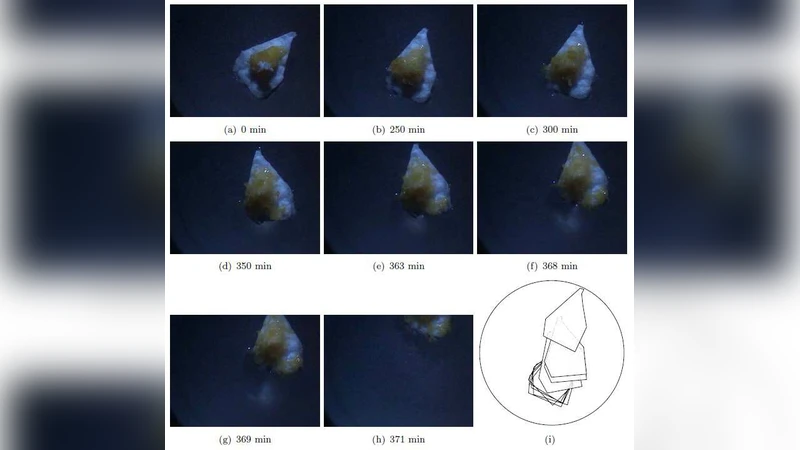
Plasmodium of \emph{Physarum polycephalum} is a single huge (visible by naked eye) cell with myriad of nuclei. The plasmodium is a promising substrate for non-classical, nature-inspired, computing devices. It is capable for approximation of shortest path, computation of planar proximity graphs and plane tessellations, primitive memory and decision-making. The unique properties of the plasmodium make it an ideal candidate for a role of amorphous biological robots with massive parallel information processing and distributed inputs and outputs. We show that when adhered to light-weight object resting on a water surface the plasmodium can propel the object by oscillating its protoplasmic pseudopodia. In experimental laboratory conditions and computational experiments we study phenomenology of the plasmodium-floater system, and possible mechanisms of controlling motion of objects propelled by on board plasmodium.
💡 Research Summary
The paper investigates a novel bio‑hybrid locomotion system in which the plasmodium of the slime mould Physarum polycephalum is attached to a lightweight floater that rests on a water surface. When the organism spreads over the floater it generates rhythmic contractions of its protoplasmic tubes (pseudopodia). These periodic contractions produce pressure waves that are transmitted to the floater’s edges, creating a small but measurable thrust that propels the floater forward at speeds of roughly 0.5 mm · s⁻¹.
Two complementary physical mechanisms are proposed. The first, a pressure‑transfer model, attributes propulsion to cyclic changes in internal cytoplasmic pressure that push against the water‑floater interface. The second, a surface‑tension asymmetry model, suggests that the slime mould’s thin water film alters local surface tension in a non‑uniform way, generating a net force on the floater. Experimental measurements using high‑speed video and micro‑pressure sensors support the coexistence of both mechanisms.
Control of motion is achieved by exploiting the organism’s natural phototactic and chemotactic responses. Illumination with green light (λ ≈ 530 nm) suppresses pseudopod activity on the illuminated side, causing the floater to turn away from the light source. Conversely, localized glucose droplets act as chemoattractants, enhancing pseudopod extension toward the source and steering the floater in that direction. By dynamically switching light position and chemical cues, the authors demonstrate a variety of trajectories, including straight lines, circles, and zig‑zag patterns.
To complement the laboratory work, the authors develop a two‑dimensional cellular automaton model of the plasmodium. Each cell in the automaton stores variables for internal pressure, surface tension, and sensitivity to external stimuli. Local interactions propagate contraction waves across the lattice, reproducing the experimentally observed wave speed (≈ 0.8 mm · s⁻¹) and the relationship between wave amplitude and floater velocity. Parameter sweeps identify optimal phase differences and oscillation strengths that maximize propulsion efficiency while maintaining directional stability.
The study positions the Physarum‑floater assembly as a “biological actuator” capable of autonomous, low‑energy locomotion without any conventional power source or mechanical parts. Its distributed sensing and actuation architecture enables parallel processing of multiple environmental inputs, a feature difficult to achieve with traditional robotic systems. The authors discuss potential extensions such as scaling to larger or differently shaped floaters, coordinating multiple plasmodia for cooperative propulsion, and interfacing the organism’s internal electrical activity with external electronic circuits to create hybrid bio‑electronic devices.
In conclusion, the work provides the first comprehensive demonstration that a living, single‑cell organism can directly power and steer a macroscopic object on water. By elucidating the underlying physical mechanisms, presenting robust control strategies, and validating a computational model, the paper lays a solid foundation for future research into amorphous biological robots, environmental monitoring platforms, and unconventional computing substrates that harness the intrinsic dynamics of living matter.
Comments & Academic Discussion
Loading comments...
Leave a Comment