Understanding Cascading Failures in Power Grids
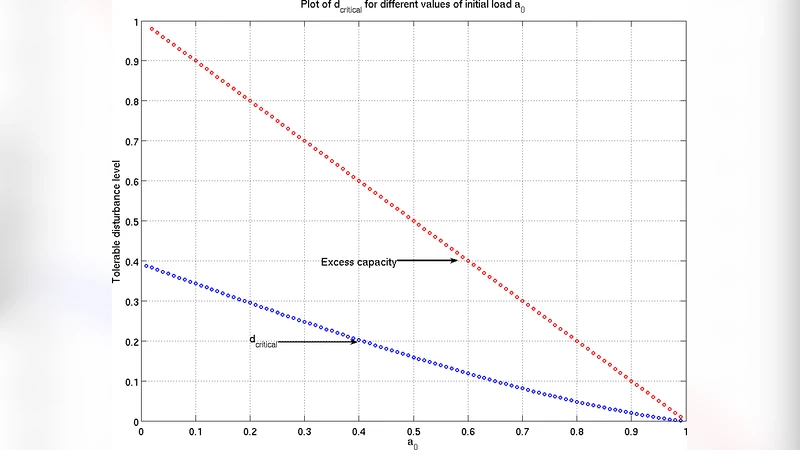
In the past, we have observed several large blackouts, i.e. loss of power to large areas. It has been noted by several researchers that these large blackouts are a result of a cascade of failures of various components. As a power grid is made up of several thousands or even millions of components (relays, breakers, transformers, etc.), it is quite plausible that a few of these components do not perform their function as desired. Their failure/misbehavior puts additional burden on the working components causing them to misbehave, and thus leading to a cascade of failures. The complexity of the entire power grid makes it difficult to model each and every individual component and study the stability of the entire system. For this reason, it is often the case that abstract models of the working of the power grid are constructed and then analyzed. These models need to be computationally tractable while serving as a reasonable model for the entire system. In this work, we construct one such model for the power grid, and analyze it.
💡 Research Summary
The paper addresses one of the most pressing reliability challenges in modern electric power systems: cascading failures that can evolve into large‑scale blackouts. Recognizing that a power grid comprises thousands to millions of heterogeneous components—relays, breakers, transformers, transmission lines, and control devices—the authors argue that a full‑scale, component‑by‑component simulation is infeasible for both analytical insight and real‑time operation. Consequently, they develop an abstract yet physically grounded network model that captures the essential mechanisms of load redistribution and component overload, enabling systematic study of system stability under stochastic disturbances.
Model Construction
The grid is represented as an undirected graph (G(V,E)) where each vertex (v\in V) denotes a physical asset (generator, substation, transformer, etc.) and each edge (e\in E) represents a transmission line. Two key state variables are assigned to every vertex: a capacity (C_v) (the maximum power the component can safely carry) and a current load (L_v) (the actual power flow). Initially the system operates in a feasible region where (L_v\le C_v) for all (v). Component failures are introduced as independent Bernoulli events with probability (p_v). When a vertex fails, its load is instantaneously redistributed to its neighbors. Two redistribution policies are examined: (i) Uniform redistribution, where the load is divided equally among all adjacent vertices, and (ii) Weighted redistribution, where the share allocated to each neighbor is proportional to line admittance or pre‑failure power flow, thereby reflecting realistic electrical constraints.
Mathematically, the load vector (\mathbf{L}\in\mathbb{R}^{|V|}) evolves according to
\
Comments & Academic Discussion
Loading comments...
Leave a Comment