Dynamical effects of subducting ridges: Insights from 3-D laboratory models
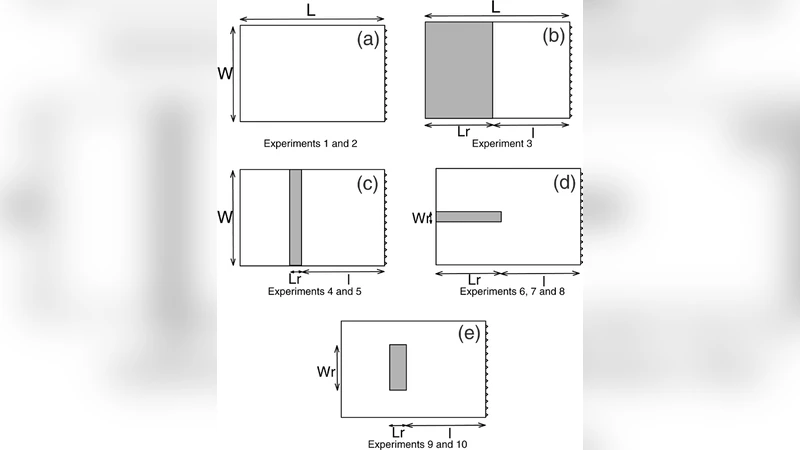
We model the subduction of buoyant ridges and plateaus to study their effect on slab dynamics. Oceanic ridges parallel to the trench have a stronger effect on the process of subduction because they simultaneously affect a longer trench segment. Large buoyant slab segments sink more slowly into the asthenosphere, and their subduction result in a diminution of the velocity of subduction of the plate. We observe a steeping of the slab below those buoyant anomalies, resulting in smaller radius of curvature of the slab, that augments the energy dissipated in folding the plate and further diminishes the velocity of subduction. When the 3D geometry of a buoyant plateau is modelled, the dip of the slab above the plateau decreases, as a result of the larger velocity of subduction of the dense “normal” oceanic plate on both sides of the plateau. Such a perturbation of the dip of the slab maintains long time after the plateau has been entirely incorporated into the subduction zone. We compare experiments with the present-day subduction zone below South America. Experiments suggest that a modest ridge perpendicular to the trench such as the present-day Juan Fernandez ridge is not buoyant enough to modify the slab geometry. Already subducted buoyant anomalies within the oceanic plate, in contrast, may be responsible for some aspects of the present-day geometry of the Nazca slab at depth.
💡 Research Summary
The paper presents a systematic investigation of how buoyant lithospheric features—specifically oceanic ridges and plateaus—affect the dynamics of subducting slabs. Using three‑dimensional analogue laboratory experiments, the authors reproduce the subduction of a dense oceanic plate that contains buoyant anomalies of varying geometry, size, and orientation relative to the trench. The experimental medium is a viscous silicone polymer whose density contrast with a denser “normal” plate mimics the contrast between buoyant and typical oceanic lithosphere. By imposing a trench‑like boundary and allowing the plates to sink under gravity, the authors can directly observe slab velocity, curvature, and dip changes as the buoyant structures are incorporated.
Three principal configurations are examined. First, a ridge that runs parallel to the trench is introduced. Because the buoyant segment spans a long trench length, it simultaneously reduces the effective driving force over a broad area. The experiments show a marked slowdown of slab rollback, a steepening of the slab beneath the ridge, and a reduction in the radius of curvature. The steepening increases the amount of mechanical work required to bend the slab, further damping the subduction rate. The magnitude of the slowdown scales with the ridge length and its excess buoyancy.
Second, a narrow ridge that cuts across the trench (perpendicular orientation) is tested. Despite being buoyant, the ridge occupies only a limited trench segment, so the surrounding dense plate continues to dominate the overall slab pull. The measured slab velocity and curvature remain essentially unchanged, and any transient deformation caused by the ridge quickly relaxes. This result suggests that modest, trench‑perpendicular ridges such as the modern Juan Fernandez Ridge lack sufficient buoyancy to perturb slab geometry in a meaningful way.
Third, a three‑dimensional buoyant plateau (or “plateau”) is introduced. The plateau’s width and thickness are comparable to the slab thickness, creating a large, localized buoyant anomaly. As the plateau subducts, the slab above it adopts a shallower dip because the dense oceanic lithosphere on either side of the plateau continues to sink more rapidly. This differential motion forces the slab to flatten above the plateau while the slab edges remain steep, producing a pronounced curvature contrast that persists long after the plateau has been fully incorporated. The experiments demonstrate that the dip reduction is proportional to the plateau’s lateral extent and buoyancy excess.
The authors then compare their experimental outcomes with the present‑day Nazca subduction zone beneath South America. Seismic tomography and slab‑geometry reconstructions reveal a deep‑seated flattening of the Nazca slab and a reduced rollback velocity in regions where older buoyant anomalies are inferred to have been subducted. The laboratory results reproduce these features: a previously subducted buoyant ridge or plateau can generate a long‑lived curvature change and a slower slab, whereas the currently active Juan Fernandez Ridge, being relatively small, would not produce observable effects.
Key insights emerging from the study are: (1) the orientation of a buoyant feature relative to the trench controls the spatial extent of its influence; (2) parallel ridges exert the strongest control because they affect a larger trench segment simultaneously; (3) the reduction in slab velocity is amplified by the increased bending energy associated with a smaller radius of curvature; (4) large, three‑dimensional plateaus produce a permanent dip perturbation that survives after full subduction; and (5) the geological record of past buoyant anomalies can explain present‑day slab geometry that cannot be accounted for by current surface topography alone.
Methodologically, the work demonstrates the power of 3‑D analogue modelling to capture the coupled effects of buoyancy, slab bending, and trench‑plate interaction—processes that are difficult to resolve in numerical models due to computational constraints and uncertainties in rheology. By scaling the experiments to realistic Earth parameters, the authors provide quantitative constraints on how much buoyancy (in terms of density contrast and lateral size) is required to produce observable slab deformation.
In conclusion, the study offers a robust experimental framework for interpreting the role of subducting ridges and plateaus in shaping slab dynamics. It bridges the gap between idealized numerical simulations and complex natural observations, highlighting that the geometry and buoyancy of subducted lithospheric anomalies are critical determinants of slab velocity, curvature, and long‑term mantle flow patterns. Future work should integrate these analogue constraints with high‑resolution seismic imaging and thermomechanical modelling to assess the implications for seismic hazard, volcanic arc migration, and mantle convection patterns associated with buoyant subduction events.
Comments & Academic Discussion
Loading comments...
Leave a Comment