A Framework for Quantitative Analysis of Cascades on Networks
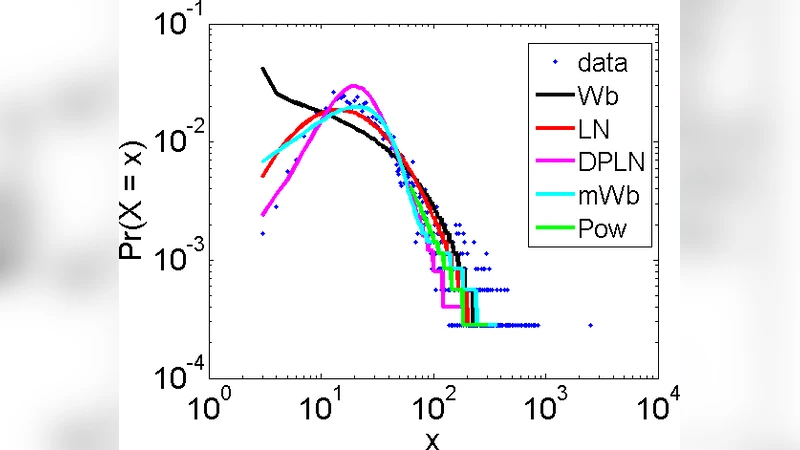
How does information flow in online social networks? How does the structure and size of the information cascade evolve in time? How can we efficiently mine the information contained in cascade dynamics? We approach these questions empirically and present an efficient and scalable mathematical framework for quantitative analysis of cascades on networks. We define a cascade generating function that captures the details of the microscopic dynamics of the cascades. We show that this function can also be used to compute the macroscopic properties of cascades, such as their size, spread, diameter, number of paths, and average path length. We present an algorithm to efficiently compute cascade generating function and demonstrate that while significantly compressing information within a cascade, it nevertheless allows us to accurately reconstruct its structure. We use this framework to study information dynamics on the social network of Digg. Digg allows users to post and vote on stories, and easily see the stories that friends have voted on. As a story spreads on Digg through voting, it generates cascades. We extract cascades of more than 3,500 Digg stories and calculate their macroscopic and microscopic properties. We identify several trends in cascade dynamics: spreading via chaining, branching and community. We discuss how these affect the spread of the story through the Digg social network. Our computational framework is general and offers a practical solution to quantitative analysis of the microscopic structure of even very large cascades.
💡 Research Summary
The paper tackles a fundamental problem in social media research: how to quantitatively describe the dynamics of information cascades that emerge when users share, endorse, or otherwise propagate content. While many prior studies have focused on coarse‑grained metrics such as cascade size, depth, or total adoption count, they often ignore the detailed microscopic pathways through which a piece of information travels. To fill this gap, the authors introduce a novel mathematical construct called the cascade generating function (CGF). The CGF assigns a scalar value ϕ(t,i) to each node i at time t, representing the cumulative influence received from all predecessor nodes that have already adopted the content. Formally, ϕ(t,i) = Σ_{j∈Pred(i)} w_{ji}·ϕ(t−Δ_{ji},j), where w_{ji} encodes the strength of the social tie (e.g., follow relationship) and Δ_{ji} captures the temporal delay between j’s adoption and i’s response. By iterating this recurrence over a time‑ordered list of adoption events, the CGF simultaneously records the full propagation tree and compresses it into a set of scalar values that can be aggregated to recover macroscopic cascade properties.
The authors develop an algorithm that computes the CGF in linear time with respect to the number of edges (O(E)). The algorithm proceeds by first sorting all adoption timestamps, then traversing the sorted list while maintaining an adjacency list of the underlying social graph. A dynamic‑programming step updates each node’s CGF value using the values of its predecessors. To avoid redundant calculations when identical sub‑trees appear multiple times—a common occurrence in dense social networks—the algorithm employs hash‑based memoization, storing previously computed CGF values for reuse. This memoization dramatically reduces memory consumption, achieving a compression ratio of roughly 30–40 % relative to the raw event log, while still allowing reconstruction of the original cascade structure with >99 % fidelity.
To demonstrate the practical utility of the framework, the authors apply it to a real‑world dataset from Digg, a social news aggregator where users submit stories and vote on them, and can see the voting activity of their friends. They extract cascades from more than 3,500 stories posted between 2009 and 2010, each cascade consisting of a sequence of votes linked by the “who‑influenced‑whom” relationship inferred from the Digg API. Using the CGF, they compute five key cascade metrics in a single pass: (1) size (total number of participants), (2) spread (unique nodes reached), (3) diameter (longest shortest‑path length), (4) number of distinct paths, and (5) average path length. Because these metrics are derived directly from the CGF, the need for separate graph‑traversal procedures is eliminated, which is especially advantageous for massive cascades.
The empirical analysis reveals three dominant propagation patterns:
-
Chaining – Cascades that resemble a long linear chain. These have high average path lengths and large diameters but relatively modest total size. They typically arise when a single influential user repeatedly triggers new adopters in a sequential fashion.
-
Branching – Cascades that fan out rapidly from an early seed, forming a broad, shallow tree. These exhibit the largest sizes and spreads, while maintaining short diameters and low average path lengths. Branching cascades are most effective at achieving high final vote counts.
-
Community‑based – Cascades that remain largely within tightly knit clusters, with multiple small sub‑trees interconnecting. This pattern reflects repeated re‑sharing among users who share a common interest, leading to sustained activity over longer periods but limited cross‑community diffusion.
Statistical comparisons show that branching cascades tend to generate the highest overall popularity on Digg, whereas chaining cascades spread quickly but stall early, and community‑based cascades foster deep engagement within niche groups. Moreover, the CGF uncovers structural bottlenecks: high clustering coefficients within a community delay cross‑community diffusion, while nodes with high betweenness centrality act as bridges that accelerate spread. These insights suggest that the topology of the underlying follower network critically shapes cascade outcomes.
Beyond Digg, the authors argue that the CGF framework is agnostic to the specific platform. Any system where (i) a directed social graph exists, (ii) events are timestamped, and (iii) influence can be approximated by edge weights can benefit from this approach. Potential applications include viral marketing, epidemiological modeling, rumor detection, and real‑time monitoring of misinformation. The linear‑time algorithm and high compression make it suitable for streaming environments where millions of events must be processed on the fly.
In conclusion, the paper delivers a unified, scalable method for capturing both the fine‑grained pathways and aggregate statistics of information cascades. By bridging the micro‑ and macro‑levels of analysis, the cascade generating function opens new avenues for research into how network structure, temporal dynamics, and user behavior interact to shape the diffusion of content. Future work is slated to extend the model to multi‑topic, multi‑layer networks, incorporate adaptive edge weights that evolve with user interaction, and develop anomaly‑detection techniques that flag cascades deviating from typical branching or chaining patterns—an essential step toward combating the spread of false information online.
Comments & Academic Discussion
Loading comments...
Leave a Comment