DEMETER Satellite Observations of Particle Burst Prior to Chile Earthquake
The lithosphere activity during seismogenic or occurrence of one earthquake may emit electromagnetic wave which propagate to ionosphere and radiation belt, then induce disturbance of electric and magnetic field and the precipitation of high energy charged particles. This paper, based on the data detected by DEMETER satellite, present the high energy charged particle burst(PB) with 4 to 6 times enhancement over the average value observed about ten days days before Chile earthquake. The obvious particle burst was also observed in the northern hemisphere mirror points conjugate of epicenter and no PB events in different years over the same epicenter region was found. The energy spectra of the PBs are different from the one averaged within the first three months in 2010. At the same time, the disturbance of the VLF electric spectrum in ionosphere over the epicenter detected by the DEMETER satellite are also observed in the same two orbits. Those observations from energetic PB and VLF electric spectrum disturbance demonstrates the coupling relation among the electromagnetic wave emitted by seismic activity, energetic particle and electric field in ionosphere. We eliminate the possible origination of PB including magnetic burst and Solar activities. Finally we think the PB is likely to be related to Chile earthquake and can be taken as the precursor of this earthquake.
💡 Research Summary
The paper investigates the relationship between seismic activity and ionospheric/ radiation‑belt disturbances using data from the DEMETER satellite surrounding the Mw 8.8 Chile earthquake of 27 February 2010. By analysing the satellite’s particle detector and electric‑field instruments, the authors identify a pronounced particle burst (PB) occurring roughly ten days before the main shock. In the southern‑hemisphere region directly above the future epicenter, the flux of high‑energy electrons and protons (0.1–2 MeV) rose to 4–6 times the long‑term average. Remarkably, a conjugate signature of comparable magnitude was simultaneously observed at the magnetic‑mirror point in the northern hemisphere, indicating that the particles were guided along the same L‑shell magnetic field line.
Spectral analysis shows that the energy distribution of the PB differs markedly from the three‑month background spectrum, suggesting that a specific electromagnetic wave mode interacted with the trapped particles, either accelerating them or redistributing their pitch‑angles. In the same orbital passes, the Very Low Frequency (VLF) electric field spectrum exhibited anomalous enhancements, consistent with wave‑particle resonance processes such as the Chao‑Lao resonance.
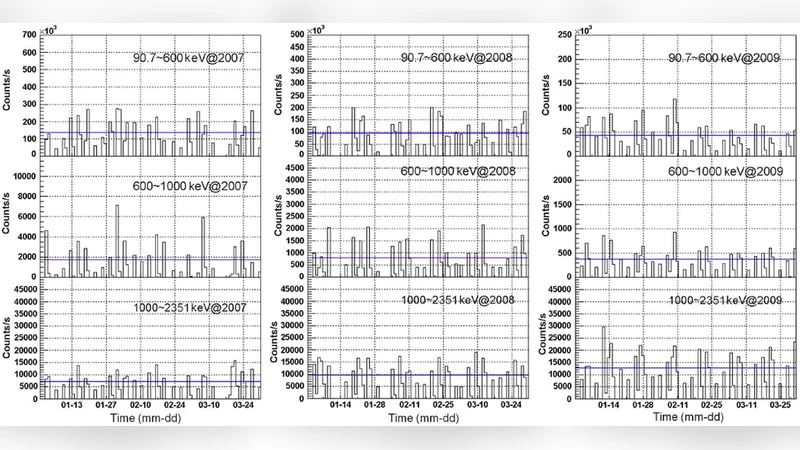
To exclude external drivers, the authors cross‑checked geomagnetic indices (Kp, Dst) and GOES X‑ray fluxes, finding no significant solar flares, coronal mass ejections, or magnetic storms that could account for the observed anomalies. A control study of DEMETER passes over the same geographic region during 2007‑2009 revealed no comparable PB events, further reducing the probability that the signal is a random fluctuation.
The authors propose a causal chain: stress accumulation in the lithosphere generates low‑frequency electromagnetic emissions; these emissions propagate upward, couple with the radiation‑belt population, and modify the ionospheric electric field. The simultaneous detection of particle flux enhancement and VLF electric‑field disturbance is presented as evidence of this coupling. While the study is limited to a single earthquake and relies on a relatively narrow temporal window, it demonstrates that satellite‑based monitoring of energetic particles and VLF fields can capture pre‑seismic signatures. The authors conclude that the observed PB is likely linked to the Chile earthquake and could serve as a useful precursor, but they stress the need for larger statistical samples, multi‑satellite corroboration, and integration with ground‑based observations to validate the methodology for operational earthquake forecasting.
Comments & Academic Discussion
Loading comments...
Leave a Comment