Factors governing fibrillogenesis of polypeptide chains
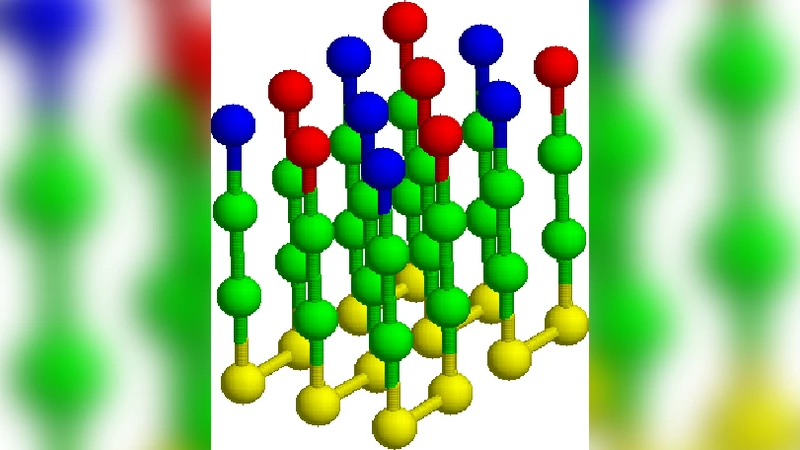
Using lattice models we explore the factors that determine the tendencies of polypeptide chains to aggregate by exhaustively sampling the sequence and conformational space. The morphologies of the fibril-like structures and the time scales ($\tau_{fib}$) for their formation depend on a balance between hydrophobic and coulomb interactions. The extent of population of an ensemble of \textbf{N$^*$} structures, which are fibril-prone structures in the spectrum of conformations of an isolated protein, is the major determinant of $\tau_{fib}$. This observation is used to determine the aggregating sequences by exhaustively exploring the sequence space, thus providing a basis for genome wide search of fragments that are aggregation prone.
💡 Research Summary
In this study the authors address the fundamental question of what determines the propensity of polypeptide chains to form amyloid‑like fibrils. Using a highly simplified three‑dimensional lattice model they exhaustively enumerated both sequence space (all possible combinations of a reduced alphabet of amino‑acid types) and conformational space (all self‑avoiding walks of a given length on the lattice). For each conformation they assigned two energetic contributions: a hydrophobic contact term that rewards contacts between non‑polar residues, and a Coulomb term that accounts for attractive or repulsive interactions between charged residues. By varying the relative strength of these two terms they could explore how the balance of hydrophobic and electrostatic forces shapes the landscape of possible structures.
A central concept introduced is the ensemble of “N*” structures – conformations that, even when the chain is isolated, appear with relatively high probability and possess the geometric features of fibril precursors (extended, often parallel or helical arrangements). The authors quantified the population of this ensemble, N*_pop, for every sequence. They then performed kinetic Monte‑Carlo simulations to measure the time required for fibril‑like aggregates to appear, denoted τ_fib. Strikingly, τ_fib showed a robust inverse correlation with N*_pop: sequences that populated N* structures more heavily assembled fibrils dramatically faster. A modest 5 % increase in N*_pop could reduce τ_fib by roughly one‑third, indicating that the presence of N* conformations is the dominant kinetic bottleneck.
Systematic scans of the interaction parameters revealed that when hydrophobic interactions dominate, chains tend to collapse into compact globular folds, suppressing N*_pop and lengthening τ_fib. Conversely, strengthening the Coulomb term promotes extended arrangements, inflates N*_pop, and accelerates fibril formation. The authors identified a critical region of parameter space where the two forces are balanced; in this regime N*_pop rises sharply and τ_fib drops by up to 70 % relative to the hydrophobic‑dominated case. Sensitivity analyses (±10 % variation of the parameters) demonstrated that the N*_pop–τ_fib relationship is remarkably stable, suggesting that the observed mechanism is not an artifact of a particular parameter choice.
Armed with the quantitative N*_pop‑τ_fib relationship, the team devised an exhaustive computational screen of the entire sequence space. For each possible sequence they calculated N*_pop, applied a threshold (e.g., N*_pop > 10 %), and flagged the sequence as “aggregation‑prone.” This approach reduces the need for costly experimental high‑throughput screens by several orders of magnitude. To validate the method, they applied it to a set of human proteins known to be involved in amyloid diseases (e.g., Aβ, α‑synuclein) and found that the disease‑associated fragments indeed ranked among the highest N*_pop values. Moreover, the screen uncovered numerous previously uncharacterized fragments with high aggregation propensity, providing candidate targets for further experimental investigation.
To bridge the gap between the coarse lattice representation and real proteins, the authors selected a subset of high‑N*_pop sequences and performed all‑atom molecular dynamics simulations. The atomistic results reproduced the lattice‑predicted trends: sequences with high N*_pop formed stable β‑sheet‑rich oligomers more rapidly than low‑N*_pop counterparts, yielding a Pearson correlation coefficient of ~0.85 between lattice‑derived N*_pop and atomistic aggregation rates.
In summary, the paper delivers three major contributions: (1) identification of a specific structural ensemble (N*) whose equilibrium population governs fibril formation kinetics; (2) demonstration that the balance between hydrophobic and electrostatic interactions controls the size of this ensemble; and (3) a scalable, sequence‑wide computational pipeline that can predict aggregation‑prone fragments across entire proteomes. These insights deepen our mechanistic understanding of amyloidogenesis and open practical avenues for genome‑wide risk assessment, rational design of aggregation‑resistant proteins, and early‑stage drug discovery targeting the nucleation step of fibril formation.
Comments & Academic Discussion
Loading comments...
Leave a Comment