Fuzzy Ontology Representation using OWL 2
The need to deal with vague information in Semantic Web languages is rising in importance and, thus, calls for a standard way to represent such information. We may address this issue by either extending current Semantic Web languages to cope with vagueness, or by providing a procedure to represent such information within current standard languages and tools. In this work, we follow the latter approach, by identifying the syntactic differences that a fuzzy ontology language has to cope with, and by proposing a concrete methodology to represent fuzzy ontologies using OWL 2 annotation properties. We also report on the prototypical implementations.
💡 Research Summary
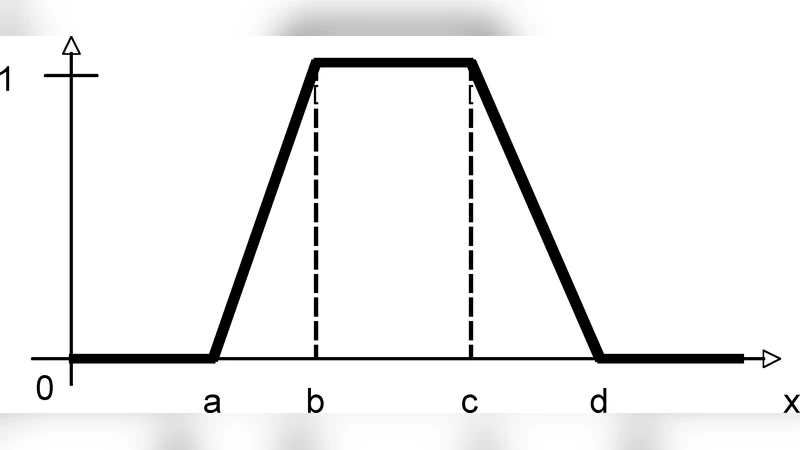
The paper addresses the growing need to handle vague and uncertain information within Semantic Web technologies, specifically focusing on how to represent fuzzy ontologies without altering the existing OWL 2 standard. Rather than extending OWL 2 with new syntax, the authors propose a methodology that leverages OWL 2 annotation properties to embed fuzzy semantics as metadata. The work begins by identifying the syntactic gaps between classical OWL 2 and fuzzy ontology languages: fuzzy concepts require membership functions and modifiers, fuzzy roles need degree values, fuzzy axioms often carry weights, and fuzzy datatypes must be expressed with functions such as triangular or Gaussian distributions. Because these constructs cannot be directly mapped onto OWL 2’s core constructs (classes, object properties, data properties, restrictions), the authors suggest encapsulating them in user‑defined annotation properties.
The core mapping strategy is as follows: each fuzzy concept is annotated with a property (e.g., hasFuzzyMembership) whose literal value encodes the membership function parameters; modifiers are attached via a hasFuzzyModifier annotation; fuzzy roles receive a hasFuzzyDegree annotation indicating a value in the
Comments & Academic Discussion
Loading comments...
Leave a Comment