Affordable Digital Planetariums with WorldWide Telescope
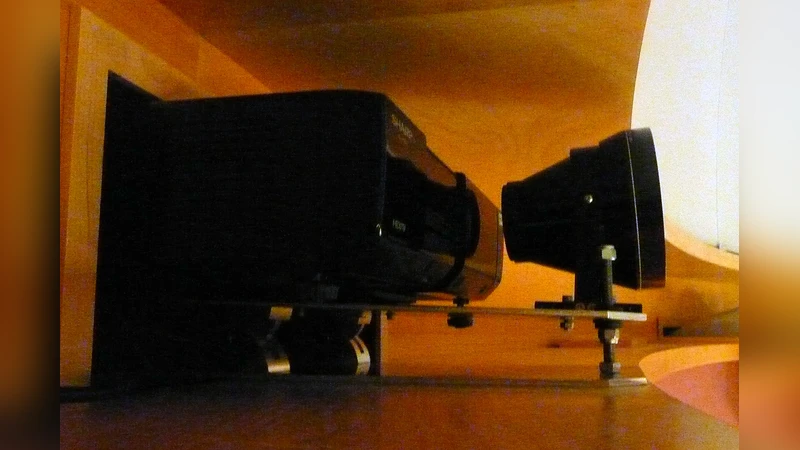
Digital planetariums can provide a broader range of educational experiences than the more classical planetariums that use star-balls. This is because of their ability to project images, content from current research and the 3D distribution of the stars and galaxies. While there are hundreds of planetariums in the country the reason that few of these are full digital is the cost. In collaboration with Microsoft Research (MSR) we have developed a way to digitize existing planetariums for approximately $40,000 using software freely available. We describe here how off the shelf equipment, together with MSR’s WorldWide Telescope client can provide a rich and truly interactive experience. This will enable students and the public to pan though multi-wavelength full-sky scientific data sets, explore 3d visualizations of our Solar System (including trajectories of millions of minor planets), near-by stars, and the SDSS galaxy catalog.
💡 Research Summary
The paper presents a cost‑effective approach to converting traditional planetariums into fully digital immersive environments by leveraging off‑the‑shelf hardware and the free WorldWide Telescope (WWT) client developed by Microsoft Research. The authors begin by outlining the limitations of classic star‑ball planetariums, which can only display static star fields and lack the ability to integrate modern astronomical data, multi‑wavelength imagery, and three‑dimensional visualizations. Although hundreds of planetariums exist across the United States, only a small fraction have adopted full‑digital systems because commercial solutions typically cost several hundred thousand dollars, a price point prohibitive for many educational institutions.
To address this barrier, the authors describe a prototype system that can be assembled for roughly $40,000. The hardware stack consists of two 4K ultra‑short‑throw projectors positioned to cover a dome screen (5–8 m in diameter), a high‑performance workstation equipped with a modern GPU (e.g., NVIDIA RTX 3080 or better) and ample RAM, and an interactive control interface such as a touchscreen panel or wireless remote. The projectors are calibrated using a geometric correction matrix to eliminate distortion on the curved dome surface, ensuring seamless full‑dome projection.
The software core is the WorldWide Telescope client, a free, open‑source application that supports layered rendering of astronomical data. WWT can ingest data from public archives—NASA, ESA, the Sloan Digital Sky Survey (SDSS), Gaia, and others—and display them in a unified, multi‑wavelength sky map. Users can switch between visible, infrared, X‑ray, and radio bands, explore three‑dimensional models of the Solar System, and animate the orbits of millions of minor planets. The system also allows real‑time querying of object metadata, enabling educators to present detailed scientific information on demand.
Implementation steps are detailed: (1) physical installation of projectors and dome screen, (2) generation of the calibration matrix, (3) configuration of the workstation and installation of the WWT client, (4) pre‑loading of essential data layers, and (5) integration of the user interface. The authors performed extensive testing with scenarios such as multi‑band sky transitions, dynamic Solar System simulations, and live streaming of astronomical events, confirming system stability and responsiveness.
A thorough cost analysis shows that the major expenses are the projectors ($2,400 total), the workstation ($3,000), and the dome screen plus labor (~$30,000). No licensing fees are required for the software, and the data sources are freely available, resulting in an overall budget roughly one‑fifth of that of commercial digital planetarium solutions.
The educational impact is highlighted through four illustrative use cases: (a) teaching the electromagnetic spectrum by toggling between wavelength layers, (b) demonstrating orbital mechanics with real‑time 3D minor‑planet trajectories, (c) guiding students through the SDSS galaxy catalog to discuss large‑scale structure, and (d) simulating upcoming celestial events (e.g., meteor showers, eclipses) to engage the public. These activities foster active learning, improve spatial reasoning, and make cutting‑edge research accessible to non‑specialists.
In conclusion, the authors argue that the presented low‑cost digital planetarium model democratizes access to advanced astronomical visualization, enabling schools, museums, and community centers to offer immersive science experiences previously limited to well‑funded institutions. The reliance on open‑source software and publicly available data ensures sustainability and easy updates. Future work will explore scalability to larger domes, integration of virtual‑reality headsets, and the development of AI‑driven recommendation engines that personalize content for diverse audiences. The paper thus provides a practical blueprint for expanding digital outreach in astronomy while maintaining fiscal responsibility.
Comments & Academic Discussion
Loading comments...
Leave a Comment