Phase Transitions in Dense Baryonic Matter and Cooling of Rotating Neutron Stars
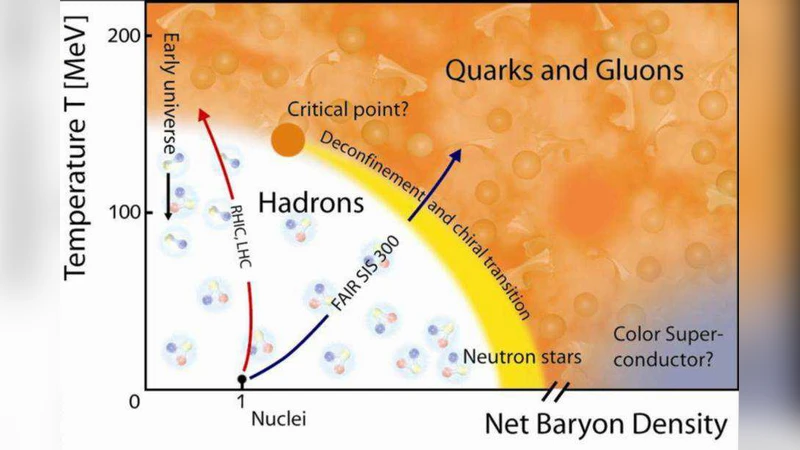
New astrophysical instruments such as skA (square kilometer Array) and IXO (formerly Constellation X) promise the discovery of tens of thousands of new isolated rotating neutron stars (pulsars), neutron stars in low-mass X-ray binaries (LMXBs), anomalous X-ray pulsars (AXPs), and soft gamma repeaters (SGRs). Many of these neutron stars will experience dramatic density changes over their active lifetimes, driven by either stellar spin-up or spin-down, which may trigger phase transitions in their dense baryonic cores. More than that, accretion of matter onto neutron stars in LMXBs is believed to cause pycno-nuclear fusion reactions in the inner crusts of neutron stars. The associated reaction rates may be drastically altered if strange quark matter would be absolutely stable. This paper outlines the investigative steps that need to be performed in order to explore the thermal response of neutron stars to rotationally-driven phase transitions in their cores as well as to nuclear burning scenarios in their crusts. Such research complements the exploration of the phase diagram of dense baryonic matter through particle collider experiments, as performed at RHIC in the USA and as planned at the future Facility for Antiproton and Ion Research (FAIR) in Darmstadt, Germany.
💡 Research Summary
The paper discusses how upcoming astronomical facilities such as the Square Kilometre Array (SKA) and the International X‑ray Observatory (IXO) will dramatically increase the known population of rotating neutron stars—including isolated pulsars, low‑mass X‑ray binaries (LMXBs), anomalous X‑ray pulsars (AXPs), and soft gamma repeaters (SGRs). Many of these objects will undergo substantial changes in their central density over their active lifetimes, driven either by spin‑down (loss of angular momentum) or spin‑up (accretion‑induced angular momentum gain). The authors argue that such density variations can push the matter in the stellar core across critical thresholds, triggering phase transitions from conventional nucleonic matter to exotic phases such as hyperonic matter, deconfined quark matter, or absolutely stable strange quark matter.
The paper is organized around two intertwined physical processes: (1) rotationally driven core phase transitions and (2) pycnonuclear fusion reactions in the inner crust (the “inner‐mantle” region between the core and the outer crust).
Core Phase Transitions
When a neutron star spins down, the centrifugal support diminishes, the central pressure rises, and the core density can exceed the threshold for a new phase. The transition releases latent heat, alters the specific heat and thermal conductivity, and therefore modifies the cooling curve. Conversely, during accretion‑driven spin‑up in LMXBs, the increased centrifugal force lowers the central density, possibly causing a reverse transition back to a less exotic phase. These transitions are not merely academic; they feed back on the star’s moment of inertia and spin evolution, creating observable signatures in timing data and thermal emission.
Pycnonuclear Fusion in the Inner Crust
At the extreme densities (∼10¹⁴ g cm⁻³) and low temperatures (∼10⁸ K) of the inner crust, nuclei are arranged in a Coulomb lattice immersed in a sea of degenerate neutrons. Quantum tunnelling under these conditions enables pycnonuclear fusion reactions, which act as an internal heat source. The reaction rates are highly sensitive to the composition and structure of the lattice. If strange quark matter is absolutely stable, nuclei could partially convert into strange quark nuggets, dramatically altering the Coulomb barrier and enhancing fusion rates by orders of magnitude. This would leave a distinct imprint on the star’s thermal evolution and on the high‑energy photon spectra observed by X‑ray telescopes.
Proposed Research Roadmap
The authors outline a four‑step program to quantify these effects:
- Rotating Stellar Structure – Solve the general‑relativistic, rotating fluid equations in two or three dimensions, incorporating modern equations of state (EOS) that include possible exotic phases.
- Thermal Evolution with Phase Transitions – Couple the structural models to the heat‑transport equation, explicitly including latent heat, changes in specific heat, and modified thermal conductivity across phase boundaries.
- Recalculation of Pycnonuclear Rates – Use up‑to‑date nuclear‑physics data and QCD‑based models of strange quark matter to compute revised fusion rates for various crust compositions.
- Observational Confrontation – Generate synthetic cooling curves, X‑ray/γ‑ray spectra, and timing evolution for comparison with data from SKA, IXO, NICER, and future gravitational‑wave detectors.
By integrating rotational dynamics, dense‑matter microphysics, and crustal nuclear reactions, the study aims to turn rotating neutron stars into natural laboratories for probing the phase diagram of strongly interacting baryonic matter. The authors stress that the synergy between astrophysical observations and terrestrial heavy‑ion experiments (RHIC, FAIR) will be essential for validating the theoretical models.
In summary, the paper argues that (i) rotationally induced density changes can trigger both forward and reverse phase transitions in neutron‑star cores, producing observable thermal and timing anomalies, and (ii) the presence of absolutely stable strange quark matter could dramatically boost pycnonuclear fusion in the inner crust, offering a novel diagnostic of exotic matter. Systematic modeling along the proposed roadmap, combined with the wealth of forthcoming high‑precision observations, promises to shed light on the behavior of matter at supra‑nuclear densities.