Space and velocity distributions of Galactic isolated old Neutron stars
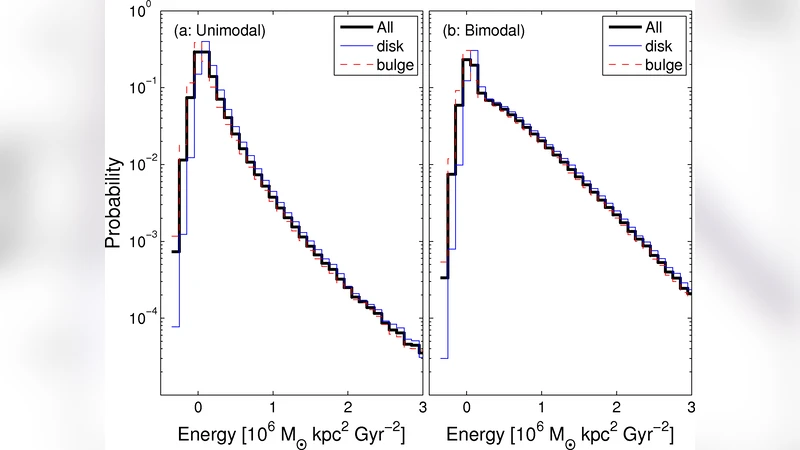
I present the results of Monte-Carlo orbital simulations of Galactic Neutron Stars (NSs). The simulations take into account the up-to-date observed NS space and velocity distributions at birth, and account for their formation rate. I simulate two populations of NSs. Objects in the first population were born in the Galactic disk at a constant rate, in the past 12 Gyr. Those in the second population were formed simultaneously 12 Gyr ago in the Galactic bulge. I assume that the NSs born in the Galactic disk comprise 40% of the total NS population. Since the initial velocity distribution of NSs is not well known, I run two sets of simulations, each containing 3x10^6 simulated NSs. One set utilizes a bimodal initial velocity distribution and the other a unimodal initial velocity distribution, both are advocated based on pulsars observations. In light of recent observational results, I discuss the effect of dynamical heating by Galactic structure on NS space and velocity distributions and show it can be neglected. I present catalogue of simulated NS space and velocity vectors in the current epoch, and catalogue of positions, distances and proper motions of simulated NSs, relative to the Sun. Assuming there are 10^9 NSs in the Galaxy, I find that in the solar neighborhood the density of NSs is about 2-4x10^-4 pc^-3 and their scale height is about 0.3-0.6 kpc (depending on the adopted initial velocity distribution). These catalogue can be used to test the hypothesis that some radio transients are related to these objects.
💡 Research Summary
The paper presents a comprehensive Monte‑Carlo study of the present‑day spatial and velocity distribution of isolated old neutron stars (NSs) in the Milky Way. The author constructs two distinct birth populations: (1) a disk component formed continuously at a constant rate over the past 12 Gyr, and (2) a bulge component that originated in a single burst 12 Gyr ago. The relative contribution is set to 40 % disk and 60 % bulge, reflecting current estimates of the Galaxy’s stellar mass distribution.
To explore the impact of the poorly constrained natal kick distribution, two widely used models are employed. The first is a bimodal Maxwellian distribution (low‑velocity component ≈ 100 km s⁻¹, high‑velocity component ≈ 500 km s⁻¹) derived from pulsar proper‑motion studies, while the second is a single‑peak log‑normal distribution with a mean speed of ≈ 300 km s⁻¹. For each velocity model the author simulates 3 × 10⁶ synthetic NSs, integrating their orbits in a realistic Galactic potential that includes the thin and thick disks, the bulge, and a dark‑matter halo.
The simulations also test the role of dynamical heating caused by spiral arms, giant molecular clouds, and other substructures. The results show that heating contributes negligibly to the long‑term evolution of NS orbits because the typical birth speeds far exceed the velocity perturbations induced by these structures. Consequently, the present‑day distribution is dominated by the initial kick and the smooth Galactic potential.
Assuming a total Galactic NS population of 10⁹ (a value consistent with supernova rate estimates), the model predicts a local space density of 2–4 × 10⁻⁴ pc⁻³ in the solar neighbourhood. The vertical distribution follows an exponential law with a scale height that depends on the kick model: ≈ 0.3 kpc for the unimodal distribution and ≈ 0.6 kpc for the bimodal case. These numbers are somewhat higher than earlier analytic estimates, reflecting the inclusion of a substantial bulge‑born component that has had ample time to diffuse vertically.
A key deliverable of the work is a publicly available catalogue containing, for each simulated NS, its present‑day three‑dimensional position, velocity vector, and derived observables such as heliocentric distance, Galactic longitude and latitude, and proper motion. This resource enables observers to compute the expected number of NSs in any sky region, to assess the likelihood that a given transient (e.g., Rotating Radio Transients, Fast Radio Bursts, or other unexplained radio flashes) could be associated with a nearby isolated NS, and to design targeted searches with upcoming facilities like the Square Kilometre Array.
The paper concludes by outlining future extensions: coupling the dynamical models with NS thermal and magnetic evolution to predict multi‑wavelength signatures, exploring alternative Galactic potentials (e.g., triaxial halos), and applying the framework to external galaxies where NS populations may be probed indirectly. Overall, the study provides a robust, data‑driven baseline for the spatial and kinematic properties of the Milky Way’s hidden neutron‑star reservoir.
Comments & Academic Discussion
Loading comments...
Leave a Comment