Stroke saturation on a MEMS deformable mirror for woofer-tweeter adaptive optics
High-contrast imaging of extrasolar planet candidates around a main-sequence star has recently been realized from the ground using current adaptive optics (AO) systems. Advancing such observations will be a task for the Gemini Planet Imager, an upcoming “extreme” AO instrument. High-order “tweeter” and low-order “woofer” deformable mirrors (DMs) will supply a >90%-Strehl correction, a specialized coronagraph will suppress the stellar flux, and any planets can then be imaged in the “dark hole” region. Residual wavefront error scatters light into the DM-controlled dark hole, making planets difficult to image above the noise. It is crucial in this regard that the high-density tweeter, a micro-electrical mechanical systems (MEMS) DM, have sufficient stroke to deform to the shapes required by atmospheric turbulence. Laboratory experiments were conducted to determine the rate and circumstance of saturation, i.e. stroke insufficiency. A 1024-actuator 1.5-um-stroke MEMS device was empirically tested with software Kolmogorov-turbulence screens of r_0=10-15cm. The MEMS when solitary suffered saturation ~4% of the time. Simulating a woofer DM with ~5-10 actuators across a 5-m primary mitigated MEMS saturation occurrence to a fraction of a percent. While no adjacent actuators were saturated at opposing positions, mid-to-high-spatial-frequency stroke did saturate more frequently than expected, implying that correlations through the influence functions are important. Analytical models underpredict the stroke requirements, so empirical studies are important.
💡 Research Summary
The paper investigates the stroke (maximum surface deformation) limitations of a high‑density micro‑electromechanical systems (MEMS) deformable mirror (DM) when used as the “tweeter” in a woofer‑tweeter adaptive optics (AO) architecture for extreme‑contrast imaging of exoplanets. The motivation stems from the recent success of ground‑based high‑contrast imaging using conventional AO systems and the upcoming Gemini Planet Imager (GPI), which will rely on a two‑stage correction scheme: a low‑order “woofer” DM handling large‑scale wavefront errors and a high‑order MEMS “tweeter” correcting fine spatial frequencies. The ultimate goal is to achieve >90 % Strehl ratios, suppress stellar light with a coronagraph, and reveal faint planetary companions within the dark‑hole region of the point‑spread function.
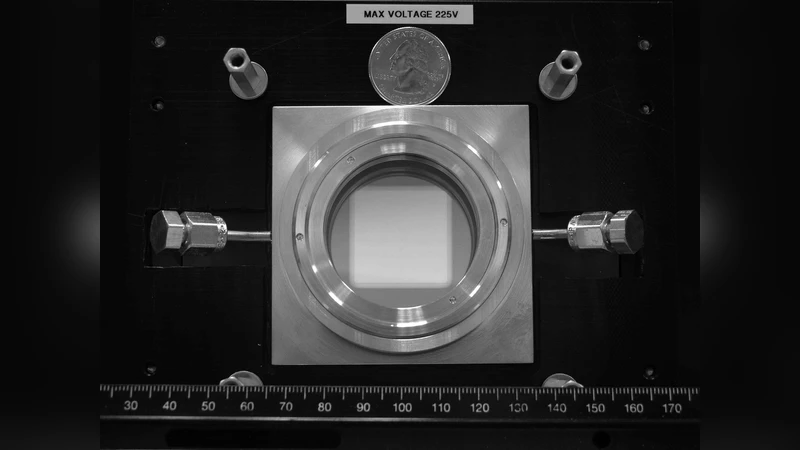
A 1024‑actuator MEMS DM with a quoted 1.5 µm peak‑to‑peak stroke was tested in the laboratory. Synthetic Kolmogorov turbulence screens were generated in software, with Fried parameters r₀ set to 10 cm and 15 cm, representing moderate to poor seeing conditions typical of large‑aperture sites. The turbulence phase maps were converted to voltage patterns and applied to the MEMS; interferometric metrology recorded the actual surface shape. “Saturation” was defined as any actuator reaching its commanded voltage limit (i.e., the 1.5 µm stroke ceiling).
When the MEMS operated alone, about 4 % of the 1024 actuators saturated across the ensemble of turbulence realizations. Saturation events clustered in the mid‑ to high‑spatial‑frequency regime, where the local curvature of the phase screen demands larger actuator excursions. Notably, adjacent actuators rarely saturated in opposite directions, indicating that the MEMS influence functions retain some smoothing but do not provide perfect cancellation of neighboring commands.
To emulate a realistic woofer‑tweeter system, a low‑order woofer DM was simulated with 5–10 actuators spanning the 5‑meter primary mirror. The woofer removed the bulk of the low‑frequency content, leaving the MEMS to correct only the residual high‑frequency errors. Under this configuration, MEMS saturation dropped dramatically to well below 1 % (typically 0.3–0.5 %). This demonstrates that a modest‑order woofer can dramatically reduce the stroke burden on the tweeter, making the risk of saturation negligible for on‑sky operation.
The authors also compared their empirical results with analytical stroke‑budget models commonly used in AO system design. Simple models that estimate required stroke from the RMS wavefront error or from the peak‑to‑peak amplitude of a Kolmogorov screen systematically under‑predicted the actual stroke needed. The discrepancy arises because such models ignore the spatial correlation introduced by the DM’s influence functions, the non‑linear voltage‑stroke relationship of MEMS actuators, and manufacturing tolerances that cause actuator‑to‑actuator variation. Consequently, the paper argues that empirical testing is indispensable for validating stroke budgets, especially for extreme‑AO instruments where the contrast requirements are stringent (10⁻⁶–10⁻⁸).
The practical implication is clear: for GPI‑type systems, a 1.5 µm‑stroke MEMS tweeter is sufficient provided it is paired with an appropriately sized woofer. However, designers must account for the higher-than‑expected stroke demand at mid‑spatial frequencies, perhaps by selecting MEMS devices with a modest stroke margin (e.g., 2 µm) or by refining the control algorithms to redistribute commands more evenly across neighboring actuators. The study underscores that residual wavefront error directly translates into speckle noise within the dark hole, limiting planet detectability; therefore, avoiding actuator saturation is a critical step toward achieving the desired high‑contrast performance.
In summary, the paper delivers a thorough experimental characterization of MEMS DM stroke saturation, validates the benefit of a woofer‑tweeter architecture, highlights shortcomings of conventional analytical stroke estimates, and provides concrete guidance for the design of next‑generation extreme AO systems aimed at direct exoplanet imaging.
Comments & Academic Discussion
Loading comments...
Leave a Comment