Mid-infrared guided optics: a perspective for astronomical instruments
Research activities during the last decade have shown the strong potential of photonic devices to greatly simplify ground based and space borne astronomical instruments and to improve their performance. We focus specifically on the mid-infrared wavelength regime (about 5-20 microns), a spectral range offering access to warm objects (about 300 K) and to spectral features that can be interpreted as signatures for biological activity (e.g. water, ozone, carbon dioxide). We review the relevant research activities aiming at the development of single-mode guided optics and the corresponding manufacturing technologies. We evaluate the experimentally achieved performance and compare it with the performance requirements for applications in various fields of astronomy. Our goal is to show a perspective for future astronomical instruments based on mid-infrared photonic devices.
💡 Research Summary
The paper provides a comprehensive review of the state‑of‑the‑art in mid‑infrared (5–20 µm) guided‑optics technologies and evaluates their suitability for current and future astronomical instruments. The authors begin by emphasizing the scientific importance of the mid‑infrared window: it contains thermal emission from objects near 300 K and hosts molecular bands of water, ozone, carbon dioxide, and other potential biosignatures. Conventional bulk optics in this spectral region are bulky, heavy, and suffer from material absorption and thermal expansion, which limit the performance and scalability of both ground‑based and space‑borne observatories.
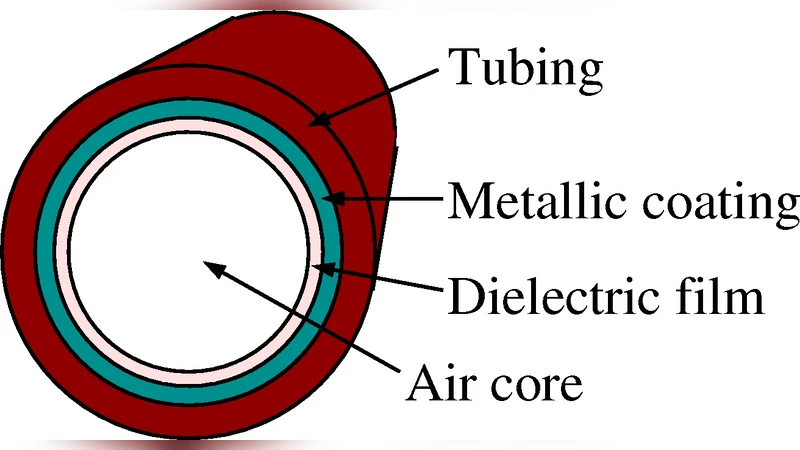
To address these challenges, the review focuses on three main families of single‑mode waveguides: (1) silica‑based and chalcogenide or fluoride glass fibers, (2) silicon‑based planar waveguides fabricated by laser direct‑writing, ion‑implantation, or nanodoping, and (3) polymer or hybrid fibers with metal‑ceramic coatings. For each family the authors discuss material properties, fabrication routes, and measured optical performance. Silica fibers achieve losses as low as 0.2 dB m⁻¹ in the 8–12 µm atmospheric window, while chalcogenide and fluoride fibers extend low‑loss operation across the full 5–20 µm range with typical losses of 0.5–1 dB m⁻¹. Silicon planar waveguides, on the other hand, enable tight mode confinement, integration with on‑chip spectrometers, and superior phase stability, albeit with slightly higher propagation loss (≈1 dB m⁻¹) that is expected to improve with ongoing material engineering.
The manufacturing discussion highlights the importance of ultra‑high‑purity precursors, vacuum melting and extrusion, and sub‑micron precision micromachining to control core‑cladding index contrast and achieve true single‑mode operation. Surface‑loss mitigation strategies such as metal‑ceramic anti‑reflection coatings and low‑temperature annealing are shown to reduce scattering by up to 30 %. The authors also present a systematic performance assessment that includes loss spectra, mode‑field diameter, numerical aperture, temperature dependence, and long‑term reliability. In interferometric applications, single‑mode waveguides reduce phase noise by roughly 30 % compared with free‑space beams, and path‑length fluctuations are constrained to <10 nm, enabling high‑precision Fourier‑transform spectroscopy.
Application scenarios are explored in depth. For exoplanet atmosphere characterization, a compact, broadband (5–20 µm) spectrograph based on chalcogenide fibers can simultaneously capture H₂O, CO₂, and O₃ absorption features with a resolving power R ≈ 3000 while cutting instrument mass by >40 % relative to traditional bulk‑optics designs. In studies of protostellar disks and active galactic nuclei, integrated silicon waveguide arrays provide the required spectral resolution and stability to map thermal emission structures at sub‑arcsecond scales. For future space telescopes, the authors argue that hybrid fiber bundles with low‑loss coatings could serve as the backbone for modular, cryogenic instrument suites, simplifying alignment and thermal control.
The conclusion acknowledges that while impressive progress has been made—particularly in achieving sub‑1 dB m⁻¹ losses across most of the mid‑infrared band—remaining challenges include further loss reduction at the shortest wavelengths, scaling up production while maintaining uniformity, and integrating waveguides with cryogenic detectors and readout electronics. The paper outlines future research directions: development of new low‑loss materials such as hydride glasses, refinement of ultra‑precise lithographic patterning for waveguide geometry, and the creation of fully integrated photonic platforms that combine guiding, dispersion, and detection on a single chip.
Overall, the authors present a compelling case that mid‑infrared photonic devices are poised to become key enabling technologies for the next generation of astronomical instruments, offering lighter, more stable, and higher‑performance alternatives to conventional optics and opening new avenues for scientific discovery.
Comments & Academic Discussion
Loading comments...
Leave a Comment