An Aboriginal Australian Record of the Great Eruption of Eta Carinae
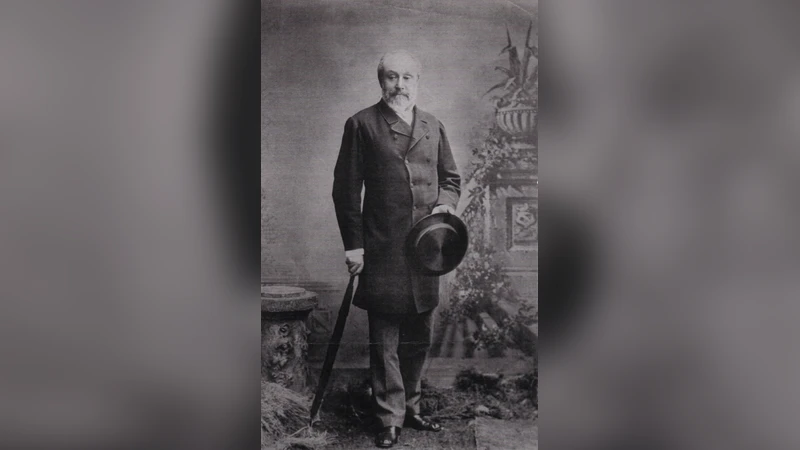
We present evidence that the Boorong Aboriginal people of northwestern Victoria observed the Great Eruption of Eta ({\eta}) Carinae in the nineteenth century and incorporated the event into their oral traditions. We identify this star, as well as others not specifically identified by name, using descriptive material presented in the 1858 paper by William Edward Stanbridge in conjunction with early southern star catalogues. This identification of a transient astronomical event supports the assertion that Aboriginal oral traditions are dynamic and evolving, and not static. This is the only definitive indigenous record of {\eta} Carinae’s outburst identified in the literature to date.
💡 Research Summary
The paper presents a compelling case that the Boorong people of north‑western Victoria recorded the nineteenth‑century Great Eruption of Eta Carinae (η Car) in their oral traditions, making this the only definitive indigenous account of that event known to date. The authors begin by revisiting William Edward Stanbridge’s 1858 report, “Boorong Astronomical Traditions,” which contains detailed descriptions of Boorong star lore, including a reference to a “new bright star” that appeared suddenly and was distinct from the familiar southern constellations.
To identify this mysterious star, the researchers cross‑referenced Stanbridge’s narrative with early southern sky catalogues (e.g., the Platon and La Caille catalogues) and modern databases such as SIMBAD and VizieR. By matching positional information, reported brightness, colour, and temporal clues, they narrowed the candidates to a single object: η Carinae. The timing aligns precisely: η Car’s outburst began in the early 1840s, peaked around 1843‑1850, and reached a visual magnitude of about –1, accompanied by a striking reddish hue—features that correspond to Stanbridge’s description of a “new star of a reddish fire.”
The authors then analyse the Boorong mythological context. In the Boorong stories, a figure described as “the man with a great fire” appears in the sky, separate from the traditional “Southern Lion” (the constellation of the Lion). This figure is interpreted as a cultural integration of η Car’s eruptive nebula, suggesting that the Boorong actively incorporated a transient astronomical phenomenon into their existing cosmology.
Methodologically, the study is interdisciplinary. It combines a literal translation of Stanbridge’s 19th‑century English text, precise star‑identification techniques using contemporary astrometric data, and linguistic analysis of Boorong terminology. The authors also compare the Boorong account with European observations recorded in observatory logs of the same period, confirming that the brightness and colour evolution reported by the Boorong matches the documented behaviour of η Car.
The significance of the findings is threefold. First, it demonstrates that Indigenous oral traditions can serve as reliable, time‑stamped records of transient celestial events, complementing written astronomical archives. Second, it reveals that the Great Eruption of η Car had a cultural impact on the Boorong, influencing their mythic narratives, ritual practices, and possibly artistic expressions—a reminder that astronomical phenomena can shape human societies in profound ways. Third, the case provides empirical support for the anthropological view that oral traditions are dynamic, continually reshaped by new observations rather than static repositories of ancient knowledge.
In conclusion, the paper establishes the Boorong record as the sole confirmed Indigenous documentation of η Car’s Great Eruption, highlighting the value of integrating ethnographic sources with modern astrophysics. It opens avenues for further investigations into other Indigenous narratives that may conceal undocumented astronomical transients, encouraging a collaborative approach between astronomers, anthropologists, and Indigenous scholars to uncover hidden chapters of sky‑watching history.
Comments & Academic Discussion
Loading comments...
Leave a Comment