Hard X-ray and Gamma-Ray Detectors
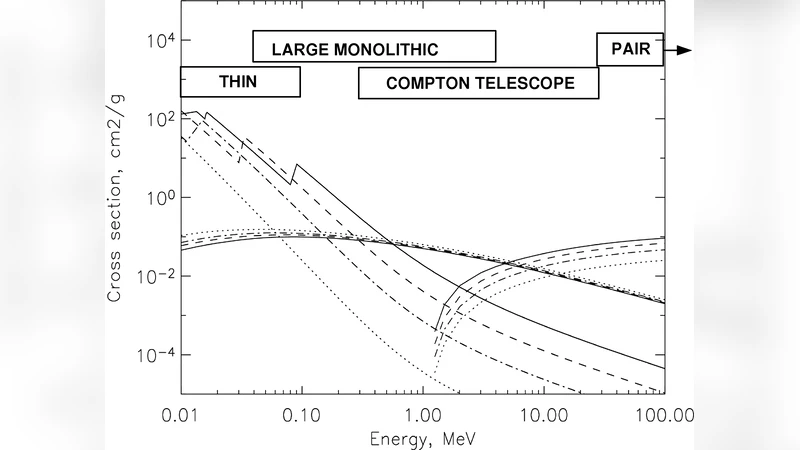
The detection of photons above 10 keV through MeV and GeV energies is challenging due to the penetrating nature of the radiation, which can require large detector volumes, resulting in correspondingly high background. In this energy range, most detectors in space are either scintillators or solid-state detectors. The choice of detector technology depends on the energy range of interest, expected levels of signal and background, required energy and spatial resolution, particle environment on orbit, and other factors. This section covers the materials and configurations commonly used from 10 keV to > 1 GeV.
💡 Research Summary
**
The paper provides a comprehensive overview of detector technologies used for photons in the hard X‑ray to gamma‑ray regime, spanning roughly 10 keV to energies above 1 GeV. It begins by emphasizing the fundamental challenge: photons in this band are highly penetrating, requiring detector volumes large enough to achieve acceptable stopping power. Large volumes, however, inevitably increase the background from cosmic rays, trapped particles, and activation of detector materials, making the signal‑to‑background ratio (S/B) the central design metric.
Two broad families of detectors dominate space‑based missions: scintillators and solid‑state semiconductor devices. Scintillators convert incident photon energy into visible light, which is then read out by photomultiplier tubes (PMTs) or silicon photomultipliers (Si‑APDs). The paper reviews the most common scintillator materials:
- NaI(Tl) – high light yield, low cost, excellent for ≤200 keV, but temperature‑sensitive and suffers radiation‑induced darkening.
- CsI(Tl) – mechanically robust, better radiation hardness than NaI, suitable for long‑duration missions.
- BGO (Bi₄Ge₃O₁₂) – high density (7.13 g cm⁻³) and atomic number, giving superior gamma‑ray absorption; however, its modest light output limits energy resolution.
- LaBr₃(Ce) – emerging as a “next‑generation” scintillator with ~3 % energy resolution at 662 keV, fast decay (~16 ns), and good linearity, making it ideal for the 100 keV‑several MeV window.
Scintillator‑based instruments are favored when large detection areas are needed, when modest energy resolution suffices, or when simplicity and proven heritage are priorities.
Solid‑state detectors exploit the creation of electron‑hole pairs in a semiconductor crystal. Their performance hinges on material bandgap, carrier mobility, and the ability to operate at or near room temperature. The paper discusses:
- High‑purity Germanium (HPGe) – unrivaled energy resolution (<0.1 % at 1 MeV) but requires cryogenic cooling (≈77 K) and is vulnerable to radiation‑induced leakage currents.
- CdZnTe (CZT) and CdTe – operate at ambient temperature, provide good stopping power up to ~1 MeV, and can be pixelated for imaging. CZT’s high resistivity and large bandgap reduce leakage, while its fine pixelation enables coded‑mask or Compton imaging.
- Silicon (Si(Li) and Si‑CZT hybrids) – excellent for low‑energy X‑rays (≤30 keV) due to low atomic number; stacking thin Si layers can extend the effective energy range.
- Mercury Iodide (HgI₂) – mentioned as an emerging material with high Z and room‑temperature operation, though crystal growth remains challenging.
The paper stresses that semiconductor detectors demand sophisticated front‑end electronics (ASICs) for low‑noise charge readout, temperature stabilization, and on‑board calibration (often using embedded radioactive sources). Radiation damage, manifested as increased leakage current and charge‑trapping, must be mitigated through periodic annealing, shielding, and selection of radiation‑hard materials.
Background suppression strategies are examined in depth. Passive shielding (lead, tungsten, polymer composites) reduces external particle flux but adds mass. Active anti‑coincidence (ACS) systems, typically plastic scintillators surrounding the primary detector, veto events coincident with charged particles, improving S/B by an order of magnitude. Pulse‑shape discrimination, timing analysis, and software‑based event filtering further refine the data set.
Orbital environment considerations are highlighted. Low Earth orbit (LEO) missions contend with the South Atlantic Anomaly and trapped proton belts, while deep‑space probes face a more isotropic cosmic‑ray background and solar particle events. The paper outlines how mission‑specific factors—such as expected flux, mission duration, power budget, and thermal constraints—drive the choice of detector, shielding, and readout architecture.
For photon energies above ~10 MeV, the detection mechanisms shift to pair production and Compton scattering. The authors describe the architecture of Compton telescopes (e.g., double‑layer CZT or Si detectors) and pair‑production telescopes (e.g., silicon tracker + calorimeter). These instruments require precise 3‑D position resolution, fast timing, and complex event reconstruction algorithms to determine photon direction and energy.
In the concluding section, the paper identifies four key research directions that will shape the next generation of hard X‑ray and gamma‑ray observatories:
- Advanced Scintillator Development – engineering high‑density, high‑light‑yield composites (e.g., lanthanide‑doped glasses) that can be grown in large volumes with uniform optical properties.
- Scalable Room‑Temperature Semiconductor Production – improving crystal growth techniques for large‑area CZT, HgI₂, and perovskite‑based semiconductors while reducing defect densities that degrade charge collection.
- Artificial‑Intelligence‑Enhanced Background Rejection – deploying machine‑learning models on‑board to classify events in real time, enabling dynamic adjustment of veto thresholds and improving effective sensitivity.
- Low‑Power, High‑Speed ASICs and Integrated Electronics – designing application‑specific integrated circuits that combine preamplification, digitization, and trigger logic within a minimal power envelope, essential for small satellite platforms.
Overall, the paper argues that optimal detector selection is a multidimensional trade‑off among energy range, required energy/spatial resolution, background environment, mass/power constraints, and mission lifetime. By integrating advances in materials science, electronics, and data‑analysis algorithms, future missions will achieve unprecedented sensitivity across the hard X‑ray to gamma‑ray spectrum, opening new windows on astrophysical phenomena, planetary science, and nuclear security applications.
Comments & Academic Discussion
Loading comments...
Leave a Comment