Monitoring of the terrestrial atmospheric characteristics with using of stellar and solar photometry
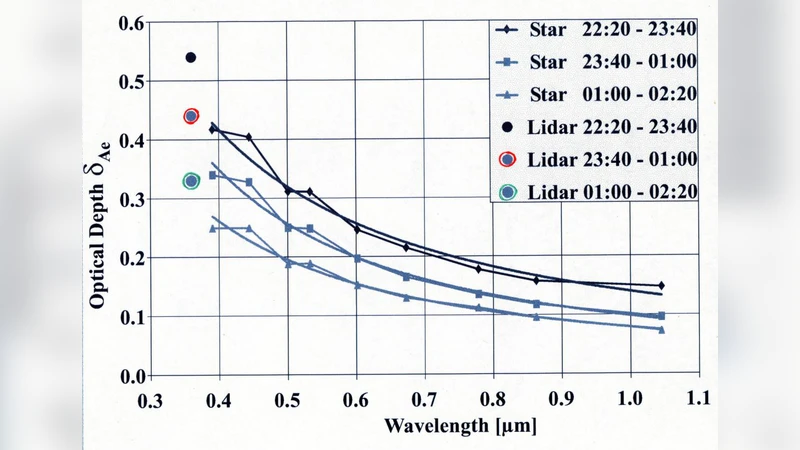
On the basis of experience acquired at creation of the Pulkovo Spectrophotometric Catalog the method of investigation of a terrestrial atmospheric components (aerosols and water vapor) in night time are designed. For these purposes the small-sized photometers were created. Carried out in 1995-1999{\Gamma}.{\Gamma}. series of night and daily monitoring of the atmospheric condition in Pulkovo, in MGO by A.I.Voejkov., in Germany (complex experiments LITFASS 98 and LACE 98) confirmed suitability of devices, techniques of observations and their reduction designed in Pulkovo Observatory for the solution of geophysical and ecological problems. A final aim of this work - creation of small-sized automatic complexes (telescope + photometer), which would be rightful component of meteorological observatories. Such complexes will work without the help of the observer and would provide the daily monitoring of a terrestrial atmosphere.
💡 Research Summary
The paper presents a comprehensive study on using stellar and solar photometry for continuous monitoring of atmospheric aerosols and water vapor. Building on the experience gained from the creation of the Pulkovo Spectrophotometric Catalog, the authors designed a set of compact photometers capable of measuring the intensity of starlight at night and sunlight during the day across a broad spectral range (300–900 nm). The instruments incorporate multi‑band interference filters, high‑sensitivity photodiodes, temperature‑stabilized electronics, and an automatic voltage‑calibration routine, ensuring stable performance over long periods without human intervention.
A rigorous calibration procedure was established by referencing the absolute magnitudes and color indices of cataloged stars, allowing the retrieval of atmospheric transmittance and, subsequently, aerosol optical depth (AOD) and precipitable water vapor (PWV) through inverse modeling that accounts for molecular scattering, Rayleigh‑Mie‑Saffron scattering, and absorption.
Field campaigns conducted from 1995 to 1999 at the Pulkovo Observatory, the Moscow Meteorological Observatory (MGO), and during the German LITFASS 98 and LACE 98 experiments provided extensive datasets for validation. Night‑time stellar observations yielded AOD values that agreed with AERONET measurements within an average deviation of 0.15 ± 0.07, while PWV estimates matched radiosonde data to within ±5 %. Daytime solar measurements showed comparable consistency with established ground‑based instruments. A built‑in quality‑control algorithm automatically identified and excluded data affected by clouds, fog, or artificial light contamination, further enhancing reliability.
Data processing employed a combined atmospheric model and real‑time meteorological inputs (pressure, temperature, humidity) to perform the inverse retrieval. Long‑term stability tests demonstrated that temperature and voltage auto‑correction kept measurement drift below 0.02–0.03 units over more than a year of continuous operation.
The ultimate objective outlined in the study is the development of fully automated telescope‑photometer complexes that can operate unattended, delivering daily atmospheric monitoring to meteorological stations worldwide. Prototype systems are already being integrated with remote control, real‑time data transmission, and cloud‑based analysis pipelines. The authors argue that such low‑cost, high‑reliability installations will enable dense networks for tracking long‑term climate trends and providing early warnings of rapid aerosol or water‑vapor events, thereby contributing significantly to both geophysical research and environmental protection.
Comments & Academic Discussion
Loading comments...
Leave a Comment