Service Level Agreement (SLA) in Utility Computing Systems
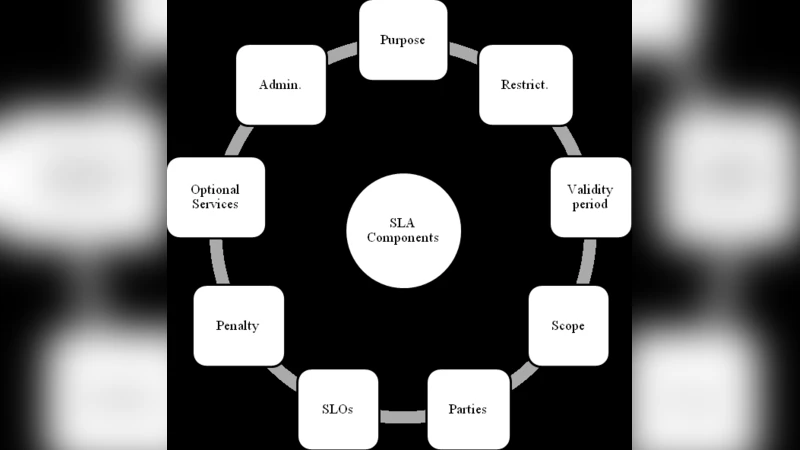
In recent years, extensive research has been conducted in the area of Service Level Agreement (SLA) for utility computing systems. An SLA is a formal contract used to guarantee that consumers’ service quality expectation can be achieved. In utility computing systems, the level of customer satisfaction is crucial, making SLAs significantly important in these environments. Fundamental issue is the management of SLAs, including SLA autonomy management or trade off among multiple Quality of Service (QoS) parameters. Many SLA languages and frameworks have been developed as solutions; however, there is no overall classification for these extensive works. Therefore, the aim of this chapter is to present a comprehensive survey of how SLAs are created, managed and used in utility computing environment. We discuss existing use cases from Grid and Cloud computing systems to identify the level of SLA realization in state-of-art systems and emerging challenges for future research.
💡 Research Summary
The chapter provides a comprehensive survey of Service Level Agreements (SLAs) within utility‑computing environments, focusing on how SLAs are created, managed, and employed in both grid and cloud systems. It begins by defining an SLA as a formal contract that guarantees a consumer’s quality‑of‑service expectations and argues that, because utility computing charges users on a pay‑as‑you‑go basis and dynamically allocates resources, maintaining high customer satisfaction hinges on robust SLA mechanisms.
The authors classify existing SLA research into two principal dimensions: expressive languages and management frameworks. Expressive languages such as WS‑Agreement, WSLA, QML, and SLA‑ML are examined for their ability to model a wide range of QoS attributes (availability, latency, throughput, security, cost, etc.) in machine‑readable XML/JSON formats. Management frameworks are then grouped according to the lifecycle phases they support—negotiation, monitoring, violation detection, remediation, and renegotiation. A central theme is the need for autonomic SLA management, where policy engines, rule‑based systems, and machine‑learning predictors automatically adjust resource allocations, trigger scaling actions, or re‑route traffic to keep SLA targets within bounds without human intervention.
The chapter proceeds to a detailed case‑study comparison of grid and cloud platforms. Research‑oriented grid middleware (e.g., Globus Toolkit, UNICORE) often implements sophisticated, multi‑parameter QoS contracts and dynamic negotiation protocols, yet suffers from a lack of standard interfaces and high configuration complexity, limiting its deployment in production environments. Commercial cloud providers (Amazon Web Services, Microsoft Azure, Google Cloud Platform) typically expose only a basic set of SLA guarantees—primarily uptime and performance metrics—and offer limited remediation (service credits) when violations occur. This contrast illustrates that, while the concept of an SLA is widely accepted, its practical realization varies dramatically across utility‑computing domains.
A substantial portion of the analysis is devoted to the multi‑QoS trade‑off problem. The authors discuss how improving one attribute (e.g., higher availability through replication) inevitably raises costs or energy consumption, and how decreasing latency may require over‑provisioned compute resources. To address these conflicts, they review multi‑objective optimization techniques, fuzzy logic controllers, and reinforcement‑learning approaches that can discover Pareto‑optimal configurations and dynamically adapt policies based on real‑time telemetry.
Looking forward, the chapter identifies four research directions that are essential for evolving SLAs from static contracts to intelligent, self‑governing components of utility‑computing infrastructures:
- Standardized, extensible SLA meta‑models that enable interoperability across heterogeneous clouds and grids.
- Predictive, big‑data‑driven monitoring that anticipates SLA breaches before they happen and triggers proactive mitigation.
- Blockchain or distributed‑ledger based smart contracts to provide immutable audit trails, transparent enforcement, and automated settlement of penalties.
- User‑centric SLA negotiation tools that abstract the underlying complexity and allow non‑technical stakeholders to define, modify, and visualize SLA terms easily.
In conclusion, the chapter argues that SLAs are evolving from simple legal documents into core technical mechanisms that assure reliability, elasticity, and cost‑effectiveness in utility‑computing services. While current commercial clouds offer only rudimentary SLA features, emerging research in autonomic management, standardized languages, and decentralized contract execution promises a future where SLAs are fully automated, interoperable, and capable of handling complex, multi‑dimensional QoS requirements. This evolution is critical for the next generation of utility‑computing platforms that must balance performance, cost, and sustainability at scale.
Comments & Academic Discussion
Loading comments...
Leave a Comment