Is the degree of saturation a good candidate for Bishops X parameter?
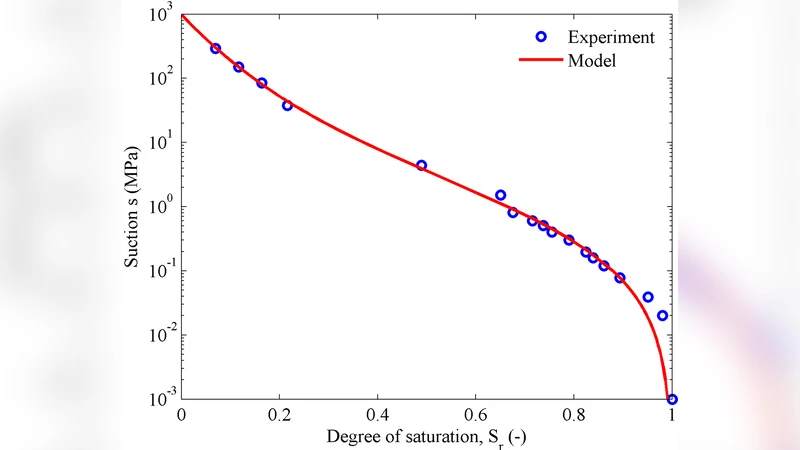
In unsaturated soil mechanics, the quest for an effective stress playing the same role as Terzaghi’s effective stress does for saturated soils has introduced a long standing debate, dating back to the 1960s. Several contributions have been proposed since the early work of Bishop. It is well recognized to date that a single constitutive stress is not sufficient by itself to catch the main features of the behaviour of unsaturated soils and it is often combined with matric suction. In this paper, focus is given to a largely used formulation for such a constitutive stress, based on the use of an averaged pore pressure. In particular, this paper discusses on thermodynamics bases the validity of the choice of the factor X weighting the fluid pressures contribution to the constitutive stress. This factor is usually assumed to be equal to the degree of saturation of water. In this work it is shown that the choice of this natural candidate implies restrictive assumptions on the plastic flow rule. As shown from experimental data obtained from a literature review, this choice may not be pertinent for certain classes of materials, particularly high plasticity clays.
💡 Research Summary
The paper revisits the long‑standing assumption that Bishop’s X‑parameter (χ), which weights the contribution of pore‑water and pore‑air pressures in the effective stress formulation for unsaturated soils, can be identified with the degree of saturation (S_r). Starting from a thermodynamic framework, the authors derive the conditions under which χ = S_r is compatible with the Clausius‑Duhem inequality and a plastic flow rule that depends only on matric suction (ψ). This derivation reveals that setting χ equal to S_r implicitly imposes a restrictive plastic potential: the plastic strain increment must be a function of suction alone, independent of the detailed saturation state or micro‑structural variables.
To test the practical relevance of this restriction, the authors conduct an extensive literature review, extracting data from triaxial, direct shear, and suction‑controlled tests on a variety of soils ranging from coarse sands to highly plastic clays. For coarse‑grained soils, the χ = S_r assumption yields predictions of shear strength and volumetric strain that are within 5–10 % of experimental observations, supporting its use as a convenient approximation. However, for high‑plasticity clays (e.g., kaolinite, bentonite) the model systematically mis‑predicts behavior: it underestimates shear strength loss and overestimates dilatancy when suction exceeds about 200 kPa. These discrepancies arise because the plastic response of such clays is strongly governed by micro‑structural mechanisms (electro‑double‑layer forces, particle rearrangement) that are not captured by a simple saturation‑based weighting.
The authors therefore argue that χ should be treated as a more general function, possibly of the form χ = α S_r + β (ψ/ψ_ref) + γ I_d, where I_d represents a measure of the soil’s grain‑size distribution or fabric. Such a formulation relaxes the restrictive plastic flow assumption, allowing the effective stress to incorporate both suction and structural effects while remaining thermodynamically admissible.
In conclusion, while the χ = S_r hypothesis offers a parsimonious and historically popular choice, its validity is limited to soils whose plastic flow is not strongly suction‑dependent. For high‑plasticity clays and other materials with complex micro‑structures, a multi‑parameter χ is required to achieve accurate predictions. The paper calls for targeted experimental programs to quantify the relationships among χ, suction, saturation, and micro‑structural descriptors, and for the development of constitutive models that embed these relationships into robust unsaturated soil design tools.
Comments & Academic Discussion
Loading comments...
Leave a Comment