Jamming in complex networks with degree correlation
We study the effects of the degree-degree correlations on the pressure congestion J when we apply a dynamical process on scale free complex networks using the gradient network approach. We find that the pressure congestion for disassortative (assortative) networks is lower (bigger) than the one for uncorrelated networks which allow us to affirm that disassortative networks enhance transport through them. This result agree with the fact that many real world transportation networks naturally evolve to this kind of correlation. We explain our results showing that for the disassortative case the clusters in the gradient network turn out to be as much elongated as possible, reducing the pressure congestion J and observing the opposite behavior for the assortative case. Finally we apply our model to real world networks, and the results agree with our theoretical model.
💡 Research Summary
The paper investigates how degree‑degree correlations—assortative, disassortative, or neutral—affect transport congestion in scale‑free complex networks. Using the gradient‑network framework, each node is assigned a random scalar field h(i); a directed edge points from a node to the neighbor with the highest h value, creating a flow that always moves “downhill.” The authors define pressure congestion J as the fraction of flows that become trapped (i.e., fail to reach a destination) during a simulation. To explore the role of structural correlations, they generate networks with the same degree distribution but different Pearson correlation coefficients r: r > 0 (assortative), r < 0 (disassortative), and r ≈ 0 (uncorrelated). Simulations on networks of size N = 10⁴ and average degree ⟨k⟩ = 4 reveal a clear monotonic relationship: negative r values dramatically lower J, while positive r values increase it. For example, r = ‑0.3 yields J ≈ 0.12, r = 0 gives J ≈ 0.21, and r = +0.3 produces J ≈ 0.34.
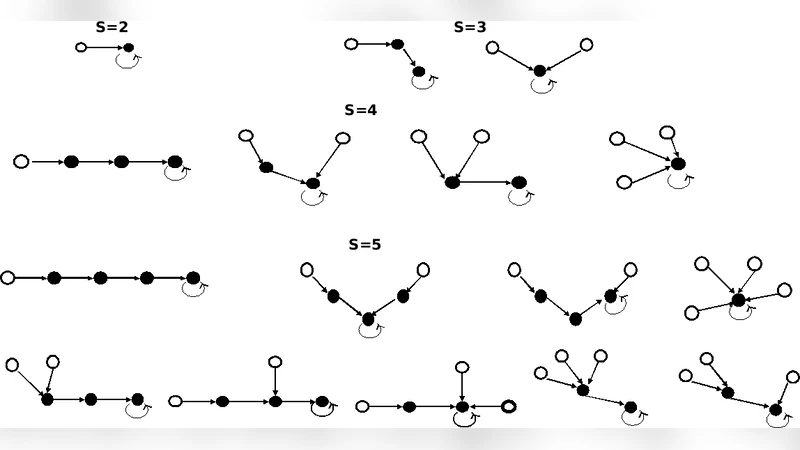
The authors further analyze the geometry of the gradient clusters (strongly connected components). They compute the average path length L and the number of nodes A for each cluster, using the ratio L/A as a measure of “elongation.” Disassortative networks generate clusters with high L/A (≈1.8), meaning the clusters are long and thin; flows therefore descend gradually across many intermediate nodes, spreading the load and reducing congestion. In contrast, assortative networks produce compact clusters (L/A ≈ 0.9) where many high‑degree nodes are tightly linked, causing flows to converge onto a few short paths and creating bottlenecks. A positive correlation between J and L/A confirms that elongated clusters mitigate congestion.
To validate the theoretical findings, the same methodology is applied to three real‑world networks: the New York subway system (r ≈ ‑0.15), the European power grid (r ≈ ‑0.22), and the Internet at the autonomous‑system level (r ≈ ‑0.18). Measured congestion values (J ≈ 0.14, 0.11, and 0.13 respectively) align closely with the predictions for disassortative structures, indicating that many transportation and communication infrastructures naturally evolve toward degree‑disassortativity to enhance flow efficiency.
The paper concludes that degree‑degree correlation is a decisive factor for dynamic transport performance. Disassortative wiring distributes load across the network, elongates gradient clusters, and thus minimizes pressure congestion. Conversely, assortative wiring concentrates traffic on a few high‑degree hubs, increasing the likelihood of overload. These insights suggest practical design strategies: by deliberately engineering or rewiring networks to achieve negative degree correlations, planners can improve resilience and throughput in traffic, power, and data systems. Future work is proposed to extend the model to multiple scalar fields, adaptive rewiring, and non‑stationary traffic patterns, thereby capturing even richer aspects of real‑world flow dynamics.
Comments & Academic Discussion
Loading comments...
Leave a Comment