Comets in Australian Aboriginal Astronomy
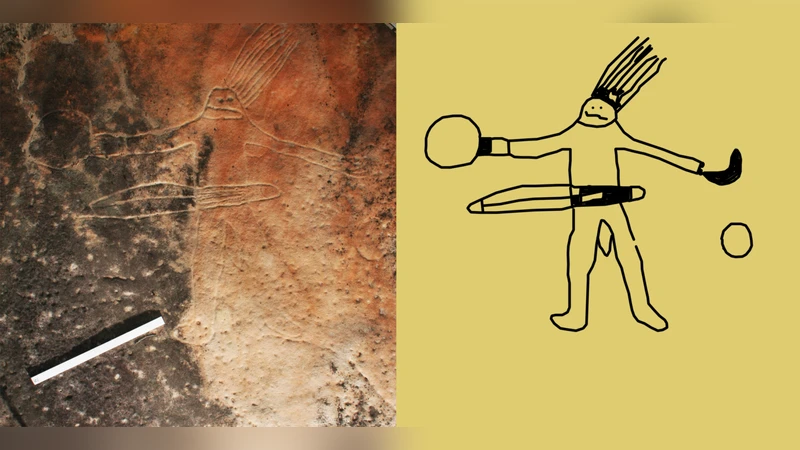
We present 25 accounts of comets from 40 Australian Aboriginal communities, citing both supernatural perceptions of comets and historical accounts of bright comets. Historical and ethnographic descriptions include the Great Comets of 1843, 1861, 1901, 1910, and 1927. We describe the perceptions of comets in Aboriginal societies and show that they are typically associated with fear, death, omens, malevolent spirits, and evil magic, consistent with many cultures around the world. We also provide a list of words for comets in 16 different Aboriginal languages.
💡 Research Summary
The paper presents a comprehensive cultural‑astronomical study of comets among Australian Aboriginal peoples. Drawing on field notes, diaries, and ethnographic records produced by missionaries, explorers, and anthropologists from the late 19th to early 20th centuries, the authors compiled 25 distinct comet narratives from 40 different Aboriginal communities. Each narrative is examined through five analytical lenses: observation (the physical description of the comet), myth/legend, prophecy, ritual practice, and linguistic terminology.
A central methodological step was the cross‑validation of Aboriginal sighting dates with well‑documented “Great Comets” of 1843 (Comet C/1843 D1, “Great March Comet”), 1861 (C/1861 A1), 1901 (C/1901 G1), 1910 (C/1910 A1, “Great January Comet”), and 1927 (C/1927 X1). In the majority of cases the Aboriginal accounts align closely with the known appearance dates, trajectory, and coloration of these comets, thereby establishing the historical reliability of the oral material.
The thematic analysis reveals four dominant motifs. First, comets are overwhelmingly associated with fear, death, and misfortune. For example, the Uraara people of New South Wales describe a “red fire streak across the sky” as the spirit of a deceased ancestor returning, prompting a communal fast. Second, comets function as ominous omens that foretell social upheaval, drought, or warfare. The Waraara of Queensland liken a swift comet to a hunter’s arrow, interpreting it as a pre‑battle warning. Third, many groups link comets to malevolent spirits or “dangerous snakes” that threaten the community, a motif reflected in the lexical choices across languages. Fourth, certain communities incorporate comet sightings into ritual actions—such as the Lala people’s night‑long fire‑keeping ceremony meant to “bind the sky fire to the earth.”
Linguistically, the authors catalog comet names in 16 distinct Aboriginal languages. The majority are compound formations that combine lexical roots for fire, smoke, snake, thunder, or light, reinforcing the negative symbolic charge. For instance, in the Waraara language “gurru‑barr” translates literally to “fire‑snake,” while in the Nura language “karrik‑yarr” means “smoke‑path.” This pattern suggests a shared cognitive mapping of cometary phenomena onto culturally salient danger imagery.
When placed in a global comparative context, the Aboriginal fear of comets mirrors the widespread negative connotations found in Maya, Aztec, Chinese, and European traditions. However, the Australian data exhibit a distinctive integration of comet lore into community governance and ritual cycles, reflecting the particular ecological and social landscapes of the continent. The authors argue that this integration underscores the role of comets as catalysts for collective decision‑making, moral instruction, and cosmological ordering.
The paper also highlights the methodological value of Indigenous oral traditions as auxiliary data for historical astronomy. The close correspondence between Aboriginal descriptions and the recorded parameters of the Great Comets demonstrates that oral narratives can preserve precise astronomical information across generations.
Limitations acknowledged include potential alterations during oral transmission, observer bias in early ethnographic recordings, and gaps in the source material for certain regions. The authors call for future work that quantitatively aligns oral sighting data with astronomical ephemerides, develops a digital, searchable database of comet terminology, and engages contemporary Aboriginal communities in collaborative research to ensure cultural sensitivity and continuity.
In sum, the study enriches our understanding of how Aboriginal societies perceived and responded to cometary events, situates these perceptions within a broader cross‑cultural framework, and opens pathways for integrating Indigenous knowledge with modern astronomical scholarship.
Comments & Academic Discussion
Loading comments...
Leave a Comment