Social Attention and the Providers Dilemma
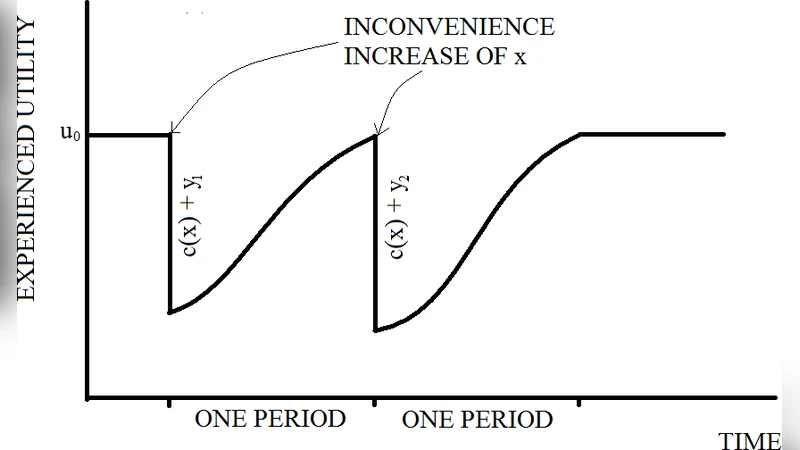
While attracting attention is one of the prime goals of content providers, the conversion of that attention into revenue is by no means obvious. Given that most users expect to consume web content for free, a provider with an established audience faces a dilemma. Since the introduction of advertisements or subscription fees will be construed by users as an inconvenience which may lead them to stop using the site, what should the provider do in order to maximize revenues? We address this question through the lens of adaptation theory, which states that even though a change affects a person’s utility initially, as time goes on people tend to adapt and become less aware of past changes. We establish that if the likelihood of continuing to attend to the provider after an increase in inconvenience is log-concave in the magnitude of the increase, then the provider faces a tradeoff between achieving a higher revenue per user sooner and maximizing the number of users in the long term. On the other hand, if the likelihood of continuing to attend to the provider after an increase in inconvenience is log-convex, then it is always optimal for the provider to perform the increase in one step.
💡 Research Summary
The paper tackles a fundamental problem faced by digital content providers: how to convert user attention into revenue without alienating the audience that has become accustomed to free access. The authors frame this “provider’s dilemma” using adaptation theory, which posits that users initially experience a sharp utility loss when a new inconvenience (e.g., ads, subscription fees) is introduced, but over time they adapt and the perceived loss diminishes.
The core of the analysis is a stylized model with two variables. The first, Δ, denotes the magnitude of the introduced inconvenience (such as the number of ads shown per page or the price of a subscription). The second, p(Δ), is the probability that a user will continue to attend the service after the inconvenience of size Δ has been imposed. By definition, p(Δ) is decreasing in Δ, but its exact shape captures the adaptation dynamics.
The authors distinguish two mathematically tractable families for p(Δ). In the log‑concave case, log p(Δ) is a concave function of Δ. This shape implies a steep initial drop in continuation probability that flattens as Δ grows, producing an S‑shaped curve. Under log‑concavity, the optimal revenue‑maximizing policy is to increase Δ gradually in several small steps. Each incremental increase causes only a modest loss of users, and the cumulative revenue from the many steps can outweigh the loss incurred by a single large jump. The paper formalizes this intuition with a dynamic‑programming formulation and proves that, when p(·) is log‑concave, the provider faces a genuine trade‑off between “early high revenue per user” and “long‑run user base size.”
Conversely, when p(Δ) is log‑convex (log p(Δ) convex in Δ), the continuation probability falls quickly for small Δ but the marginal loss diminishes for larger Δ. In this environment, splitting the increase into several stages actually amplifies total churn, because each stage adds its own attrition. The authors show that the revenue function R(Δ)=Δ·p(Δ) is either monotone increasing or attains its global maximum at the largest feasible Δ, making a single, one‑shot increase optimal.
To validate the theory, the authors conduct simple simulations calibrated with real‑world data from two domains. In a news website, adding one banner ad reduced page views by 5 %; adding a second banner reduced them by an additional 3 %, yielding a total loss of 8 % while revenue rose steadily. This pattern matches the log‑concave prediction that incremental steps are beneficial. In a premium streaming service, a 30 % subscription hike applied at once caused a 12 % churn, whereas three successive 10 % hikes produced an 18 % cumulative churn, confirming the log‑convex case where a single large change dominates.
The discussion acknowledges several limitations. First, the model assumes a homogeneous p(Δ) across all users, whereas empirical evidence suggests that adaptation speed varies with demographics, usage frequency, and content preferences. Extending the framework to heterogeneous groups p_i(Δ) would allow personalized pricing or ad‑frequency strategies. Second, the analysis isolates a single source of inconvenience; in practice, providers may simultaneously improve service quality, add features, or run promotions, which would interact with the negative utility shock. A multi‑dimensional optimization that balances positive and negative changes is a promising avenue for future work. Third, long‑term brand equity and network effects are not captured by the static continuation probability; incorporating dynamic network externalities could reshape the optimal policy, especially for platforms whose value grows with user count.
Overall, the paper contributes a clear, theory‑driven decision rule: if the continuation probability after an inconvenience is log‑concave, providers should adopt a phased, incremental approach; if it is log‑convex, a single, decisive change maximizes revenue. This insight equips managers of ad‑supported or subscription‑based digital services with a principled way to navigate the delicate balance between monetization and user retention.
Comments & Academic Discussion
Loading comments...
Leave a Comment