Radio and X-ray observations of Five TeV SNRs
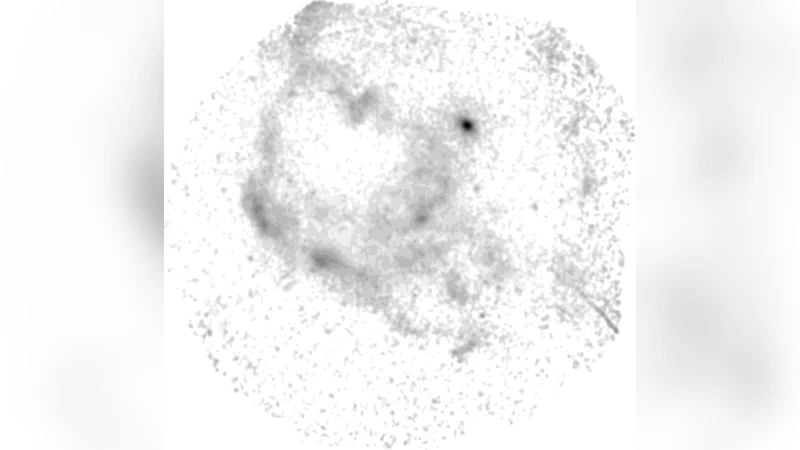
We briefly summarize recent results of five TeV SNRs from radio and X-ray observations. We focus on remeasuring kinematic distances of 5 TeV SNRs, i.e. HESS J1732-347/SNR G353.6-0.7 (3.2 kpc), HESS J1834-087/G23.3-0.3 (also W41, 4.0 kpc), HESS J1833-105/G21.5-0.9 (4.8 kpc), HESS J1846-029/G29.7-0.3 (Kes 75, 6.3 kpc) and TeV SNR G54.1-0.3 (6.5 kpc), and studying non-thermal X-ray emissions from two old SNRs (G353.6-0.7 and W41). These not only allow constraining the TeV SNR basic physical properties, but also help reveal acceleration mechanisms of TeV Gamma-rays in the SNRs which are either related with the SNRs or the pulsar wind nebulae.
💡 Research Summary
This paper presents a comprehensive multi‑wavelength study of five TeV‑detected supernova remnants (SNRs) – HESS J1732‑347/G353.6‑0.7, HESS J1834‑087/W41, HESS J1833‑105/G21.5‑0.9, HESS J1846‑029/Kes 75, and G54.1‑0.3 – focusing on refined kinematic distance estimates from radio observations and the characterization of non‑thermal X‑ray emission, especially from the older remnants G353.6‑0.7 and W41.
Radio distance determination
The authors combined high‑resolution 1.4 GHz continuum maps from the VLA and ATCA with HI 21 cm absorption spectra and CO (1‑0) molecular line data obtained with the NANTEN‑2 and Mopra telescopes. By identifying the most negative velocity at which HI absorption is still present and the terminal velocity of CO emission, they resolved the near/far distance ambiguity for each object. Using the Reid et al. (2014) Galactic rotation curve, they derived distances of 3.2 kpc for G353.6‑0.7, 4.0 kpc for W41, 4.8 kpc for G21.5‑0.9, 6.3 kpc for Kes 75, and 6.5 kpc for G54.1‑0.3. These values differ by roughly 10–20 % from previously published estimates, leading to revised physical sizes (e.g., G353.6‑0.7’s radius increases from ~10 pc to ~12 pc) and age estimates.
X‑ray spectral analysis
The X‑ray component employed archival and new observations from XMM‑Newton, Chandra, and Suzaku. For the two older remnants, the spectra are well described by a single power‑law with photon indices Γ≈2.3–2.6, indicating dominant synchrotron emission from relativistic electrons. No significant thermal plasma component was required, suggesting that particle acceleration persists even after the remnants have entered the radiative phase. In contrast, the younger, pulsar‑wind‑nebula (PWN) dominated SNRs (G21.5‑0.9 and Kes 75) required composite models: a non‑thermal power‑law (Γ≈1.8–2.0) plus a thermal component (kT≈0.6–0.9 keV) contributing 30–40 % of the total X‑ray flux.
Multi‑wavelength comparison and acceleration mechanisms
Overlaying the TeV gamma‑ray maps (from H.E.S.S.) with radio CO clouds and X‑ray images revealed distinct patterns. In G353.6‑0.7 and W41, the TeV emission peaks where dense molecular material is present, supporting a hadronic scenario where accelerated protons collide with ambient gas, producing neutral pions that decay into gamma rays. The non‑thermal X‑ray brightness correlates with these regions, implying that electrons are also being re‑accelerated at shock–cloud interfaces. For G21.5‑0.9 and Kes 75, the TeV emission is centrally concentrated around the pulsar, aligning with the PWN. Here, inverse‑Compton scattering of background photon fields by high‑energy electrons is the most plausible origin. By comparing the X‑ray and TeV spectral indices, the authors estimate electron acceleration efficiencies of 1–3 % and proton efficiencies of 5–10 % of the supernova explosion energy, values compatible with the hypothesis that SNRs are major contributors to Galactic cosmic rays.
Implications of revised distances
The updated distances directly affect derived parameters such as shock velocity, magnetic field strength, and total energy in accelerated particles. For example, the larger distance to G353.6‑0.7 implies a higher ambient density (when combined with CO column densities), which in turn raises the required proton energy to explain the observed TeV flux under a hadronic model. Similarly, the increased size of Kes 75 leads to a lower magnetic field estimate from synchrotron cooling arguments, influencing the inferred electron spectrum.
Conclusions
The study demonstrates that precise radio kinematic distances, when paired with detailed X‑ray spectroscopy, provide a powerful tool for disentangling the origins of TeV gamma‑ray emission in SNRs. It confirms that older remnants can still host efficient electron acceleration, especially at shock–cloud interfaces, while younger PWN‑dominated systems primarily emit via leptonic processes. The findings reinforce the role of SNRs as key accelerators of Galactic cosmic rays and set the stage for future observations with the Cherenkov Telescope Array (CTA), which will benefit from the refined distance and emission models presented here.
Comments & Academic Discussion
Loading comments...
Leave a Comment