Complex networks derived from cellular automata
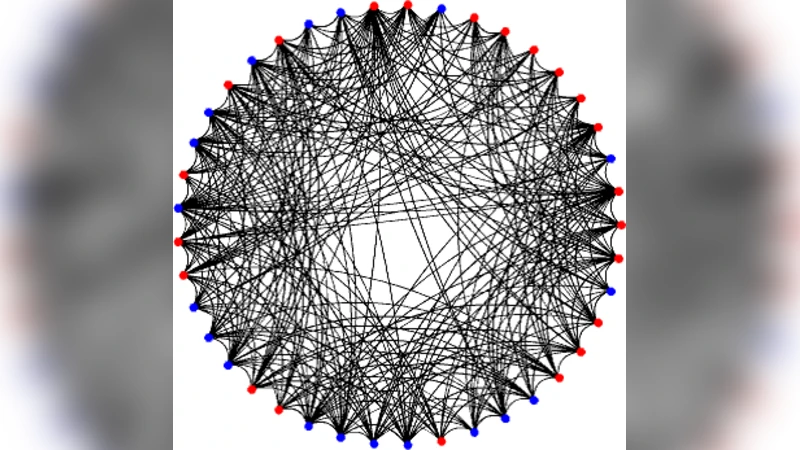
We propose a method for deriving networks from one-dimensional binary cellular automata. The derived networks are usually directed and have structural properties corresponding to the dynamical behaviors of their cellular automata. Network parameters, particularly the efficiency and the degree distribution, show that the dependence of efficiency on the grid size is characteristic and can be used to classify cellular automata and that derived networks exhibit various degree distributions. In particular, a class IV rule of Wolfram’s classification produces a network having a scale-free distribution.
💡 Research Summary
The paper introduces a systematic procedure for constructing directed graphs from one‑dimensional binary cellular automata (CA) and demonstrates that the resulting network topologies reflect the dynamical class of the underlying CA rule. The authors map each cell of a CA lattice to a vertex and create a directed edge i → j whenever the state of cell i at time t influences the state of cell j at time t + 1 according to the update rule. By iterating this mapping over a finite number of time steps, a finite directed network is obtained whose adjacency structure is a direct imprint of the CA’s transition function.
A broad set of representative CA rules is examined, covering Wolfram’s four classes: Class I (fixed point), Class II (periodic), Class III (chaotic), and Class IV (complex). For each rule the authors generate networks on lattices of size N = 2^m (m = 5…10) with both random and simple initial configurations. Standard network metrics—global efficiency η(N) = (1/(N(N‑1)))∑{i≠j}1/d{ij}, average shortest‑path length, clustering coefficient, and degree distribution—are computed and compared across classes.
The results show a clear correspondence between CA class and network characteristics. Networks derived from Class I and Class II rules are highly clustered, have short average path lengths, and exhibit an efficiency that decays roughly as η ∝ N⁻¹, indicating that information can travel efficiently even as the system grows. Their degree distributions are narrow and resemble those of regular lattices. In contrast, Class III rules produce networks with low clustering, long diameters, and a near‑Poisson degree distribution; the efficiency decays more slowly (η ∝ N⁻⁰·⁵), akin to random graphs, reflecting the lack of coherent structure in chaotic CA dynamics.
The most striking findings concern Class IV rules, especially Rule 110 and Rule 54, which are known to generate complex, edge‑of‑chaos behavior. Networks built from these rules display multi‑scale connectivity: a small core of high‑degree hubs coexists with many low‑degree nodes, yielding a power‑law degree distribution p(k) ∝ k⁻ᵞ with γ≈2.1. Log‑log plots of the cumulative degree distribution reveal an extended linear regime, confirming a scale‑free topology. Moreover, the global efficiency of Class IV networks remains almost constant or decreases only logarithmically with N, indicating that the presence of long‑range connections generated by the CA’s complex dynamics sustains high information‑flow capacity even in large systems.
By systematically analyzing the scaling of η(N) across rule families, the authors argue that the efficiency‑versus‑size relationship constitutes a robust classifier for CA behavior, complementing Wolfram’s phenomenological taxonomy. The degree‑distribution analysis further distinguishes Class IV as the sole source of scale‑free networks within the examined rule set.
Finally, the paper discusses broader implications. Because the CA‑to‑network mapping is fully controllable via rule selection, initial conditions, and lattice dimensionality, it offers a versatile synthetic benchmark for complex‑network research. Such CA‑derived networks can be employed to test theories of network robustness, diffusion processes, and synchronization, and they provide a concrete bridge between discrete dynamical systems and modern network science. The work thus opens a new avenue for exploring how simple local update rules give rise to rich global topologies and for using those topologies as experimental platforms in the study of complex systems.
Comments & Academic Discussion
Loading comments...
Leave a Comment